TL;DR:
- Understanding your insurance type helps find the right healthcare options in North Bergen and Secaucus.
- Persistence and documentation are key to successfully navigating local healthcare providers and referrals.
- Community health centers offer accessible, low-cost care regardless of insurance status or income.
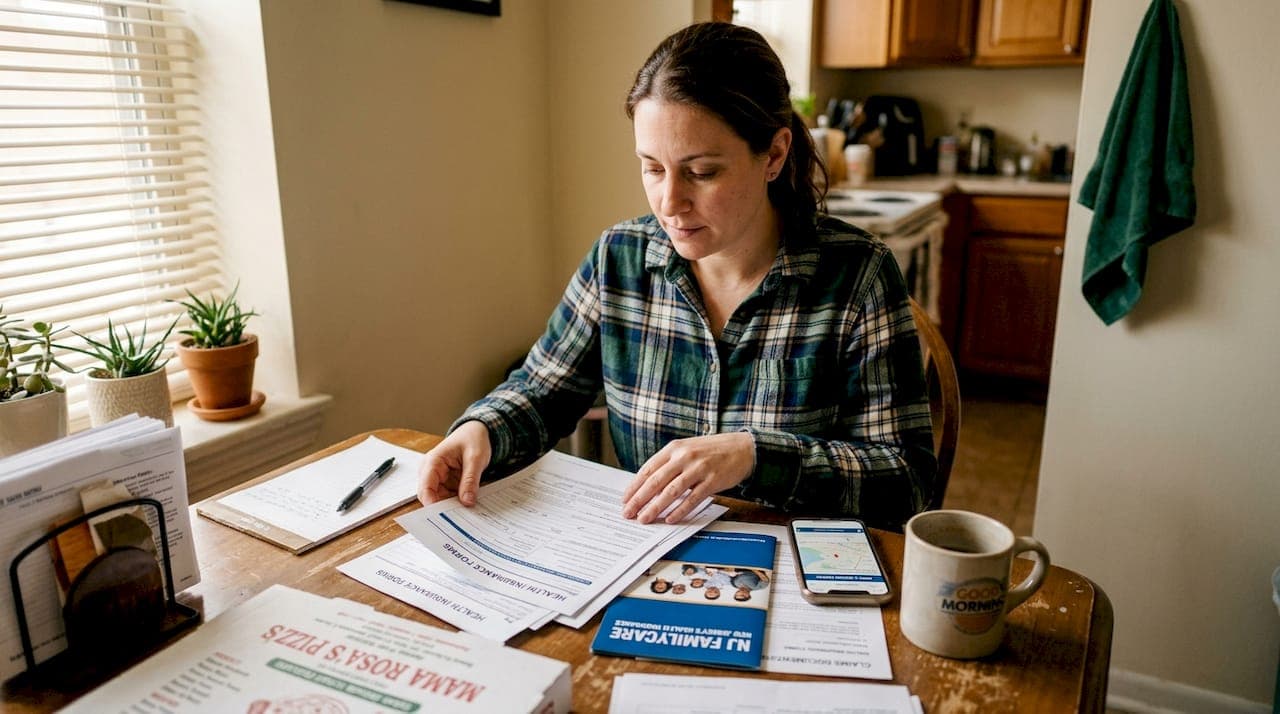
Figuring out where to get healthcare in North Bergen or Secaucus can feel genuinely confusing, especially when you're dealing with insurance questions, cost concerns, or a new medical issue that needs attention now. You might not know if your coverage is current, which clinic accepts your plan, or whether you even qualify for assistance programs. This guide walks you through your real options, from understanding your insurance type to booking your first appointment, so you can access the care you need without unnecessary stress or delay.
Table of Contents
- Understand your healthcare options in North Bergen and Secaucus
- Step-by-step: How to find and use local providers
- Community health resources: Accessing care if you're uninsured
- Getting the right care: Urgent vs. routine and specialist referrals
- A local's perspective: What most guides miss about healthcare access
- Connect with specialized local healthcare solutions
- Frequently asked questions
Key Takeaways
| Point | Details |
|---|---|
| Multiple access paths | Residents can use Medicare, NJ FamilyCare, or community clinics for healthcare based on their coverage or situation. |
| Step-by-step guidance | A practical workflow helps you efficiently find, select, and visit the right local healthcare provider. |
| Community support | Federally qualified health centers like NHCAC serve all residents, including the uninsured, with walk-ins and payment plans. |
| Know when and where to go | Choosing urgent versus routine care depends on how quickly you need help and your ongoing health management. |
| Persistence pays off | Following up, using all local resources, and staying organized can make navigating healthcare much easier. |
Understand your healthcare options in North Bergen and Secaucus
Before you search for a provider, it helps to understand which coverage category applies to you. The healthcare landscape in New Jersey includes several distinct pathways, and each one comes with its own eligibility rules, sign-up steps, and typical uses.
Medicare is the federal program for adults 65 and older, and for certain younger people with qualifying disabilities. If you are on Medicare, your focus should be on finding providers who accept your specific plan, whether that is Original Medicare, a Medicare Advantage plan, or a supplemental (Medigap) policy. Reading about Medicare coverage options in New Jersey can help you clarify which services and specialists are included before you start calling offices.
NJ FamilyCare is New Jersey's Medicaid program. It covers low to moderate income individuals, children, pregnant women, parents, and some adults without children. One significant advantage is that NJ FamilyCare eligibility allows applications year-round, not just during an open enrollment window. This is critically important if you recently lost a job, experienced a change in income, or moved to the state. You apply through New Jersey's GetCoveredNJ portal, and many residents are approved faster than they expect.
Marketplace and employer plans are the plans most working-age adults carry. If your employer provides insurance, you sign up during your workplace open enrollment period. If you purchase your own coverage, you use the GetCoveredNJ marketplace, typically during the November to January enrollment window, though qualifying life events allow exceptions.
Federally Qualified Health Centers (FQHCs) serve as a safety net for anyone who does not fit neatly into the above categories. These community health centers treat patients regardless of insurance status and offer sliding scale fees based on income.
The table below gives you a quick comparison so you can identify where you stand right now.
| Coverage type | Who qualifies | How to enroll | Best for |
|---|---|---|---|
| Medicare | Adults 65+ or qualifying disabled | Social Security Administration | Older adults, chronic condition management |
| NJ FamilyCare (Medicaid) | Low/moderate income NJ residents | GetCoveredNJ portal, year-round | Families, low income adults, children |
| Employer/marketplace plan | Employed or self-purchasing adults | Employer HR or GetCoveredNJ | Working-age adults with stable income |
| FQHC / community health center | Anyone, regardless of coverage | Walk-in or call ahead | Uninsured, underinsured, or cost barriers |
Once you know which category fits your situation, checking your insurance coverage details before scheduling an appointment saves you from billing surprises later. You can also explore options for accessing preventive care locally once your coverage situation is clear.
Step-by-step: How to find and use local providers
Once you know your main healthcare options, here's exactly how to find a provider and get seen without confusion. The process is more manageable than it looks when you break it into clear steps.
Step 1: Locate your insurance card or documentation. If you have coverage, your card lists the insurance company name, member ID, and often a customer service number. That number is your first call if you are not sure which providers are in your network.
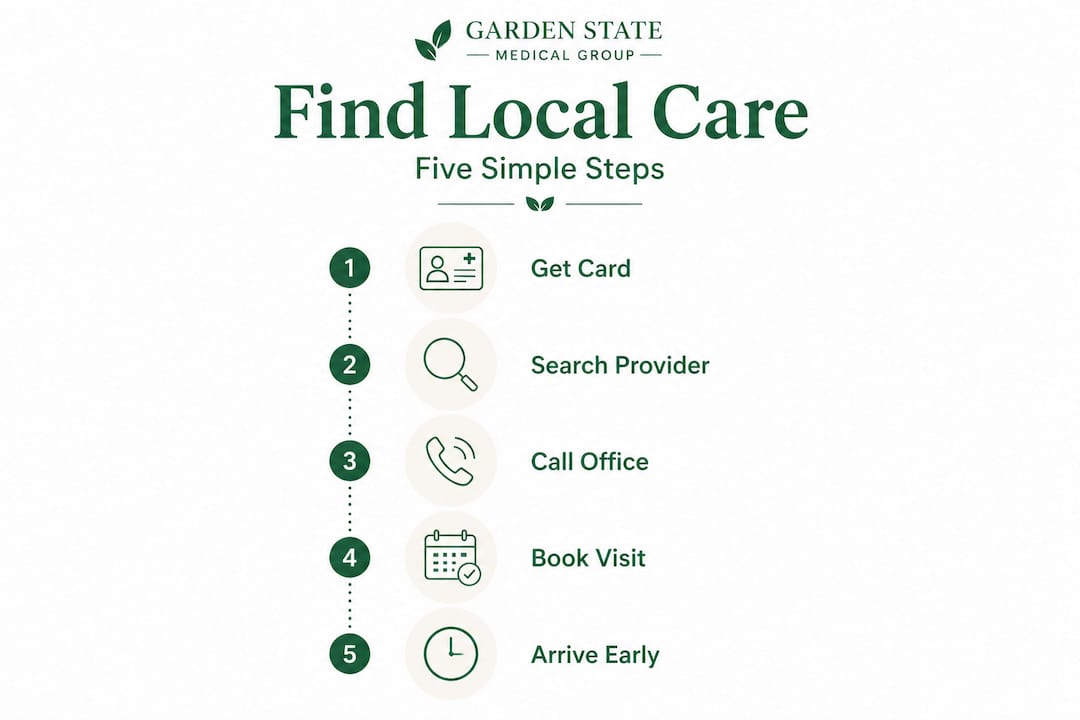
Step 2: Use a provider search tool. Most insurance companies have an online portal where you can search for in-network doctors by zip code. For Medicare patients specifically, Medicare Care Compare lets you find nearby hospitals and providers in North Bergen by searching your city or zip code directly. This tool also shows quality ratings and patient review summaries, which is useful when comparing options.
Step 3: Call the provider's office to confirm acceptance. Never assume a provider is in-network solely based on an online search result. Lists can be outdated. A quick call to confirm your insurance plan and ask about new patient availability takes two minutes and prevents billing headaches.
Step 4: Book your appointment and ask what to bring. Most offices will tell you what documents to have ready. First visits typically require a photo ID, insurance card, a list of current medications with dosages, and any recent lab results or health records you have.
Step 5: Arrive early on your first visit. New patient paperwork takes time. Arriving 15 minutes early helps you complete forms without feeling rushed and gives staff time to verify your information before you see the provider.
Pro Tip: Keep a digital photo of your insurance card on your phone. Many offices now accept this during check-in, and having it readily available speeds up the process if you forget your wallet.
The table below outlines the most commonly requested local provider types and what to expect from each.
| Provider type | Best contact method | What to bring | Typical wait time |
|---|---|---|---|
| Primary care physician | Call or online scheduling | ID, insurance card, medication list | Days to weeks |
| Urgent care clinic | Walk-in or online check-in | ID, insurance card or payment method | Same day, usually under 2 hours |
| Specialist | Referral from primary care | Referral letter, records, insurance card | Weeks, sometimes longer |
| FQHC | Walk-in or phone | ID, income proof if requesting sliding scale | Same day to a few days |
For residents in the area, visiting the North Bergen primary care clinic directly can simplify the process if you want to understand how local medical services work before your first appointment.

Community health resources: Accessing care if you're uninsured
Not sure if you have insurance, or worried about costs? Community health options cover these gaps, and they are more accessible than many residents realize.
Federally Qualified Health Centers, like North Hudson Community Action Corporation (NHCAC), are required by federal law to serve patients regardless of their ability to pay. They use a sliding scale fee structure, meaning what you pay is based on your income and household size. Some visits cost very little or nothing at all for qualifying residents.
These centers are the right choice when you find yourself in any of these situations:
- You recently lost your job and your employer coverage has lapsed
- You are between marketplace plan enrollment periods and do not yet qualify for a special enrollment period
- You are undocumented or have immigration-related concerns about applying for public coverage
- You cannot afford your current copays or deductibles even with insurance
- You need care for a child or family member who is not currently enrolled in any plan
NHCAC serves a significant patient population annually, regardless of coverage status, and offers services ranging from primary care to dental, mental health, and specialty referrals across multiple health center sites in the area.
Community health centers are not just for basic cold-and-flu visits. Many offer chronic disease management, prenatal care, behavioral health services, and prescription assistance programs. These broader offerings make them a genuine long-term healthcare option, not just a stopgap.
Pro Tip: Before visiting a community health center, call ahead to ask about language services if English is not your first language. Many NHCAC sites offer multilingual staff and interpreter services. Also ask what income documentation, if any, you should bring for the sliding scale application. You can learn more about finding sliding scale and walk-in clinics in the area as a starting point.
The HudPost coverage of NHCAC notes that NHCAC operates with a community mission, encouraging people to seek services even if their coverage lapses, and maintaining walk-in access alongside scheduled appointments.
Getting the right care: Urgent vs. routine and specialist referrals
With your main access points covered, let's make sure you get the right care at the right time, and that you do not get stuck in referral or triage loops.
Urgent care is for medical issues that are not emergencies but cannot comfortably wait several days for a routine appointment. This includes things like a sprained ankle, a severe sore throat, a minor cut that needs stitches, a urinary tract infection, or a fever that is climbing. Urgent care centers typically see patients same day with no referral needed.
Routine and preventive care is handled through your primary care provider. Annual checkups, blood pressure monitoring, diabetes management, vaccinations, and health screenings all fall into this category. These appointments are planned in advance and are the foundation of staying healthy long-term.
Hospital emergency rooms are for true emergencies: chest pain, stroke symptoms, serious injury, loss of consciousness, or anything that requires immediate intervention. Using the ER for non-emergencies is costly and often means a very long wait.
Here is the workflow for getting a specialist referral when your primary care provider recommends one:
- Ask your primary care provider to explain clearly why the referral is needed and what type of specialist they are recommending.
- Confirm with your insurance whether the referral requires prior authorization from your insurer before the specialist appointment.
- Request that your primary care office send your records and referral documentation to the specialist directly, and ask for the specialist's contact information.
- Call the specialist's office yourself to confirm receipt of the referral and to schedule your appointment.
- At the specialist visit, bring a copy of your referral letter and any test results your primary provider ordered.
A practical access workflow for preventive and chronic care involves identifying your coverage path first (Medicare, NJ FamilyCare, or marketplace plan), then choosing a nearby primary care or FQHC option for ongoing management, and using urgent care or hospitals only when faster assessment is genuinely needed.
Pro Tip: Ask your primary care provider to write a brief summary letter each time you see them, especially after a new diagnosis or medication change. This document can dramatically speed up specialist onboarding and prevents you from having to repeat your full history from memory. Understanding when to choose urgent care vs primary care is a skill that saves you time and money over the long run.
A local's perspective: What most guides miss about healthcare access
Now that you have seen the step-by-step process, let's talk honestly about what it actually feels like to navigate local healthcare in North Bergen and Secaucus.
The guides make it look clean. Call this number, use that portal, bring these documents. In practice, phone lines are sometimes on hold for 20 minutes, online portals have outdated provider lists, and the referral your doctor sent "last week" occasionally arrives well after you do. That is not a failure of the system necessarily. It is just the reality of coordinating care across multiple organizations, and knowing this ahead of time removes a lot of frustration.
What actually works, from a ground-level perspective, is persistence paired with documentation. Write down the name of every person you speak with and what they told you. Keep a folder, even a simple one on your phone, with photos of your insurance cards, referral letters, and lab results. When something falls through the cracks (and sometimes it does), this paper trail is what gets things resolved quickly.
Local connections also matter more than most official guides acknowledge. Knowing which front desk staff is particularly helpful, which office returns calls promptly, and which clinic genuinely accommodates walk-ins versus technically accepting them are the kinds of details you pick up from neighbors, community centers, and local Facebook groups. Do not underestimate that social layer of healthcare navigation. Understanding primary care essentials gives you a stronger foundation, but the human relationships you build with your care team are what sustain good health over time.
Finally, do not let one difficult experience stop you from trying again. Some residents avoid follow-up care after a frustrating first interaction, and that is where small health issues become bigger ones. Ask every question you have. Call back if you do not get an answer. Bring someone with you if you want support navigating an appointment. Healthcare access is not a single moment. It is an ongoing practice that gets easier the more you engage with it.
Connect with specialized local healthcare solutions
Ready to take the next step with a healthcare provider who understands the local landscape? Garden State Medical Group offers exactly that kind of rooted, reliable care for residents of North Bergen and Secaucus.
Whether you need primary care services for routine checkups and preventive health, or you are managing an ongoing condition like diabetes, heart disease, or a pulmonary issue, Garden State Medical Group's team supports you at every stage. The practice also offers a dedicated chronic care management program designed to keep complex conditions coordinated and under control. For residents with more specific health needs, a full range of specialized health programs covers areas from bone health to weight management. Contact Garden State Medical Group today to schedule your appointment and find the right care path for your needs.
Frequently asked questions
How can I apply for NJ FamilyCare if I just lost my job?
You can apply for NJ FamilyCare at any time through the GetCoveredNJ portal, and your eligibility will be assessed based on your current income and household size after the job loss.
Do community health centers accept walk-ins if I don't have insurance?
Yes, centers like NHCAC allow walk-ins regardless of insurance status and use sliding scale fees so that cost is not a barrier to being seen.
What documents should I bring to my first appointment at a new provider in North Bergen?
Bring a photo ID, your insurance card (if you have one), a written list of current medications and dosages, and any recent lab results or health records that are relevant to your visit.
How do I find a nearby hospital or specialist who takes my insurance?
Use Medicare Care Compare to search by city or zip code for local providers in North Bergen, and filter results by providers who accept your specific plan.
What counts as an urgent healthcare need versus routine or specialist care?
Urgent care covers non-emergency issues that cannot wait for a scheduled appointment, like a high fever, minor injuries, or infections, while routine care covers checkups, screenings, and ongoing chronic condition management with your primary care provider.