TL;DR:
- Many local healthcare options are affordable and accessible, including community clinics and telehealth.
- Insurance, including Medicaid and Medicare, is key to accessing comprehensive medical and chronic care programs.
- Coordinated care, care management, and local support services improve health outcomes and simplify navigating the system.
Navigating healthcare in North Bergen and Secaucus can feel overwhelming, especially if you're managing a chronic condition or trying to figure out which programs apply to you. Many residents assume that quality local care is hard to find or too expensive to access, but that's simply not true. Chronic disease program participation has grown significantly across New Jersey, showing that more people are finding their way into the right programs. This guide walks you through how medical services work locally, what insurance options are available, and how to take practical steps toward better, more consistent care.
Table of Contents
- What are medical services and how do you access them?
- Understanding insurance: Your gateway to care
- How chronic care and special programs keep you healthier
- Navigating the system: Coordination, telehealth, and local resources
- Our take: What most people miss about getting care locally
- Get started with local experts who simplify your healthcare
- Frequently asked questions
Key Takeaways
| Point | Details |
|---|---|
| Start with primary care | Your primary doctor is key to referrals, chronic care, and navigating medical services. |
| Insurance unlocks access | Programs like NJ FamilyCare and Medicare open the doors to affordable medical services. |
| Chronic care management matters | Participating in CCM programs offers ongoing support and better outcomes for chronic illnesses. |
| Community and telehealth boost access | Local coalitions and virtual visits help overcome barriers to care in North Bergen and Secaucus. |
What are medical services and how do you access them?
The term "medical services" covers a wide range, from a routine checkup to managing a long-term condition like diabetes or heart disease. Understanding what falls under this umbrella helps you figure out where to start and who to call.
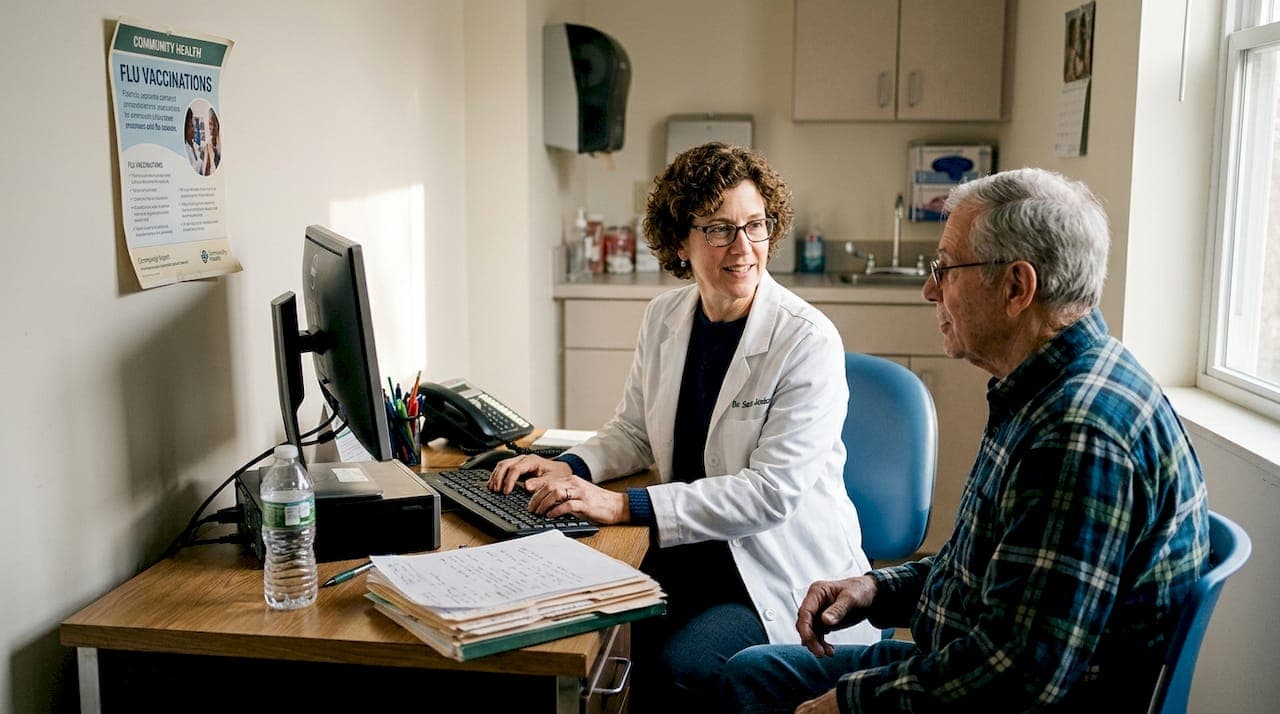
Most adults in North Bergen and Secaucus enter the healthcare system through one of three main points: a primary care provider, an urgent care clinic, or a community health center. Your primary care services provider is usually your first stop. They handle preventive care, routine checkups, and referrals to specialists. Urgent care is for issues that need same-day attention but aren't emergencies. Community clinics often serve patients regardless of insurance status.
Here's a quick look at the types of services available locally:
- Primary care: Annual physicals, vaccinations, blood pressure monitoring, and general health management
- Specialty care: Cardiology, pulmonology, orthopedics, and other focused areas
- Diagnostics: Lab work, imaging, and radiology
- Chronic disease management: Ongoing care for conditions like diabetes, COPD, and hypertension
- Telehealth: Virtual visits for follow-ups, medication reviews, and minor concerns
| Entry point | Services available | Best for |
|---|---|---|
| Primary care office | Preventive care, referrals, chronic management | Most adults, ongoing needs |
| Urgent care clinic | Same-day illness or injury | Non-emergency acute issues |
| Community health center | General care, sliding-scale fees | Uninsured or underinsured patients |
| Specialist office | Focused condition care | Referred patients with specific diagnoses |
| Telehealth platform | Virtual visits, follow-ups | Patients with mobility or travel barriers |
In 2024 to 2025, Rutgers chronic programs reached more than 1,800 participants across the Bergen and Hudson County region, showing that local resources are both available and widely used. You don't have to go far to find real support.
The specialized health programs available in your community are designed to meet you where you are, whether that's managing a new diagnosis or staying on top of a condition you've had for years.
Pro Tip: Start with your primary care provider. They are the hub for referrals, care coordination, and connecting you to the right programs. A single appointment can open several doors.
Understanding insurance: Your gateway to care
Once you know what services you need, your ability to access them often depends on your insurance status. The good news is that New Jersey offers several options, and many residents qualify for more coverage than they realize.
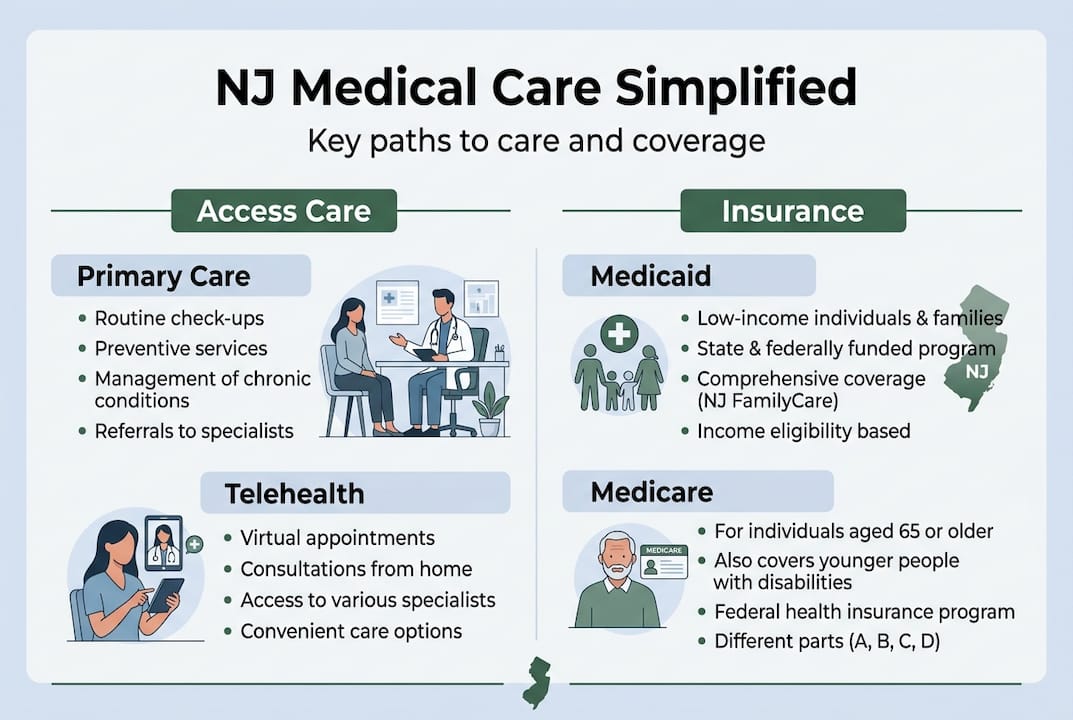
Here's a comparison of the most common insurance types available locally:
| Insurance type | Who qualifies | What it covers |
|---|---|---|
| NJ FamilyCare (Medicaid) | Low-income adults and families | Doctor visits, hospital care, prescriptions |
| Medicare Part A and B | Adults 65+ or with disabilities | Hospital stays, outpatient care, preventive services |
| Medicare Advantage | Medicare-eligible adults | All Part A and B benefits, often with extras |
| Special Needs Plans (SNPs) | Dual eligible or chronic condition patients | Tailored coverage for specific conditions |
If you're eligible for both Medicare and Medicaid, you're considered "dual eligible." Dual-eligible Special Needs Plans, known as D-SNPs, are designed specifically for people in this situation. They coordinate Medicare and Medicaid benefits into one streamlined plan, which reduces paperwork and often lowers your out-of-pocket costs.
To enroll in NJ FamilyCare or Medicare, follow these steps:
- Gather your documents: proof of income, residency, and identity
- Visit NJ FamilyCare's application portal or call 1-800-701-0710
- For Medicare, contact the Social Security Administration at 1-800-772-1213 or apply at ssa.gov
- Ask your provider's office about accepted insurance plans before your first visit
- If you're dual eligible, ask specifically about D-SNPs available at your Secaucus location or North Bergen office
You can also explore your New Jersey Medicare options in more detail to understand what each plan covers and whether switching makes sense for your situation.
Pro Tip: Always ask your provider's office if they accept your specific plan. Many offices also have staff who can help you understand your benefits or connect you with enrollment assistance.
How chronic care and special programs keep you healthier
For those living with diabetes, heart conditions, or other chronic illnesses, specialized programs can make a real difference in daily life. Chronic Care Management, or CCM, is a Medicare-covered service that gives patients with two or more chronic conditions ongoing access to a care team outside of regular office visits.
To qualify for CCM, you generally need to have at least two chronic conditions expected to last 12 months or more. Your doctor must enroll you in the program, and from there, a care manager helps coordinate all aspects of your health.
Here's what CCM typically includes:
- Care coordination: Your providers share information and work together on your treatment plan
- Regular check-ins: Monthly calls or messages to review your symptoms and medications
- Medication management: Tracking what you take and flagging any potential interactions
- Emergency planning: A written care plan that outlines what to do in a health crisis
- Community connections: Links to local support groups, transportation, and social services
Medicare's Chronic Care Management program offers 24/7 access to your care team and is often available at zero out-of-pocket cost for eligible patients.
Local programs through Rutgers and the Bergen County Chronic Disease Coalition add another layer of support. These community-based resources connect you to prevention workshops, health screenings, and specialist referrals at little or no cost.
If memory or cognitive health is a concern, there are also targeted options like the memory and cognition program that address those specific needs alongside your general chronic care.
For a step-by-step breakdown of how to get started, the chronic care management guide walks you through the process in plain language.
Pro Tip: Ask your doctor directly whether you qualify for Medicare CCM. Many patients are eligible but never enrolled simply because no one brought it up. It costs you nothing to ask and could significantly improve your health outcomes.
Navigating the system: Coordination, telehealth, and local resources
Once you enroll in a program or get insurance, knowing how to use those resources efficiently can make all the difference for your care. The system works best when your providers are talking to each other and when you stay actively involved.
Integrated care means your primary care doctor, specialists, and care managers all have access to the same records and treatment plan. This prevents duplicate tests, missed diagnoses, and conflicting medications. Here are some practical ways to coordinate your care:
- Request that your providers share records through a shared electronic health system
- Ask about care manager services if you're enrolled in a chronic care or D-SNP program
- Use your plan's member portal to track appointments, referrals, and test results
- Connect with local hospital coalitions for additional navigation support
- Review your care plan at every visit and update your medication list regularly
Telehealth has become one of the most useful tools for people who face barriers to in-person visits, whether that's limited mobility, transportation challenges, or a busy schedule. Telemedicine best practices show that virtual visits are especially effective for chronic condition follow-ups, medication reviews, and mental health check-ins.
Locally, the numbers reflect real demand. Bergen County Medicare Advantage and SNP enrollment shows thousands of residents already using coordinated plans, with Bergen SNPs reaching 7,963 enrollees and Hudson County Medicare Advantage plans covering around 29,000 residents. You can also review local Medicare Advantage plans to compare your options.
Exploring all local health programs available through your provider is a smart first step. And if you have questions about how CCM works in practice, this resource on chronic care management questions covers the most common ones.
Our take: What most people miss about getting care locally
We work with patients in North Bergen and Secaucus every day, and the pattern we see most often is this: people delay care because they assume it will be too expensive or too complicated to figure out. That assumption costs them time, and sometimes their health.
The reality is that free and low-cost options exist right here in your community. Telehealth visits reduce the need to travel. Care managers handle the coordination that used to fall entirely on patients. D-SNPs simplify billing for dual-eligible residents. These tools are available now, but they only help if you use them.
The single habit that makes the biggest difference? Keeping a simple medical records file, either on paper or in a health app, and bringing your current medication list and a short list of questions to every appointment. Patients who do this move through the system faster and get better results. For a full breakdown of how to put this into practice, the detailed steps for chronic care management are a great starting point.
Ask for help. Local offices, NJ's coalitions, and hospital navigators have staff dedicated to guiding you through every step.
Get started with local experts who simplify your healthcare
When you're ready to connect with helpful professionals who know the system, the next steps are simple. Garden State Medical Group serves patients in North Bergen and Secaucus with a team that accepts major insurance plans, including Medicare, Medicaid, and most commercial plans.
Our primary care team handles everything from annual physicals to chronic condition management and referrals. If you need specialized support, our cardiopulmonary specialists and other focused providers are part of the same integrated network. You can also browse the full list of programs to find the right fit for your health needs. Our staff helps with paperwork, insurance enrollment, and care navigation so you spend less time on logistics and more time focused on your health.
Frequently asked questions
How can I find out if my doctor accepts Medicaid or Medicare in North Bergen or Secaucus?
You can ask your doctor's office directly or use your plan's provider directory online to check accepted insurances in NJ. Most offices are happy to verify coverage before your first visit.
What is CCM and why does it matter for chronic conditions?
Chronic Care Management (CCM) gives you ongoing support, care coordination, and 24/7 access to your healthcare team. Medicare CCM programs offer this at no extra cost for eligible patients with two or more chronic conditions.
How do I apply for NJ FamilyCare (Medicaid) locally?
You can apply for NJ FamilyCare online, by phone, or in person at local offices in Hudson or Bergen County, and enrollment is open year-round with no specific sign-up window.
Can I get telehealth visits for chronic conditions?
Yes, most major plans cover telehealth, and many local providers offer virtual visits for ongoing chronic care. The Bergen-Hudson Chronic Disease Coalition supports telehealth access as a key tool for reducing care barriers.