TL;DR:
- Residents should prepare necessary documents and identify available programs based on income and needs.
- Connecting with local health departments, mobile units, and support programs is vital for comprehensive care access.
- Active navigation and professional guidance improve health outcomes beyond standalone community events.
Finding reliable, affordable health care in North Bergen or Secaucus can feel overwhelming, especially when you're managing a chronic condition or trying to stay ahead of your health with preventive screenings. Many residents don't know where to start, which programs they qualify for, or how to connect the dots between insurance, local health departments, and community resources. This guide walks you through every step, from gathering your documents to enrolling in chronic care programs, so you can stop guessing and start getting the care you need. You'll also find local contacts, practical tips, and common mistakes to avoid along the way.
Table of Contents
- What you need: Key requirements for accessing health programs
- Step 1: Enroll in insurance and core health coverage
- Step 2: Connect with local health departments for free and low-cost programs
- Step 3: Utilize mobile health units and screening events
- Step 4: Manage chronic conditions with dedicated programs and support
- Why health access in North Bergen and Secaucus requires active navigation
- Get even greater support with local health experts
- Frequently asked questions
Key Takeaways
| Point | Details |
|---|---|
| No wrong door | You can start with Medicaid, health departments, or screening events to access local health programs. |
| Documentation matters | Bring proof of residency, ID, and insurance info to clinics and application appointments. |
| Mobile units increase access | Mobile health vans offer vital screenings for chronic conditions right in your neighborhood. |
| Chronic condition support | Specialty programs and coalitions offer ongoing help for managing diagnoses locally. |
What you need: Key requirements for accessing health programs
Once you understand the importance of these programs, gathering the right materials is the first step. Before you can enroll in any health program or attend a free screening event, you need to know what to bring. Most programs in North Bergen and Secaucus ask for a few basic items, and being prepared saves you time and frustration.
Here is a quick overview of what different programs typically require:
| Program type | ID required | Proof of residence | Income verification |
|---|---|---|---|
| NJ FamilyCare (Medicaid) | Yes | Yes | Yes |
| Free preventive screenings | Recommended | No | No |
| Chronic disease programs | Yes | Yes | Sometimes |
| Vaccination events | Recommended | No | No |
NJ FamilyCare eligibility is based on income and household size, so income documents like pay stubs or tax returns are essential for that application. For free community screenings, you often just need a photo ID, and sometimes not even that.
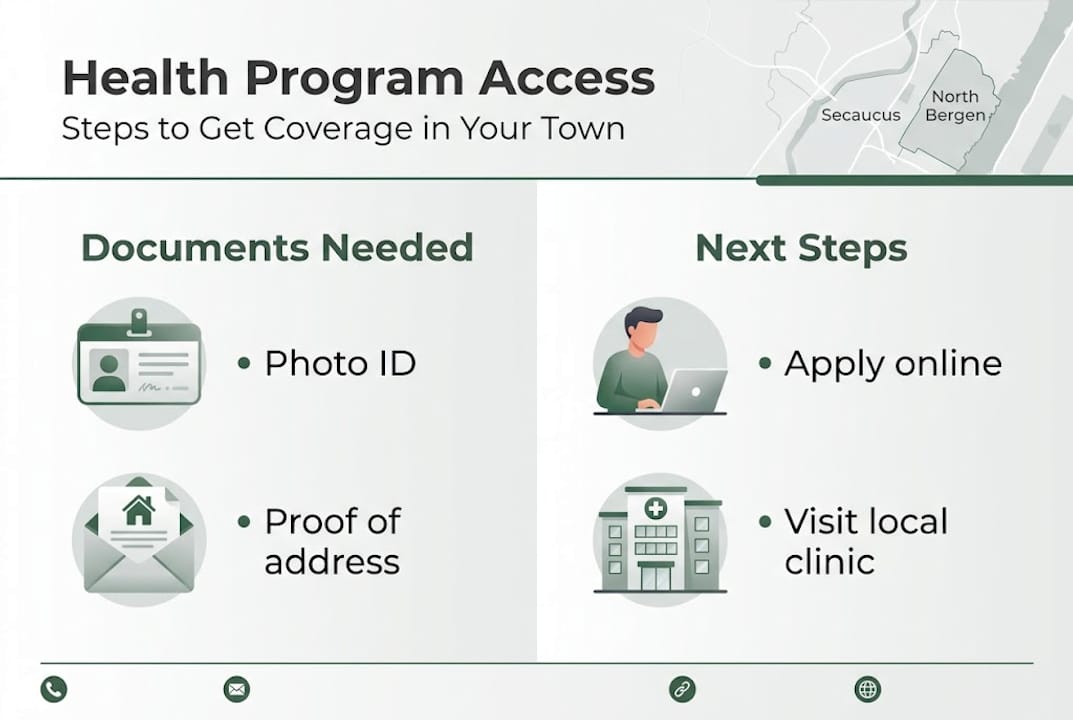
If you're missing documents, don't let that stop you. Local libraries and social service offices can help you obtain copies of vital records. Hudson County also has assistance programs for residents who need help getting identification.
Your income level directly affects which programs you can access at no cost. Lower-income households often qualify for fully covered services, while moderate-income residents may qualify for sliding-scale fees. Before you attend any event, it helps to check insurance coverage so you know exactly what your plan already covers.
Pro Tip: Create a simple folder, physical or digital, with copies of your ID, a utility bill, your most recent tax return, and your insurance card. Bring this folder to every health appointment or enrollment event. It takes 10 minutes to set up and saves hours later.
Step 1: Enroll in insurance and core health coverage
With your documents ready, the foundation for health access is insurance coverage. Without it, many programs are harder to access or come with out-of-pocket costs that add up fast.
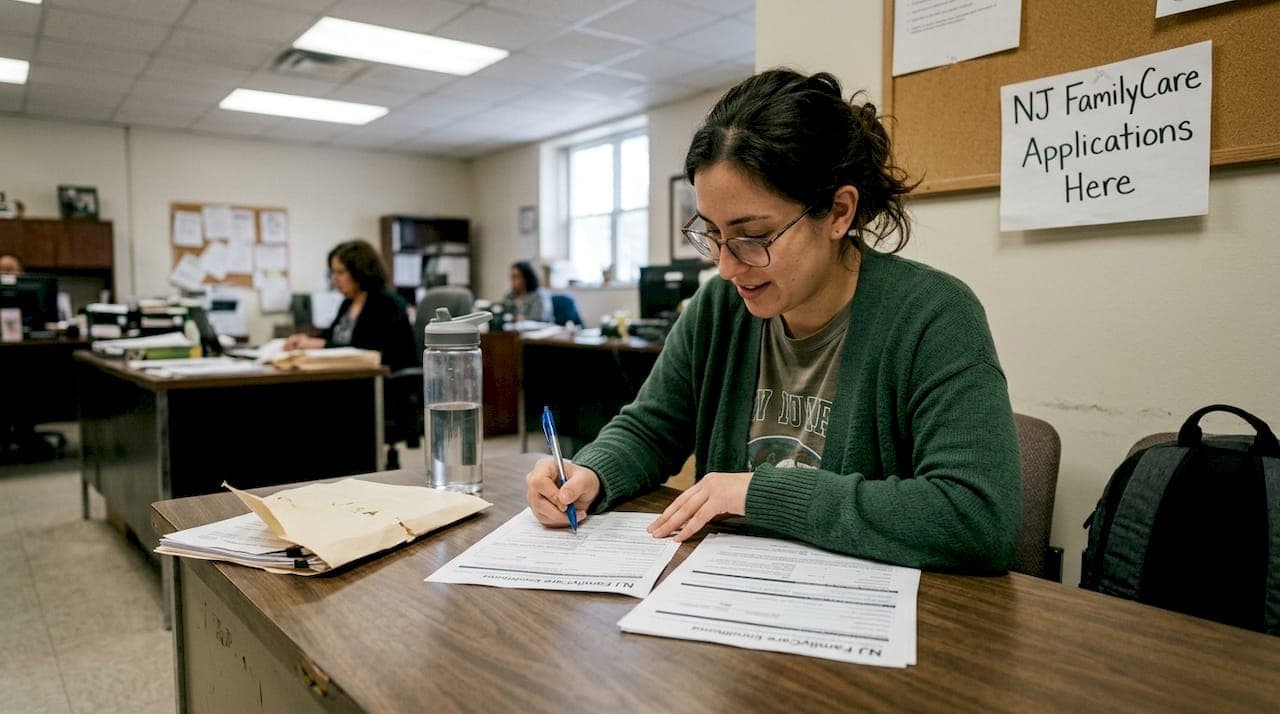
NJ FamilyCare is New Jersey's Medicaid program, and it covers a wide range of services including preventive care, specialist visits, and management of chronic diseases. The NJ FamilyCare application can be completed year-round online or by phone, which means you don't have to wait for an open enrollment period.
Here's how to apply:
- Online: Visit nj.gov/getcoverednj and complete the application in about 20 minutes.
- By phone: Call 1-800-701-0710 to apply with assistance from a live representative.
- In person: Visit your county Board of Social Services office in Secaucus or North Bergen for face-to-face help.
- Through a navigator: Free enrollment assisters are available at community health centers and libraries.
- Appeal if denied: If your application is rejected, you have the right to appeal. Request a fair hearing within 20 days of the denial notice.
For residents who are 65 or older or living with a disability, Medicare may be the primary option. Here's a simple comparison:
| Feature | NJ FamilyCare | Medicare |
|---|---|---|
| Age requirement | None (income-based) | 65+ or disability |
| Preventive care | Covered | Covered with some costs |
| Chronic care management | Covered | Covered with copays |
| Cost | Free or low-cost | Premiums apply |
For more detail on senior coverage, reviewing NJ Medicare options can help you compare plans and find the right fit.
Pro Tip: Call 1-800-701-0710 if you don't have reliable internet access. Phone enrollment is just as valid as online, and a representative can walk you through every question.
Step 2: Connect with local health departments for free and low-cost programs
With core coverage in place, your next step is tapping into local resources that deliver prevention directly. Both North Bergen and Secaucus have active health departments that run programs year-round, many of which are free and open to all residents.
The North Bergen Health Department offers services including flu clinics, preventive screenings, vaccination events, and vital records assistance. You can reach them by phone or visit in person to ask about upcoming events. They also coordinate outreach for seniors and homebound residents who cannot travel easily.
Key services available through local health departments include:
- Seasonal flu and COVID-19 vaccination clinics
- Blood pressure and diabetes screenings
- Childhood immunization programs
- Vital records (birth, death, marriage certificates)
- Health education and referrals
Secaucus goes a step further with a dedicated program for vulnerable residents. Homebound COVID and flu vaccinations are available for residents who cannot leave their homes, making sure that mobility limitations don't become a barrier to basic preventive care.
"These public events are your gateway to free or low-cost care; always bring ID and insurance info if you have it."
Many events are walk-in friendly, but calling ahead is always smart. You can also check both towns' official websites and social media pages for announcements. For a broader look at what's available nearby, the preventive services North Bergen resource page is a helpful starting point. You can also visit the North Bergen medical office or the Secaucus medical office to ask about upcoming community events.
Step 3: Utilize mobile health units and screening events
Even if you can't reach a medical office, mobile health units bring essential care directly to you. These units travel through neighborhoods in North Bergen, Secaucus, and surrounding areas, offering services that would otherwise require a clinic visit.
The Hudson Regional Health Mobile Health Unit provides free screenings in North Bergen, Secaucus, and nearby areas. When the unit visits your neighborhood, you can expect on-the-spot checks for blood pressure, cholesterol, and blood sugar, as well as vaccinations and health education materials.
More than 74,000 Hudson County residents are enrolled in Medicaid, yet health disparities remain significant in communities like North Bergen and Secaucus. Mobile outreach is one of the most effective tools for reaching residents who face transportation, language, or work-schedule barriers.
Here's how to make the most of mobile health events:
- Follow Hudson Regional Health and local health departments on social media for event announcements.
- Contact your local health department to request a mobile unit visit in your neighborhood.
- Bring your ID, insurance card if you have one, and a list of any current medications.
- After your screening, ask for a written summary of your results and follow up with a primary care provider if anything is flagged.
- Share event information with neighbors, especially seniors or those with limited mobility.
For a full calendar of preventive screenings in the area, check local health department websites regularly. Screenings are most valuable when you follow up on the results, so don't treat them as a one-time event.
Step 4: Manage chronic conditions with dedicated programs and support
Once you've taken advantage of screenings, those with chronic diseases can get even more support. Chronic conditions like diabetes, hypertension, asthma, COPD, and cardiovascular disease are common in Hudson County, and they require more than a single doctor's visit to manage well.
Chronic disease management programs are available for conditions including diabetes, hypertension, and asthma, with notable racial and socioeconomic disparities in local prevalence that make targeted outreach especially important. These programs typically include regular monitoring, patient education, and care coordination.
The Bergen-Hudson Chronic Disease Coalition connects residents to cancer, cardiovascular, diabetes, and asthma programs, supporting early detection and ongoing management. This coalition does not directly enroll patients in clinical care, but it links you to the right resources and support groups in your area.
Here's how to get connected:
- Ask your primary care provider to refer you to a formal chronic care management program.
- Contact the Bergen-Hudson Coalition to find local support groups and educational workshops.
- If you have insurance, verify that chronic care management visits are covered before your first appointment.
- If you're uninsured, ask your local health department about sliding-scale or grant-funded programs.
For a deeper look at how these programs work, the chronic disease management guide explains the process clearly. You can also find chronic care improvement tips that show how consistent engagement with these programs leads to measurably better health outcomes over time.
Why health access in North Bergen and Secaucus requires active navigation
After mastering the tactical steps, it's important to understand the big-picture strategy for lasting results. Here's an honest observation: there is no single office or website that handles everything. Medicaid covers your clinical care. Local health departments run community events. Coalitions connect you to education and support. Mobile units fill geographic gaps. None of these systems talk to each other automatically. You have to connect them yourself.
Many residents miss out on coalition programs because they assume those programs offer direct medical care. They don't. They offer awareness, referrals, and support. That distinction matters when you're planning your care strategy.
The biggest missed opportunity we see is residents who attend a screening, get a concerning result, and then never follow up. A blood pressure reading at a community event means nothing if you don't bring it to a primary care provider. Similarly, incomplete insurance paperwork delays access to everything downstream.
"Active navigation, not passivity, turns scattered resources into actual health results."
Thinking about improving chronic care access as an ongoing process rather than a one-time task is what separates residents who benefit from these programs from those who don't.
Get even greater support with local health experts
Finally, professional support can bring all the resources together for the best health outcome. Public programs are a strong foundation, but working directly with a local care team gives you continuity, accountability, and personalized guidance that community events simply can't provide.
Garden State Medical Group offers primary care services in both North Bergen and Secaucus, designed to complement the public resources you've already explored. Whether you need a comprehensive checkup, disease education, or ongoing support for a chronic condition, the team is here to help. You can also explore dedicated help managing chronic conditions and browse all available local health programs to find the right fit for your situation. Reach out today to schedule an appointment and take the next step in your health journey.
Frequently asked questions
Where can I find free health screenings in North Bergen or Secaucus?
Mobile health units and local health departments offer free preventive health screenings at regular events in both towns. Check each town's official website and social media for upcoming dates.
Who is eligible for NJ FamilyCare in Hudson County?
NJ FamilyCare eligibility is based on income and household size, and most residents can apply online or by phone at any time of year. There is no open enrollment period, so you can apply whenever you're ready.
How do I access care for a chronic condition if I'm uninsured?
Local coalitions and health departments can refer you to free or sliding-scale programs for chronic disease management. Ask specifically about grant-funded programs that serve uninsured residents in Hudson County.
Can homebound residents get vaccinations or screenings?
Yes. Secaucus homebound vaccinations are available for residents who cannot leave their homes, and other local programs may coordinate in-home care for vulnerable individuals. Contact your local health department to arrange services.