
TL;DR:
- Nearly three-quarters of US adults have at least one chronic condition requiring ongoing management.
- Effective management involves personalized, coordinated care that addresses physical and social health factors.
- Digital tools and team-based interventions improve health outcomes and reduce hospitalizations.
Nearly 3 in 4 US adults live with at least one chronic condition, and more than half are managing two or more at the same time. These are not just numbers on a page. They represent real people in North Bergen and Secaucus who wake up every day navigating medications, appointments, and lifestyle changes. Managing a chronic condition is far more than taking a pill each morning. It requires a coordinated, proactive approach that supports your whole life, not just your symptoms. This guide walks you through what chronic disease management actually means, how it works in practice, and what you can do right now to live better.
Table of Contents
- What is chronic disease management?
- Core components and approaches to managing chronic conditions
- Personalized, whole-person care: What makes management effective
- Evidence, outcomes, and emerging trends in chronic disease care
- A fresh perspective: Why real chronic disease management goes beyond checklists
- Next steps: Find personalized chronic disease management near you
- Frequently asked questions
Key Takeaways
| Point | Details |
|---|---|
| Coordinated care matters | Chronic disease management relies on team-based and proactive support for long-term health. |
| Personalization is key | Successful management tailors care plans, education, and support to individual needs and goals. |
| Evidence shows results | Team-based care and case management lower hospitalizations and improve outcomes for many chronic conditions. |
| Technology supports success | Digital health tools and remote monitoring help patients better manage their conditions every day. |
What is chronic disease management?
Now that you know how widespread and impactful chronic health problems are, let's clarify what chronic disease management actually means.
Chronic disease management refers to the coordinated care of long-term conditions that last a year or more, limit daily activities, or require ongoing medical attention. It is not a single appointment or a one-time treatment. It is an organized, continuous process designed to help you control your condition, prevent complications, and maintain the best quality of life possible.
The conditions most commonly addressed include heart disease, type 2 diabetes, cancer, chronic lung disease (such as asthma and COPD), stroke, and Alzheimer's disease. These are also the leading drivers of disability and healthcare spending in the United States.
| Chronic condition | % of US adults affected |
|---|---|
| Heart disease | ~12% |
| Diabetes | ~11% |
| Chronic lung disease | ~9% |
| Cancer (prevalence) | ~5% |
"Chronic conditions are the leading drivers of $4.9 trillion in annual US healthcare costs, yet most are preventable or manageable with the right support."
A routine check-up once a year simply is not enough when you are managing chronic conditions that change week to week. You need a care plan that is updated regularly, a team that communicates with each other, and tools to monitor your health between visits. The benefits of doing this well are significant. People who engage in structured chronic disease management experience fewer hospitalizations, fewer complications, and report a noticeably better quality of daily life. The goal is not just to survive with a condition. It is to stay active, independent, and informed.
One common misconception is that chronic disease management is only for people who are very sick. In reality, starting early, even when symptoms are mild, leads to the best long-term results.
Core components and approaches to managing chronic conditions
With the foundation clear, let's unpack the methods and tools used for effective chronic disease management.
Core methodologies include the Chronic Care Model (CCM), case management, multidisciplinary teams, and both clinic-based and digital interventions. The CCM is the most widely used framework and organizes care around six key elements.
| CCM element | What it means for you |
|---|---|
| Health system support | Your provider has the tools and policies to deliver consistent care |
| Community resources | Local programs and services support your health goals |
| Self-management support | You are educated and empowered to manage day-to-day |
| Delivery system design | Your care team has clear roles and coordinates well |
| Decision support | Your provider uses evidence-based guidelines |
| Clinical information systems | Your health data is tracked and used to improve your care |
Here is how a well-organized approach typically unfolds:
- Assessment: Your care team evaluates your current health, risks, and personal goals.
- Planning: A personalized care plan is created with specific, measurable targets.
- Intervention: Treatments, education, and support tools are put in place.
- Monitoring: Regular check-ins track your progress and flag any changes.
- Adjustment: Your plan is updated based on what is working and what is not.
Our chronic care management program follows this structured approach so nothing falls through the cracks. You can also review our chronic care improvement guide for a deeper look at how outcomes improve with coordinated care, or browse common chronic care questions that patients frequently ask.
Pro Tip: Ask your care coordinator to walk you through your care plan at every visit. Understanding each goal and why it matters helps you stay engaged and motivated between appointments.
Digital tools are now a major part of effective management. Telehealth visits, mobile health apps, and remote monitoring devices allow your team to stay connected with you outside the clinic. For providers, streamlined preventive care workflows make it easier to catch problems before they become emergencies.

Personalized, whole-person care: What makes management effective
After understanding standard models, it is essential to see why one-size-fits-all does not work. Let's focus on personalization.
Key components of effective chronic care include individual assessment, tailored care plans, coordinated care delivery, and ongoing evaluation. What sets truly effective programs apart is that they treat you as a whole person, not just a diagnosis.
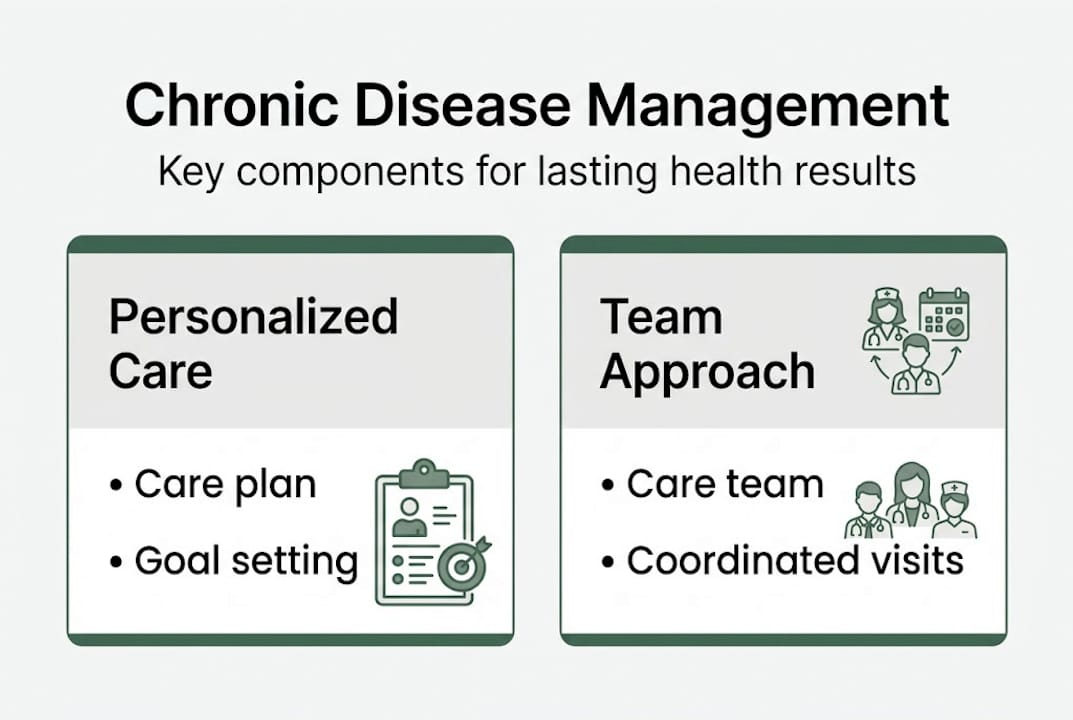
Your physical health is only one piece of the picture. Mental health, stress levels, housing stability, access to healthy food, and social support all shape how well you manage a chronic condition. This is what healthcare professionals call the social determinants of health (SDOH), meaning the non-medical factors that influence health outcomes. A program that ignores these factors will always fall short.
Here is what whole-person care looks like in practice:
- Mental health integration: Screening for depression and anxiety, which are common in people with chronic conditions.
- Nutrition and lifestyle support: Guidance on diet, physical activity, and sleep that fits your real life.
- Community connections: Links to local resources in North Bergen and Secaucus, such as fitness programs, food assistance, and support groups.
- Health literacy tools: Educational materials from trusted sources that help you understand your condition and your options.
- Self-management apps: Mobile tools that help you track symptoms, medications, and appointments.
Our local care programs are designed with these factors in mind, recognizing that the needs of residents in North Bergen and Secaucus are shaped by their community, their schedules, and their lives.
Pro Tip: Before your next appointment, write down the two or three health goals that matter most to you personally, whether that is walking more, sleeping better, or reducing stress. Sharing these with your provider helps shape a plan that you will actually follow.
Evidence, outcomes, and emerging trends in chronic disease care
Understanding the importance of personalization, let's see what actually works based on research and the latest trends.
Case management and multidisciplinary interventions reduce mortality, lower hospitalization rates, decrease potentially inappropriate medications (PIMs), and improve measurable health outcomes. These are not small gains. For someone living with heart failure or uncontrolled diabetes, fewer hospitalizations can mean years of better living.
| Outcome measure | Evidence of improvement |
|---|---|
| Hospital admissions | Reduced with team-based care |
| HbA1c levels (diabetes control) | Improved with structured monitoring |
| Potentially inappropriate medications | Decreased with pharmacist involvement |
| Quality of life scores | Improved in most patient groups |
It is important to be honest about the data. Some research shows mixed results for quality of life improvements, and not every patient subgroup benefits equally. Individual factors such as age, disease severity, and access to care all influence outcomes. This is exactly why personalized approaches outperform generic programs.
Key measures your care team should track include:
- Hospitalization and emergency room visit rates
- Blood sugar and blood pressure control
- Medication adherence and appropriateness
- Self-reported quality of life
- Mental health status
Technology is reshaping what is possible. Remote monitoring devices can send your blood pressure or glucose readings directly to your provider. Big data tools help predict which patients are at highest risk before a crisis occurs. Primary care that reduces hospitalizations is one of the clearest benefits of coordinated chronic care. And medical groups that strengthen community health are proving that local, team-based care delivers results that large, disconnected systems often cannot.
81% of mHealth app users report meaningful health improvements, making digital tools one of the most promising additions to chronic disease management in recent years.
A fresh perspective: Why real chronic disease management goes beyond checklists
Most chronic disease programs are built around checklists. Did the patient get their A1c checked? Did they receive a flu shot? Were their medications reviewed? These things matter, but they are not the whole story.
The real challenge is that shifting from reactive to proactive, whole-person care using big data and risk prediction is where the future of chronic disease management is heading. Cookie-cutter programs underperform because they are designed for the average patient, and no one is average. The person managing diabetes while working two jobs in Secaucus has different barriers than someone retired in North Bergen with a strong support network.
What we have learned is that sustainable improvement happens when care adapts to you, not the other way around. Emotional wellbeing, daily routines, and personal priorities are just as important as lab values. A care plan that fits your life is one you will actually use. We encourage you to explore our full range of care specialties to find the support that matches your specific situation. Real management means your care team knows you, not just your chart.
Next steps: Find personalized chronic disease management near you
Ready to put these concepts into practice? Here is how you can get started locally.
At Garden State Medical Group, we offer a dedicated local chronic care management program built around your individual needs. Our team of physicians, nurses, and care coordinators in North Bergen and Secaucus works together to create a plan that addresses your health goals, not just your diagnosis.
We offer a wide range of comprehensive care programs covering diabetes, heart health, lung health, and more. Our primary care team is here to guide you from your first assessment through every step of your care journey. Contact us today to schedule your personalized consultation and take the first real step toward better health.
Frequently asked questions
What types of conditions benefit from chronic disease management?
Heart disease, cancer, diabetes, and lung disease are among the most commonly managed through coordinated care programs, along with stroke and Alzheimer's disease.
How do digital tools and apps help with chronic disease management?
mHealth apps and telehealth services support self-management and remote monitoring, with 81% of app users reporting meaningful health improvements through consistent digital engagement.
What is a multidisciplinary care team?
It is a group of healthcare professionals including doctors, nurses, and social workers who collaborate to personalize your care management and ensure nothing is missed between visits.
Can chronic disease management programs really reduce hospitalizations?
Yes. Team-based and case-managed care consistently reduces preventable hospital admissions for people living with chronic conditions.
Recommended
- Chronic care management guide: improve your health in 5 steps
- Answering Common Queries About Chronic Care Management | Garden State Medical Group | Garden State Medical Group
- Chronic Care Management | Programs | Garden State Medical Group
- Essential primary care tips to manage chronic conditions
- Ghidul pacientului cu diabet, nutritie, boli metabolice - HELIOS Medical Center - Clinica Medicala Titan - Sector 3
- Yoga para doenças crónicas | IPYM