TL;DR:
- Feeling healthy does not always mean underlying conditions are absent, so routine health screenings are vital for early detection. These tests identify risks or early signs of diseases, enabling timely intervention before symptoms appear, especially for conditions like cancer, hypertension, and diabetes. A personalized approach, guided by your family history, lifestyle, and risk factors, ensures effective preventive care while minimizing potential harms such as overdiagnosis or unnecessary procedures.
Feeling healthy is reassuring, but it does not always mean everything is fine beneath the surface. Consider someone who goes in for a routine checkup with zero complaints and walks out with a referral for a colonoscopy, only to learn they have early-stage colorectal cancer that is fully treatable. That scenario plays out more often than most people realize. Health screening is the use of medical tests to detect diseases or health conditions in people who have no symptoms, making it one of the most effective tools in preventive care today. This guide breaks down what screening involves, which tests matter most, and how to get started right here in North Bergen and Secaucus.
Table of Contents
- What is health screening and how does it work?
- The most common health screening tests explained
- Benefits and evidence: Why regular health screenings matter
- What are the risks of health screening? Nuances everyone should know
- How to access preventive health screenings in North Bergen or Secaucus
- Why the smartest approach is personalized, not one-size-fits-all
- Take control of your health with local preventive screenings
- Frequently asked questions
Key Takeaways
| Point | Details |
|---|---|
| Early detection saves lives | Screening before symptoms appear can catch serious diseases when treatment is most effective. |
| Choose evidence-based tests | Prioritize screenings that have proven benefits, starting at the recommended age and frequency. |
| Personalization matters | Your screening plan should reflect your age, risk factors, and health goals, not a one-size-fits-all checklist. |
| Know the limits | Screening has risks like false positives and overdiagnosis, so discuss options with your provider. |
| Access is local and covered | Most screenings are accessible and often no-cost with insurance through local primary care providers. |
What is health screening and how does it work?
After previewing why early detection is important, let's clarify exactly what health screening means and how it fits into preventive care.
Health screening is a preventive care strategy designed for people who feel well but may be carrying a condition they do not know about yet. The goal is not to diagnose disease outright. Instead, it flags elevated risk or early signs so that follow-up testing or intervention can happen before the condition advances.
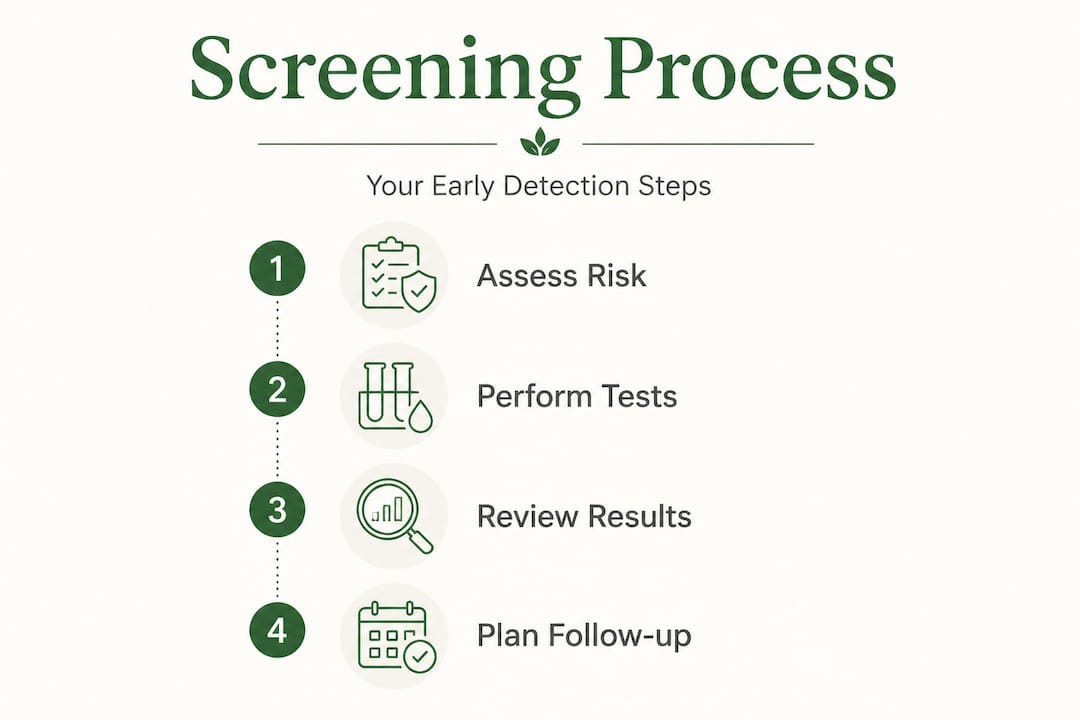
A typical screening appointment might involve several components working together. Your provider will ask about your personal and family medical history, check physical measures like blood pressure and body mass index (BMI), and order lab tests such as cholesterol panels or blood glucose levels. Each piece of information builds a clearer picture of your overall health risk.
It helps to understand two key concepts: sensitivity and specificity. Sensitivity and specificity measure how well a screening test identifies people with a condition versus correctly clearing those who do not have it. A highly sensitive test catches most true cases. A highly specific test avoids false alarms. No test is perfect on both counts, which is why a positive screen typically triggers additional diagnostic testing rather than immediate treatment.
Screening also varies by approach. Mass screening applies a test to an entire population regardless of individual risk, while selective screening targets high-risk groups such as heavy smokers or people with a strong family history of heart disease. Both strategies have their place depending on the condition being screened and the available evidence.
Here is a quick overview of what the typical screening process looks like:
- History review: Discussion of symptoms, lifestyle, medications, and family health history.
- Physical measurements: Blood pressure, weight, BMI, and sometimes waist circumference.
- Lab work: Blood draws for cholesterol, blood sugar, thyroid function, and more.
- Imaging or specialized tests: Mammograms, colonoscopies, or low-dose CT scans for lung cancer.
- Follow-up plan: Clear next steps based on results, whether normal, borderline, or abnormal.
Understanding this process takes much of the mystery out of what happens at a preventive visit and helps you walk in prepared.
The most common health screening tests explained
Now that you know the foundation, let's look at which screening tests make a difference and for whom.
Not every test is right for every person. Screenings are tailored based on age, sex, and personal risk factors. National organizations like the CDC and the U.S. Preventive Services Task Force (USPSTF) publish guidelines that providers use to customize your plan. You can explore a guide to preventive care choices to learn more about how these decisions are made.
Common screening methods include blood pressure checks, cholesterol tests, BMI assessments, cancer screenings like mammograms, Pap smears, colonoscopies, fecal occult blood tests, low-dose CT for lung cancer, and blood tests for diabetes or lipids. The table below summarizes the most widely recommended tests for adults.

| Screening Test | Condition Detected | Recommended Age | Frequency |
|---|---|---|---|
| Blood pressure | Hypertension | 18+ | At every visit |
| Cholesterol panel | Heart disease risk | 35+ (men), 45+ (women) | Every 5 years |
| Blood glucose / HbA1c | Diabetes / prediabetes | 35 to 70 (overweight) | Every 3 years |
| Colorectal cancer screen | Colorectal cancer | 45 to 75 | Every 1 to 10 years (varies by method) |
| Mammogram | Breast cancer | 40 to 74 | Every 2 years |
| Pap smear | Cervical cancer | 21 to 65 | Every 3 to 5 years |
| Low-dose CT (lung) | Lung cancer | 50 to 80 (high-risk smokers) | Annual |
| Bone density (DEXA) | Osteoporosis | 65+ women, younger if high risk | Every 2 years |
Personalized screening schedules for adults follow USPSTF and CDC guidelines, recommending colorectal cancer screening from age 45 to 75, breast cancer screening from 40 to 74 biennially, cervical cancer screening from 21 to 65, and lung cancer screening annually for high-risk individuals aged 50 to 80. Your personal risk factors will move some of those timelines earlier.
Pro Tip: Before your screening appointment, write down your family health history. Note any relatives with heart disease, cancer, diabetes, or other chronic conditions and the ages at diagnosis. Sharing this information with your provider can directly change which tests are ordered and how frequently.
Benefits and evidence: Why regular health screenings matter
Understanding which tests have the biggest impact can help you prioritize your screening routine.
The case for regular screening is built on decades of research and real outcome data. When conditions are caught early, treatment is more effective, less invasive, and far less costly. That applies across cardiovascular disease, diabetes, and several major cancers.
The numbers are convincing. Annual fecal occult blood screening reduced colorectal cancer mortality by 32% over 30 years in a major Minnesota trial, and women who skipped mammography screenings had a 40% higher breast cancer mortality rate over 25 years. These are not small differences. They represent thousands of lives that could be saved with consistent preventive care.
Annual checkups also move the needle on chronic disease management. Regular annual check-ups improved rates of controlled hypertension by 57%, dyslipidemia (high cholesterol) by 58%, and glucose abnormalities by 29% within just one year, with outcomes linked to both lifestyle changes and medication adjustments.
Here is a summary of where the evidence for screening is strongest:
- Colorectal cancer: Significant mortality reduction with fecal occult blood tests and colonoscopies, especially when started at age 45.
- Breast cancer: Mammography substantially lowers the chance of dying from breast cancer when done regularly.
- Hypertension: Blood pressure checks are simple and reliable predictors of stroke and heart disease risk.
- Diabetes: Early detection of prediabetes allows for lifestyle changes that can reverse course entirely.
- Cervical cancer: Pap smears have dramatically reduced cervical cancer deaths since becoming routine in the mid-20th century.
"Catching a condition early does not just mean earlier treatment. It often means simpler, shorter, and less aggressive treatment, with better quality of life throughout."
You can read more about the real financial and health advantages in our article on lowering health costs with preventive care. The bottom line is that skipping screenings tends to cost far more in the long run, both physically and financially.
What are the risks of health screening? Nuances everyone should know
With proven benefits highlighted, it is equally important to recognize potential downsides and controversies in screening.
Screening is genuinely valuable, but it is not without limitations. Being honest about those limitations is part of making good decisions about your health. Not every test is appropriate for every person, and not every positive result means something is actually wrong.
One of the most discussed concerns is overdiagnosis and overtreatment, where conditions are detected and treated that might never have caused harm. In older women, for instance, the harms of breast cancer screening may outweigh the benefits after age 75. Radiation exposure, unnecessary biopsies, and the psychological burden of a false positive are real costs that deserve consideration.
There is also the question of which tests simply do not deliver. General health checks show no reduction in total mortality in randomized controlled trials, and screening for ovarian, prostate, and pancreatic cancers is not broadly recommended due to insufficient evidence of benefit. The USPSTF does not endorse any screening that lacks solid proof it reduces deaths or improves outcomes.
USPSTF guidelines are designed to carefully weigh benefits against harms, though some experts note that evidence limitations can make those trade-offs difficult to judge clearly. General cardiovascular disease risk screening in low-risk populations, for example, has shown no meaningful mortality reduction at the population level.
Here are the key risks to keep in mind when considering any screening:
- False positives: A test result that flags disease when none exists, leading to unnecessary follow-up, anxiety, and sometimes invasive procedures.
- False negatives: A result that misses an actual condition, creating a false sense of security.
- Overdiagnosis: Identifying conditions that would never have caused symptoms or shortened life, yet still trigger treatment with its own risks.
- Radiation exposure: Relevant for imaging tests like mammograms and low-dose CT scans, particularly with repeated use over many years.
- Psychological impact: Waiting for results or receiving an abnormal finding is stressful, even when it turns out to be nothing serious.
Pro Tip: Always ask your provider a direct question before agreeing to a test: "Based on my age, health, and family history, is this test likely to help me more than it could harm me?" That one question opens a valuable conversation.
You can also explore local health program options to understand what services are available near you and how they fit into a thoughtful preventive care plan.
How to access preventive health screenings in North Bergen or Secaucus
Being informed is only part of the picture. Here is how you can actually put these insights into practice in your community.
Getting started with screening is more straightforward than many people think. The key is working through a primary care provider who knows your full health picture and can guide your decisions based on national guidelines. Preventive care services under the Affordable Care Act are covered without a copay when they follow national guidelines and are delivered in-network, making cost much less of a barrier than it used to be.
Follow these steps to access preventive screenings locally:
- Schedule a primary care visit. If you do not have a regular provider, now is the time to establish one. A primary care physician coordinates all aspects of your preventive care.
- Bring your health history. Include medications, past test results, and your family health history. This information directly shapes your screening plan.
- Ask about covered tests. Request a list of screenings appropriate for your age and risk profile. Ask which ones are covered under your insurance plan.
- Verify your insurance benefits. Call your insurance provider or check your member portal. Most insurance coverage for screenings includes recommended preventive services at no cost to you when delivered in-network.
- Follow up on results. Do not assume no news is good news. Confirm that you received all results and understand what each one means.
- Schedule your next visit. Prevention is ongoing. Set a reminder for your next annual visit before you leave the office.
Learning how to check insurance coverage for primary care in New Jersey helps you avoid surprise bills and ensures you are using all the benefits available to you. Local residents in North Bergen and Secaucus can also access preventive services locally through community-based providers who follow the same national clinical guidelines.
Why the smartest approach is personalized, not one-size-fits-all
You have learned the evidence, benefits, and logistics. Now, let's step back and consider a smarter way to approach your screening journey.
There is a common assumption that more screening equals better health. The evidence does not support that idea. What the evidence does support is targeted, thoughtful screening based on who you are, not just how old you are. Benefits of routine screenings are real and proven for conditions like colorectal and breast cancer, but those benefits are disease-specific and test-specific. They do not automatically extend to every test available.
We believe the most effective screening plan is built around your individual story. Your family history, your lifestyle, your current health status, and your values all matter. Someone with a first-degree relative diagnosed with colon cancer at age 40 needs a different plan than someone with no relevant family history. A longtime smoker needs different screenings than a lifelong non-smoker. Generic "head-to-toe annual screens" can give patients false confidence while adding little real value.
What actually works is an ongoing partnership with a provider you trust, someone who reviews your history year after year and adjusts your screening plan as the evidence evolves and as your life changes. That is what primary care does at its best. You can read more about personalizing preventive care and what that looks like in practice.
Think of your screening plan less like a checklist and more like an evolving conversation. Each visit builds on the last. Over time, your provider accumulates a detailed understanding of your health that no single test or appointment can capture alone.
Take control of your health with local preventive screenings
Understanding the value of health screenings is the first step. The next step is acting on it with the right support in your corner.
At Garden State Medical Group, our primary care services in North Bergen and Secaucus are built around exactly this kind of personalized, evidence-based preventive care. Our physicians take the time to understand your individual risk profile and recommend only the screenings that genuinely serve your health. We also offer specialized programs, including our diabetes prevention programs for patients at elevated risk, and on-site diagnostic testing and radiology services to make follow-up convenient and coordinated. Schedule your preventive care visit today and start building a screening plan that is right for you.
Frequently asked questions
What kinds of health screenings do I need as a healthy adult?
Recommendations depend on age, sex, family history, and risk factors. Common tests include blood pressure, cholesterol, diabetes, and cancer screenings tailored to your profile.
Is screening covered by insurance in New Jersey?
Many preventive screenings are covered with no out-of-pocket costs when they follow national guidelines and are performed in-network through your plan.
Do health screenings have risks?
Yes. False positives, overdiagnosis, and unnecessary treatment are real possibilities, so discussing which tests genuinely fit your health profile with your provider is important.
Where can I access screenings if I live in North Bergen or Secaucus?
Start with a local primary care provider who can advise you, place referrals, and verify your insurance coverage all in one place.
Why are some screening tests not recommended for everyone?
Not all screenings reduce mortality, and some tests carry harms that outweigh their benefits in certain groups, which is why individual targeting is essential.
Recommended
- Types of Preventive Care: Your Guide to Better Health | Garden State Medical Group
- Your Preventive Health Checklist: Take Charge of Wellness
- Why join health programs: better health, savings, prevention
- Learn the Importance of Having a Regular Health Checkup | Garden State Medical Group | Garden State Medical Group
- Gene therapy screening: A step-by-step guide for rare disease trials
- Gut Health Testing & Consultation Explained – Victory Serums