
TL;DR:
- Many families in North Bergen and Secaucus overlook accessible family health programs, leaving benefits unclaimed. NJ FamilyCare offers comprehensive, low-cost coverage for preventive, chronic, and behavioral healthcare, with eligibility based on residence, income, and immigration status. Connecting with local agencies, care managers, and providers enhances health outcomes and ensures continuous support beyond insurance enrollment.
Navigating family health programs can feel overwhelming, especially when you're not sure where to start or whether your family even qualifies. Many families in North Bergen and Secaucus assume these programs are only for people in extreme financial hardship, or that the paperwork is too complicated to bother. That assumption leaves real benefits unclaimed. The truth is that New Jersey offers well-structured, accessible programs covering everything from routine checkups to chronic disease management, and local families are far more likely to qualify than they realize. This guide walks you through what's available, how eligibility works, and how to use these programs effectively.
Table of Contents
- Understanding health coverage for families in NJ
- Eligibility: Who qualifies and how to apply
- Preventive care services: What families receive
- Chronic condition support and coordinated care
- What's changing in 2026 and beyond: Policy updates and local impact
- Our perspective: The overlooked power of local collaboration in family health
- Next steps: Get support and specialized care for your family
- Frequently asked questions
Key Takeaways
| Point | Details |
|---|---|
| Comprehensive coverage available | NJ FamilyCare provides preventive and chronic care for qualifying families, including check-ups, screenings, and coordinated disease management. |
| Eligibility is broad and flexible | Many North Bergen and Secaucus families qualify based on income and residency—even without an asset test in most cases. |
| Local support makes a difference | Health departments and local coalitions help families enroll and manage care for stronger, lasting health outcomes. |
| Upcoming policy changes matter | Families should prepare for potential 2027 work requirements and renewal changes to ensure continued coverage. |
| Personalized guidance is available | Providers, care managers, and community resources offer direct help with navigation, care planning, and applications. |
Understanding health coverage for families in NJ
Now that you know help is available, let's clarify exactly what health programs exist for families in your area.
New Jersey's flagship family health program is NJ FamilyCare, which serves as the state's combined Medicaid and CHIP (Children's Health Insurance Program) offering. NJ FamilyCare provides free or low-cost comprehensive coverage for eligible NJ families, including children, pregnant women, parents, and certain adults. The program is funded jointly by the state and federal government, which is why it can cover such a broad range of services at little to no cost to enrollees.
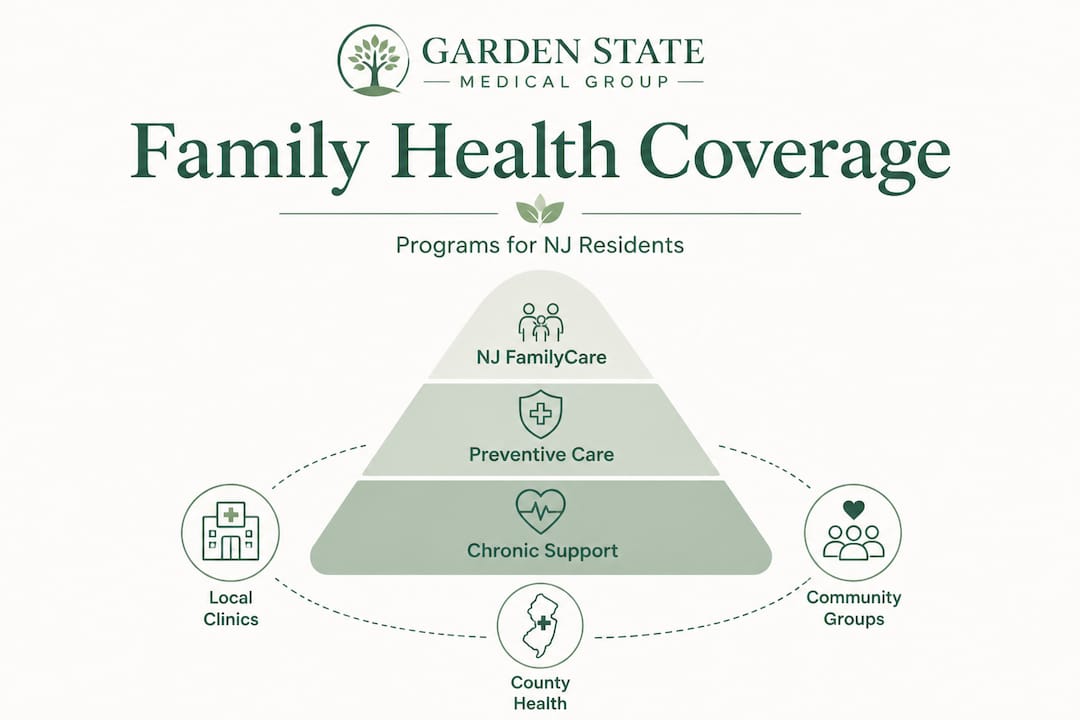
When it comes to health coverage, two categories matter most: preventive care and chronic care support. Preventive care includes annual wellness visits, vaccinations, cancer screenings, and dental checkups. The goal is to catch problems early before they grow serious. Chronic care support, on the other hand, addresses ongoing conditions like diabetes, asthma, high blood pressure, and heart disease. Both categories fall under NJ FamilyCare, which is what makes it so valuable for families managing different health needs at the same time.
Beyond the state program, local resources also play a significant role. County health departments and community coalitions help families connect with services that go beyond what insurance alone can offer. For North Bergen residents, Hudson County's health department coordinates outreach and enrollment assistance. Bergen County families near Secaucus benefit from similar programs through Bergen County's Office of Health Services. Understanding how these NJ coverage tips overlap helps you avoid gaps in care.
Here is a quick look at how NJ FamilyCare service categories break down:
| Service Category | Examples | Who It Covers |
|---|---|---|
| Preventive care | Well-child visits, vaccines, screenings | Children and adults |
| Chronic disease management | Diabetes, asthma, COPD programs | All covered members |
| Behavioral health | Counseling, substance use treatment | Children and adults |
| Dental and vision | Cleanings, exams, eyeglasses | Children (adults vary by plan) |
| Pharmacy | Prescription medications | All covered members |
Key advantages of NJ FamilyCare worth knowing:
- Coverage is available year-round, with no specific open enrollment window
- Eligibility can change with your income or family size at any time
- Many services cost nothing out of pocket for qualifying families
- You can check insurance coverage and compare plan options before enrolling
Eligibility: Who qualifies and how to apply
With an understanding of what's available, the next step is determining if your family qualifies and how to start.
Eligibility for NJ FamilyCare is based on NJ residency, citizenship or immigration status, and income thresholds by family size. You must live in New Jersey and intend to remain in the state. U.S. citizens and many qualified immigrants are eligible. Some immigration statuses require a five-year waiting period before qualifying for full Medicaid, though emergency Medicaid may still be available during that period.
Income eligibility is measured against the Federal Poverty Level (FPL), which is a figure the federal government updates each year based on family size and household income. Here's how income thresholds generally break down for NJ FamilyCare:
| Group | Income Limit (% of FPL) |
|---|---|
| Children (under 19) | Up to 355% FPL |
| Pregnant women | Up to 205% FPL |
| Parents and caretakers | Up to 138% FPL |
| Expansion adults (ages 19–64) | Up to 138% FPL |
One important detail: NJ FamilyCare uses Modified Adjusted Gross Income (MAGI) rules, which means there is no asset test for most applicants. You don't have to sell your car or empty your savings account to qualify. What matters is your household income relative to family size.
How to apply:
- Visit the official NJ FamilyCare website or call 1-800-701-0710 to start your application
- Gather your Social Security numbers, proof of income (pay stubs or tax returns), and proof of NJ residency
- Submit your application online through NJ Medicaid's portal, by phone, by mail, or in person at a county welfare agency
- Wait for a determination letter, which typically arrives within 45 days
- Once approved, choose a managed care plan from the available options in your county
Pro Tip: If your income fluctuates seasonally or you recently had a change in household size, apply as soon as that change happens. Eligibility can be backdated in some cases, meaning you could receive coverage for recent medical bills.
For families uncertain about eligibility, checking out practical enrollment tips from local health providers can save time and reduce confusion. Certified Application Counselors (CACs) are available throughout Hudson and Bergen Counties at no cost to you.
Edge cases worth flagging: mixed-status families (where some members are citizens and others are not) can still enroll eligible members individually. Foster children, pregnant teens, and individuals aging out of foster care also have special eligibility rules that may expand their access to coverage.
Preventive care services: What families receive
Once you confirm eligibility, here's what your family can expect for preventive health coverage.
NJ FamilyCare covers preventive care like check-ups, vaccines, screenings, and dental and vision services. These are not small benefits. For a growing family, these services add up to thousands of dollars in care each year. And they serve a critical purpose: catching problems before they become expensive or dangerous.
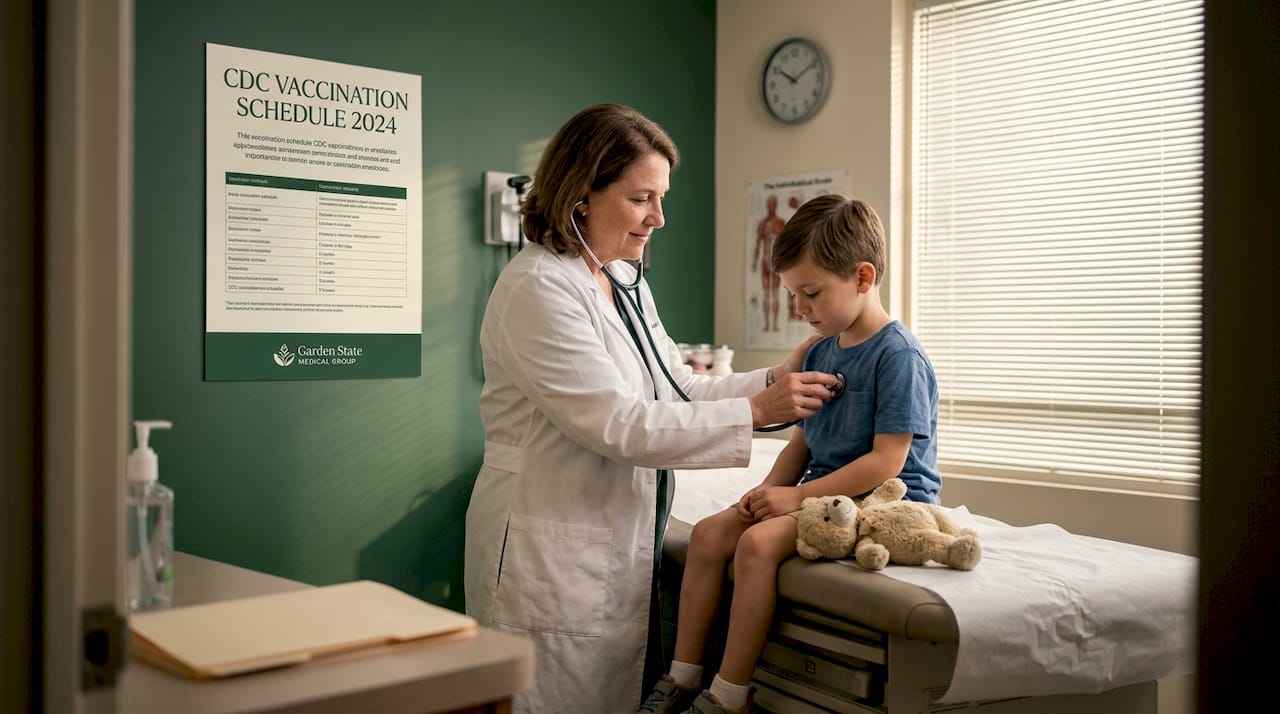
For children, well-child visits follow the American Academy of Pediatrics schedule. That means visits at birth, 2 weeks, 2 months, 4 months, 6 months, 9 months, 12 months, and so on through adolescence. Each visit includes a physical exam, developmental screening, and appropriate vaccinations. Hearing and vision screenings are also included. If a problem is identified at one of these visits, referrals to specialists are typically covered as well.
For adults, annual wellness visits are covered without cost-sharing. These visits allow your doctor to check blood pressure, cholesterol, blood sugar, and other key indicators. Screenings like mammograms, colonoscopies, and cervical cancer tests are included at recommended intervals. Women of childbearing age also receive reproductive health services as part of preventive coverage.
Preventive services worth knowing about:
- Childhood immunizations, including the flu vaccine, MMR, and varicella
- Blood pressure and cholesterol screenings for adults
- Diabetes prevention screening for adults at risk
- Dental cleanings and exams for children (adult dental varies by plan)
- Vision exams and eyeglasses for children
You can find preventive services near North Bergen and Secaucus by contacting local providers who accept NJ FamilyCare. Understanding the types of preventive care available helps you stay ahead of potential health issues rather than reacting to them after the fact.
A key statistic: Research consistently shows that adults who receive annual preventive visits are significantly more likely to catch chronic diseases at an early, treatable stage. Early detection saves both lives and healthcare costs. Your primary care options in North Bergen and Secaucus include providers who specialize in coordinating all of these services under one roof.
Pro Tip: Don't skip the annual visit just because you feel healthy. Many serious conditions, including high blood pressure and prediabetes, produce no symptoms in early stages. A routine visit is your best tool for catching these before they cause harm.
Chronic condition support and coordinated care
Preventive care keeps families healthy, but managing chronic conditions is equally key for long-term well-being.
NJ FamilyCare offers chronic management programs covering diabetes, asthma, and COPD (chronic obstructive pulmonary disease) using care managers and evidence-based guidelines. These are not generic resources. A care manager assigned to your family will review your medical history, help you understand your medications, and create a personalized care plan that fits your daily life.
Care managers serve as the link between you, your doctors, specialists, and community services. They schedule appointments, follow up after hospitalizations, and help you understand what your coverage includes. Families dealing with diabetes, for example, can receive nutrition counseling, glucose monitoring education, and referrals to local community programs that offer ongoing support. For asthma patients, care managers coordinate with schools and employers when needed.
"Managing a chronic condition doesn't mean just taking medication. It means understanding your condition, having a team around you, and knowing where to turn when things change." This collaborative model is what distinguishes effective chronic care from one-size-fits-all treatment.
On the community side, the Bergen-Hudson Chronic Disease Coalition coordinates community resources for chronic diseases among families in the region. This coalition brings together hospitals, community health centers, and social service agencies to create a connected safety net for patients. Rather than depending entirely on clinical staff, the coalition model recognizes that housing, nutrition, transportation, and social support all affect health outcomes.
Chronic conditions covered and supported locally:
- Diabetes: Self-management education, dietary support, and medication management
- Asthma: Environmental assessments, inhaler training, and school coordination
- Heart disease: Cardiac monitoring, lifestyle counseling, and specialist referrals
- High blood pressure: Medication oversight, nutrition guidance, and regular monitoring
- COPD and lung disease: Pulmonary rehabilitation, oxygen management, and specialty care
Reviewing the full chronic care guide can help your family understand what coordinated support looks like in practice. Families in Secaucus and North Bergen can also explore the dedicated chronic care program offered locally. For broader context on state coverage, the Medicaid chronic care NJ resource is a strong starting point. Local health programs also align with these services to strengthen community support.
What's changing in 2026 and beyond: Policy updates and local impact
While current programs are robust, state and federal policy changes could impact family eligibility and benefits.
Starting January 2027, certain parents will face new work requirements and more frequent renewals under Medicaid policy. This means that parents in the Medicaid expansion group may need to document employment, volunteering, or school enrollment to maintain eligibility. This is a significant shift from current policy, where coverage does not depend on activity requirements.
Renewals are also expected to become more frequent. Currently, most NJ FamilyCare members renew annually. New federal proposals could increase that frequency, requiring families to submit documentation more often. Missing a renewal deadline can cause a coverage gap, even if the family is still eligible.
Key steps families should take now:
- Review your current NJ FamilyCare plan and confirm your household income is correctly documented
- Update your mailing address and contact information with NJ FamilyCare to avoid missing renewal notices
- Ask your care manager or local enrollment counselor about anticipated changes specific to your situation
- Understand which work requirement exemptions apply to you, such as disability, caregiving responsibilities, or student status
- Contact your local county welfare office for help if your situation is complex
Pro Tip: Don't wait for a renewal notice. Log into your NJ FamilyCare account or call the helpline annually to confirm your status and make updates proactively. For detailed staying covered tips, your local provider's office can often help you prepare well before changes take effect.
Families with mixed immigration status, recent job changes, or complex living arrangements should seek help from a certified enrollment counselor as early as possible. Policy transitions create real risk for coverage gaps, but families who prepare in advance are far less likely to lose access.
Our perspective: The overlooked power of local collaboration in family health
The most important insight we can share is this: coverage is necessary, but it is not sufficient. Families who navigate these programs most successfully are not the ones who simply enrolled in NJ FamilyCare. They are the ones who connected with a care team, engaged with local coalitions, and built relationships with providers who know their specific health history.
When providers, families, and agencies work together, the results are measurably better. That isn't just an opinion. Local coalitions value collaboration as key to family health outcomes, not just access alone. What this means for you is that calling a care manager, attending a community health event, or simply keeping your annual appointment creates a network effect that strengthens your family's health over time.
There is a persistent misconception in healthcare that if you have insurance, you have everything you need. In reality, insurance is the entry point. The real value comes from the human support on the other side: the care manager who calls to check in after your child's asthma flare-up, the coalition worker who connects you with a free nutrition class, or the physician who notices a pattern in your annual labs that signals an early intervention is needed.
Our advice is direct: don't rely solely on insurance reps and paperwork to guide your care. Connect with your clinical team. Engage with the Medicaid community support structures available to your family. These relationships are what turn a health program into actual health outcomes.
Next steps: Get support and specialized care for your family
If you're ready to put this knowledge into action, here are trusted local options for your family's next health step.
Families in North Bergen and Secaucus have access to a connected range of health services, all designed to work together. Whether you're enrolling in NJ FamilyCare for the first time or managing an existing chronic condition, knowing where to turn makes all the difference.
At Garden State Medical Group, our team offers primary care services for patients of all ages, coordinating preventive visits, screenings, and referrals in one convenient location. For families dealing with ongoing health challenges, our chronic care management program pairs you with dedicated support to help manage conditions like diabetes, asthma, and heart disease. Browse our full range of family health programs to find the services that best match your family's needs. We accept most major insurance plans, including NJ FamilyCare, and our offices in North Bergen and Secaucus are here to serve your community.
Frequently asked questions
What preventive services are included in NJ FamilyCare for children and adults?
NJ FamilyCare covers annual check-ups, immunizations, screenings, dental, and vision for children and adults, with most services available at no cost to qualifying members.
How do I know if my family qualifies for NJ FamilyCare?
Eligibility depends on NJ residency, citizenship or legal immigration status, and your household income relative to the federal poverty level, with no asset test required for most applicants.
Can NJ FamilyCare help with chronic conditions like diabetes or asthma?
Yes, NJ FamilyCare provides disease management programs, assigned care managers, and coordinated support specifically designed for families managing chronic conditions like diabetes, asthma, and COPD.
What changes are coming to NJ FamilyCare in 2026 and beyond?
Starting January 2027, some parents in the Medicaid expansion group must meet work requirements and renew coverage more frequently, making it critical to document your eligibility status proactively.
Where can families in North Bergen and Secaucus find help with enrollment?
Local hospitals, the Secaucus Health Department, and provider offices like Garden State Medical Group help with applications and connect families with local coalition resources that support enrollment and ongoing care.