TL;DR:
- Health programs are proactive supports that help all adults stay well and catch issues early.
- Participation can significantly reduce emergency visits, lower costs, and improve health outcomes.
- Even high-risk and complex patients benefit from tailored programs that provide coordinated, ongoing care.
Most adults in North Bergen and Secaucus assume health programs are reserved for people already battling serious illness. That assumption costs them. 76.4% of US adults have at least one chronic condition, meaning the vast majority of people reading this are already at risk, whether they know it or not. Structured health programs are not just disease management tools. They are proactive frameworks that help you stay well, catch problems early, and reduce long-term costs. This article walks you through exactly what these programs offer, who they serve, and why joining one could be one of the most practical health decisions you make this year.
Table of Contents
- Understanding health programs: What are they and who can benefit?
- Tangible benefits: Improved outcomes, fewer hospital visits, and lower costs
- Prevention and early intervention: Why proactive action matters
- Complex and high-risk cases: Targeted program advantages for those most in need
- What most people miss: Taking the first step is easier and more rewarding than you think
- Explore local health programs: Step forward with confidence
- Frequently asked questions
Key Takeaways
| Point | Details |
|---|---|
| Most adults benefit | Health programs support everyone, not just those with diagnosed conditions. |
| Cost and ER reductions | Participation can lower ER visits by 60% and save thousands annually. |
| Prevention maximizes health | Early screenings and lifestyle changes lead to long-term health gains. |
| High-risk cases, greater impact | Those with multiple health issues see the biggest improvements and savings. |
| Accessible local solutions | Local health programs are easy to join and offer expert-guided support. |
Understanding health programs: What are they and who can benefit?
Having introduced why chronic conditions affect most adults, let's clarify what health programs are and how they serve a wide range of needs.
A health program is a structured, coordinated plan that supports your physical well-being through regular monitoring, education, screenings, and care coordination. These programs are not limited to people with serious diagnoses. Many are designed specifically for adults who want to stay ahead of potential health problems before they become serious.
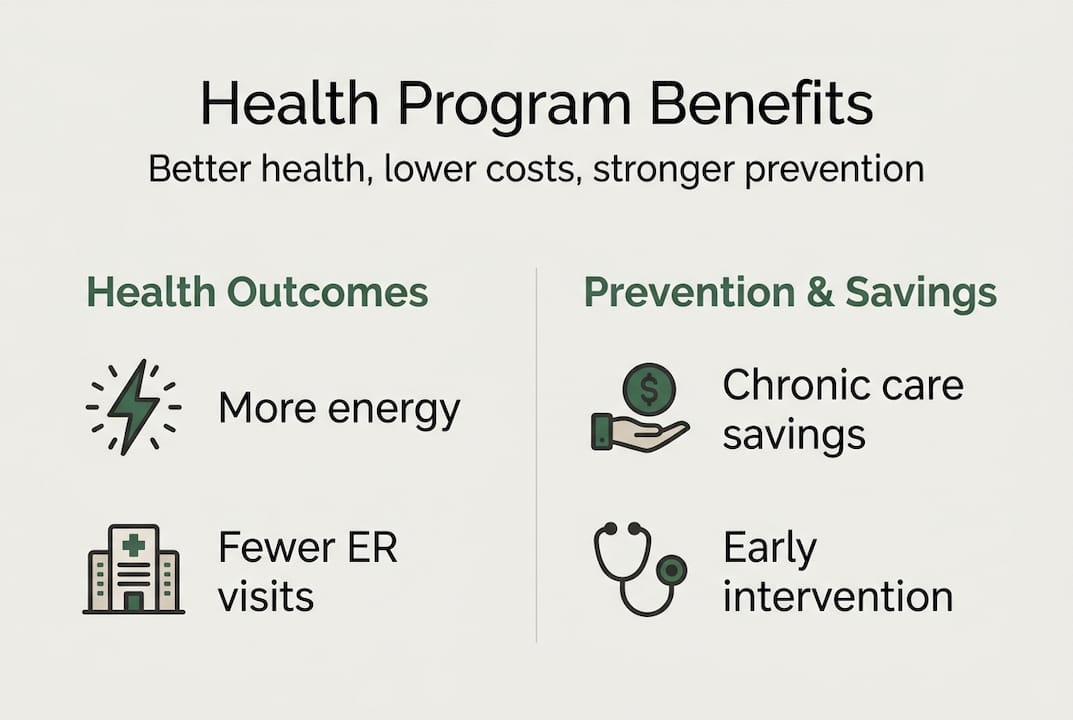
Locally, local health programs in North Bergen and Secaucus cover a wide range of needs, from diabetes prevention and education to chronic care management and cardiopulmonary support. Each program connects you with a care team that tracks your progress, answers your questions, and adjusts your plan as your health evolves.
Who qualifies? The short answer is: most adults. You do not need a diagnosis to benefit. Many programs welcome participants who simply have risk factors, such as a family history of diabetes, elevated blood pressure, or a sedentary lifestyle. Preventive screenings are available at no cost under the Affordable Care Act for eligible adults, making early participation financially accessible.
Here is a quick look at the types of programs available and what they offer:
- Diabetes prevention programs: Designed for adults with prediabetes or elevated risk, focused on lifestyle changes that delay or prevent onset.
- Chronic care management (CCM): Coordinated support for adults managing two or more chronic conditions, including regular check-ins and care planning.
- Cardiopulmonary programs: Targeted support for heart and lung health, including monitoring and education.
- Weight management programs: Structured guidance on nutrition, activity, and behavioral change.
- Bone health programs: Screening and education to reduce fracture risk, especially for older adults.
Pairing program participation with regular checkups creates a strong foundation for long-term health.
Research shows that chronic conditions are rising among young, midlife, and older adults alike, making structured health programs relevant across every age group, not just for seniors.
The key insight here is that health programs meet you where you are. Whether you are managing a diagnosed condition or simply trying to reduce your risk, there is a program designed for your situation.
Tangible benefits: Improved outcomes, fewer hospital visits, and lower costs
Once you know who can benefit, it's vital to see what health programs actually accomplish for participants.
The evidence is clear and specific. A prospective cohort trial published in AJMC found that chronic care management and case management reduced emergency room visits by 60%, improved blood sugar control (measured by A1C levels), and saved an average of $8,568 per patient annually, net of program costs. Those are not marginal improvements. Those are life-changing results.
For residents of North Bergen and Secaucus managing conditions like hypertension, diabetes, or heart disease, chronic care management provides the kind of consistent, coordinated support that prevents small problems from becoming expensive crises.
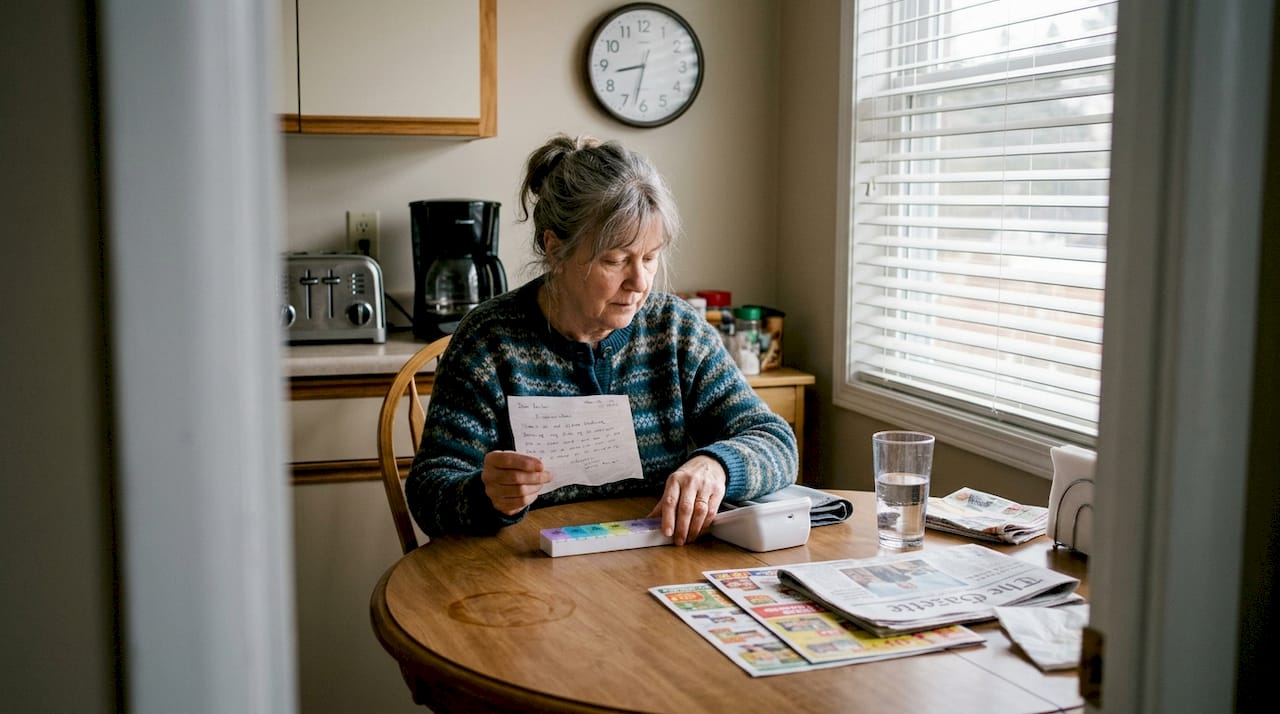
Here is a side-by-side look at typical outcomes:
| Outcome | With health program | Without health program |
|---|---|---|
| Emergency room visits | Reduced by up to 60% | Higher frequency |
| Annual cost per patient | Savings of ~$8,568 | Higher out-of-pocket costs |
| Blood sugar control (A1C) | Measurably improved | Often inconsistent |
| Care coordination | Proactive and regular | Reactive and fragmented |
| Health literacy | Significantly improved | Variable |
Understanding the steps involved in chronic care management helps you set realistic expectations and stay engaged with your care plan from the start.
The financial angle matters too. Many people avoid health programs because they assume they cost more than they save. The data says otherwise. When you factor in avoided ER visits, fewer hospitalizations, and better-managed prescriptions, program participation pays for itself many times over.
Pro Tip: To get the most from any health program, show up consistently. Regular engagement, not just enrollment, is what drives the biggest improvements in outcomes and cost savings. Think of it like physical therapy: attendance determines results.
Primary care plays a central role here as well. Research on primary care's role in preventing hospitalizations shows that coordinated primary care is one of the strongest predictors of avoiding unnecessary emergency care.
Prevention and early intervention: Why proactive action matters
Beyond immediate health improvements, prevention and catching issues early are major benefits. Here's why that matters.
Prevention is not just a buzzword. It is a measurable strategy with documented results. The Diabetes Prevention Program (DPP), one of the most studied public health interventions in the US, found that lifestyle interventions reduced diabetes incidence by up to 58% in high-risk adults. Over the long term, participants experienced a 24% reduction in diabetes incidence and extended their diabetes-free survival by 3.5 years compared to control groups.
Those numbers represent real years of better health, fewer medications, and lower medical bills.
Here is how you can start engaging with preventive care right now:
- Schedule a risk assessment. Talk to your primary care provider about your personal risk factors for diabetes, heart disease, and other chronic conditions.
- Access free screenings. Free preventive screenings are available under the ACA for blood pressure, cholesterol, diabetes, and more.
- Enroll in a prevention program. If you have prediabetes or elevated risk, the diabetes prevention program offers structured lifestyle support.
- Track your progress. Use program check-ins to monitor changes in weight, blood pressure, and lab values over time.
- Apply lifestyle changes consistently. Small, sustainable changes in diet and activity compound into significant long-term health gains.
Here is a summary of DPP long-term outcomes:
| Timeframe | Diabetes incidence reduction | Additional benefit |
|---|---|---|
| Short-term (program active) | Up to 58% | Outperforms metformin |
| Long-term follow-up | 24% sustained reduction | 3.5 extra diabetes-free years |
Practical lifestyle tips for diabetes control can complement your program participation and help you maintain momentum between appointments.
Pro Tip: Do not wait for a diagnosis to act. If your last checkup showed borderline numbers for blood sugar or blood pressure, that is your signal to engage with a prevention program now, not later. Early action consistently produces better outcomes than delayed treatment.
Complex and high-risk cases: Targeted program advantages for those most in need
For participants facing greater challenges, health programs offer even more tailored, meaningful advantages.
If you are managing multiple chronic conditions, dealing with social barriers like limited transportation or housing instability, or have a history of frequent hospitalizations, structured health programs are designed with you specifically in mind. These are the patients who benefit most, and the data backs that up.
Research from the AJMC prospective cohort trial confirms that high-risk patients see greater savings, with cost reductions proportional to their prior healthcare spending. In plain terms, the more complex your situation, the more a well-structured program can help you.
What makes these programs effective for high-risk individuals?
- Personalized case management: A dedicated care coordinator who knows your history, tracks your progress, and advocates for your needs across providers.
- Coordinated care across specialties: Your primary care provider, specialists, and program team communicate with each other, reducing gaps and duplicated efforts.
- Proactive outreach: Programs reach out to you between visits, catching warning signs before they escalate.
- Social support integration: Some programs connect participants with community resources for transportation, nutrition, and mental health support.
- Medication management: Regular reviews of your prescriptions help avoid dangerous interactions and ensure you are taking medications correctly.
Access to chronic care for complex needs means you are not navigating your health alone. You have a team working alongside you.
"The patients who come in with the most complex needs are often the ones who see the fastest turnaround once they are enrolled in a structured program. Consistent support changes outcomes." This reflects the experience of care teams working with high-risk populations in community-based settings.
Exploring programs for complex cases in your area gives you a clearer picture of what coordinated, relationship-based care actually looks like in practice.
What most people miss: Taking the first step is easier and more rewarding than you think
Having examined who benefits most, it's worth rethinking how accessible health programs really are.
Here is something we hear often from patients: "I didn't think I was sick enough to join a program." That thinking keeps people on the sidelines until a crisis forces their hand. The reality is that most participants in structured health programs are not in crisis when they start. They are adults who decided to act before things got worse.
The returns come quickly. Within the first few months, many participants report better sleep, more energy, clearer understanding of their lab results, and reduced anxiety about their health. These are not dramatic medical breakthroughs. They are the natural result of having a plan and a team behind you.
Another thing most people overlook: program coordinators do the heavy lifting for you at the start. You do not need to figure out which screenings to get or which specialist to see. That guidance is built into the program. Reviewing common chronic care management questions before your first appointment can help you feel prepared and confident walking in.
Incremental steps work. You do not have to overhaul your entire lifestyle in week one. Sustainable progress, supported by a care team, is what produces lasting results.
Explore local health programs: Step forward with confidence
Ready to move from information to action? Here's how local programs can help you thrive.
At Garden State Medical Group, we offer structured programs designed specifically for adults in North Bergen and Secaucus who want real results, whether that means managing an existing condition or staying ahead of one. Our primary care services form the foundation of coordinated, personalized care for every patient.
If you are living with multiple chronic conditions, our chronic care management program provides the consistent, coordinated support that reduces ER visits and improves daily quality of life. For those at risk for diabetes, our diabetes prevention program offers evidence-based lifestyle support that has been proven to delay or prevent onset. Reach out to our team today to find the right program for your needs and take a confident step toward better health.
Frequently asked questions
Are health programs only for people already diagnosed with chronic conditions?
No. Many health programs offer preventive care and early screenings for everyone, not just those with a diagnosis. Preventive screenings are free under the ACA for eligible adults, making early participation accessible regardless of your current health status.
What financial benefits can I expect from participating in a health program?
Participants in coordinated care programs can see ER visits drop by 60% and save up to $8,568 per year, net of program costs, based on prospective cohort research.
How effective are diabetes prevention programs compared to medication?
Lifestyle interventions reduce new cases by up to 58%, which outperforms medication like metformin in head-to-head comparisons from long-term DPP research.
Do high-risk or complex cases gain extra advantage from health programs?
Yes. High-risk patients see greater savings and improved outcomes, with cost reductions proportionate to their prior healthcare spending, making these programs especially valuable for those with complex needs.
What steps should I take to get started with a health program locally?
Contact your primary care provider or reach out directly to Garden State Medical Group to discuss available programs based on your health history, risk factors, and personal goals.
Recommended
- Lung Health Program | Programs | Garden State Medical Group
- Our Programs | Garden State Medical Group
- Garden State Medical Group | Comprehensive Healthcare in NJ | Garden State Medical Group
- Diabetes Prevention and Education Program | Programs | Garden State Medical Group
- Blog Articles | Chameleon
- 7 Ways to Take Better Care of Yourself in the New Year