TL;DR:
- Medical groups provide preventive screenings, community outreach, and chronic disease management services.
- They partner with local organizations to improve health outcomes and reach underserved populations.
- Patients can engage easily through websites, events, and primary care providers for personalized care.
Many residents in North Bergen and Secaucus assume a medical group is just a place you visit when you're sick. That picture is incomplete. Medical groups today run free screenings, manage chronic conditions across specialties, and partner with local organizations to improve neighborhood health outcomes. In Hudson County, free mobile health services like EKGs and cholesterol checks are already reaching residents who might otherwise go without care. This guide breaks down exactly what medical groups do, how they shape community health, and how you can make the most of what's available right in your backyard.
Table of Contents
- What is a medical group and why does it matter?
- Key ways medical groups support community health
- Community partnerships and health education
- Personalized care: Chronic condition management and prevention
- How to engage with your local medical group
- A fresh perspective: Why community-powered healthcare matters more than you think
- Connect with a trusted local medical group
- Frequently asked questions
Key Takeaways
| Point | Details |
|---|---|
| Medical groups go beyond clinics | They support the community with education, free screenings, and chronic disease programs. |
| Community partnerships matter | Collaborations between medical groups and local organizations increase access to preventive care and education. |
| You can engage directly | Residents in North Bergen and Secaucus can easily access and benefit from local medical group resources. |
| Personalized support for chronic care | Medical groups help you manage ongoing conditions with coordinated, patient-centered services. |
What is a medical group and why does it matter?
A medical group is a team of physicians and other healthcare providers who work together under one organization to deliver coordinated patient care. Unlike a solo practice where one doctor handles everything, a medical group gives you access to multiple providers, often across different specialties, all sharing your health records and communicating with each other. That coordination matters more than most people realize.
Understanding what medical groups do helps you use them more effectively. There are several common types:
- Primary care groups: Focus on everyday health, prevention, and managing common conditions.
- Specialty groups: Concentrate on areas like cardiology, pulmonology, or orthopedics.
- Hospital-affiliated groups: Tied to a larger hospital system, often emphasizing community-wide health programs and population health management.
- Direct primary care (DPC) models: Operate outside traditional insurance, offering personalized access for a flat monthly fee.
Each model has trade-offs. Hospital-affiliated groups tend to prioritize broad community interventions, while DPC models focus on deep, personalized relationships but may limit how many patients they serve. Primary care groups sit in the middle, balancing direct patient care with preventive programming.
For you as a patient, the biggest benefit of a medical group is seamless care. Your primary care doctor can refer you to a cardiologist or diabetes educator within the same network, and everyone stays on the same page. You spend less time repeating your health history and more time getting the care you actually need.
Pro Tip: Ask your medical group about their full provider network. Many offer specialty consultations, free health programs, and community screenings that patients never hear about simply because they didn't ask.
Key ways medical groups support community health
Understanding their basic structure allows us to see the specific ways medical groups impact local health. The role of a medical group extends well beyond the exam room.
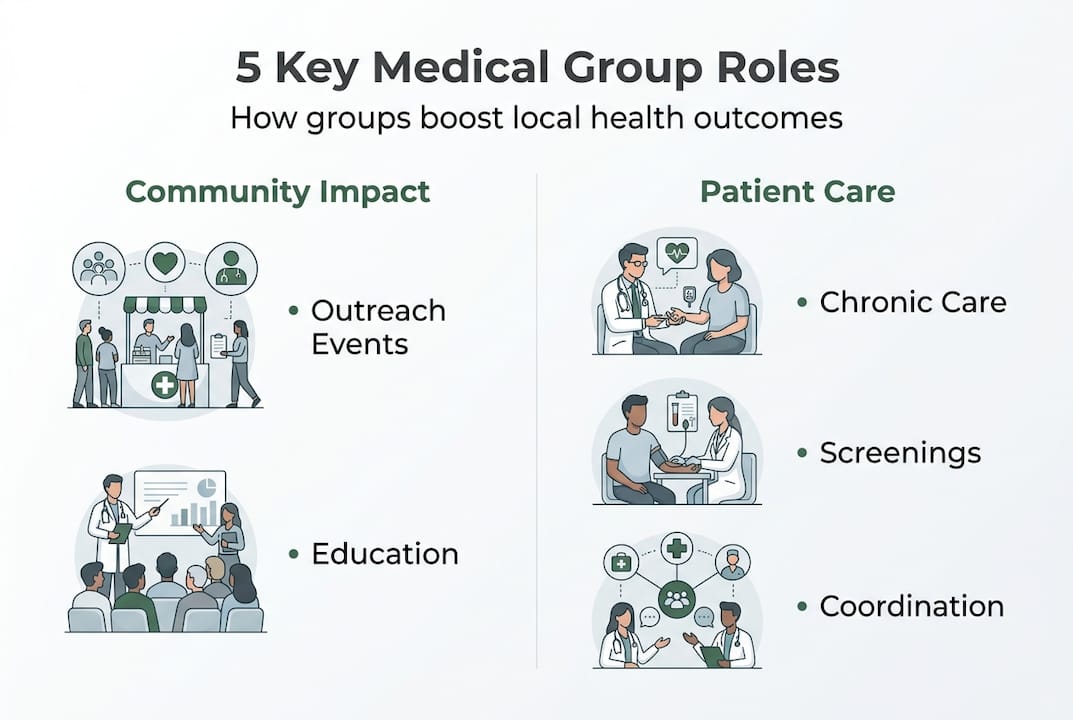
Here are five outreach services that local medical groups commonly provide:
- Free preventive screenings for blood pressure, cholesterol, and blood sugar levels.
- Health education workshops covering topics like nutrition, diabetes prevention, and heart health.
- Chronic disease management programs with follow-up calls and personalized care plans.
- Rapid response support during local health crises, such as vaccination drives or outbreak education.
- Mobile health units that bring services directly to neighborhoods with limited access.
A strong example of this is already happening nearby. HRH's Mobile Health Unit provides free EKGs, blood pressure checks, and cholesterol screenings to local residents, bringing care directly to the people who need it most.
The benefits of preventive health programs are well documented. Early detection saves lives and reduces costly emergency care. When a medical group runs these programs consistently, the whole community gets healthier over time.
Here's a quick comparison of how different group types approach community outreach:
| Type | Primary focus | Outreach examples |
|---|---|---|
| Primary care group | Direct patient care | Screenings, education classes |
| Hospital-affiliated group | Population health | Mobile units, community events |
| Direct primary care (DPC) | Personalized access | One-on-one prevention planning |
You can stay informed about community outreach efforts in your area by checking local medical group websites and signing up for newsletters. These programs are often free and designed for people exactly like you.
Community partnerships and health education
Beyond hands-on medical care, partnerships expand a group's reach and deepen their role in community well-being. Medical groups rarely work alone. Their impact grows significantly when they collaborate with schools, nonprofits, town governments, and local foundations.
Common partner organizations include:
- Public schools hosting health fairs and vision or hearing screenings for students.
- Nonprofit organizations co-sponsoring free community wellness events.
- Local government agencies coordinating vaccination programs and public health campaigns.
- Faith communities providing trusted spaces for health education outreach.
Medical groups like HRH work with foundations to bring free educational and screening services directly to residents, removing barriers like transportation and cost that often keep people from seeking care.
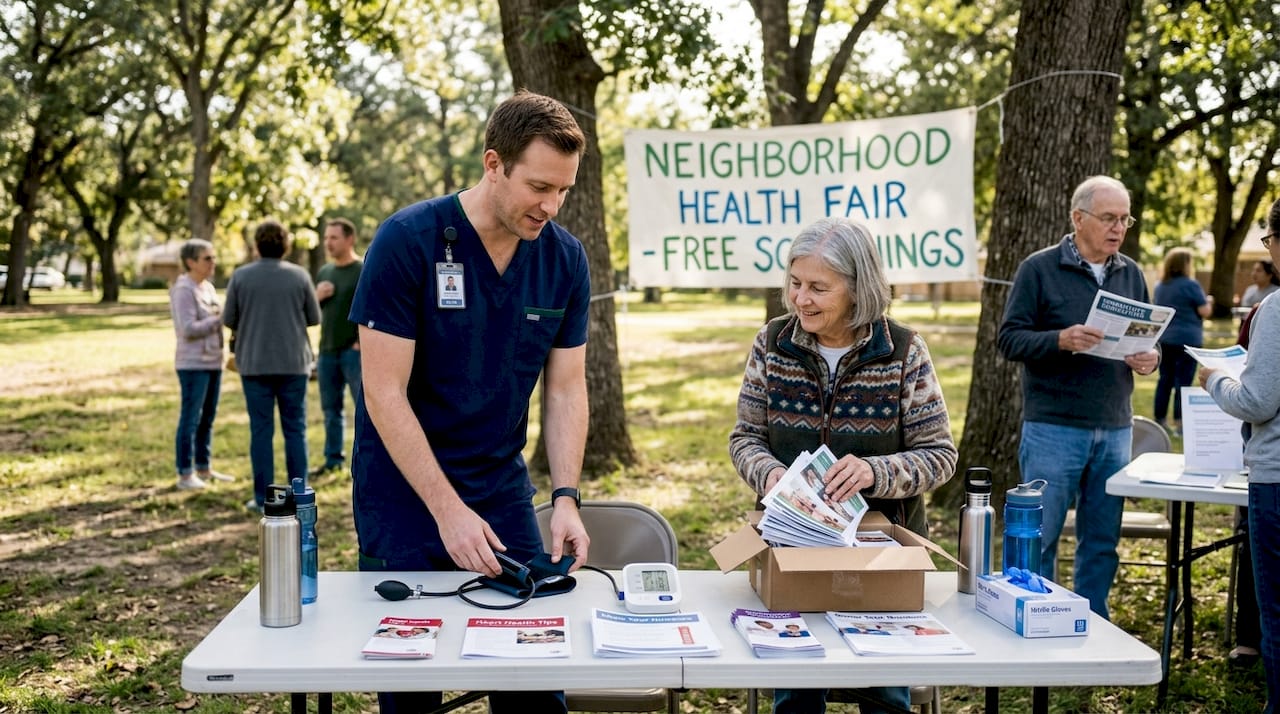
Here's a look at what community health partnerships can accomplish:
| Activity | Estimated reach | Benefit |
|---|---|---|
| Free screening event | 50 to 200 residents | Early detection of risk factors |
| Health education workshop | 20 to 80 attendees | Improved awareness and behavior change |
| Mobile health unit visit | 30 to 150 residents | Access for underserved populations |
"When healthcare comes to the community instead of waiting for the community to come to it, more lives are reached and more conditions are caught early."
The direct impact of these partnerships is real. Residents who attend a free blood pressure screening may discover a problem they didn't know existed. A parent who hears a nutrition talk at their child's school may change the whole family's eating habits. These ripple effects are hard to measure but impossible to ignore. Explore local health programs to see what's currently available near you.
Personalized care: Chronic condition management and prevention
Empowering the community doesn't stop at group events. Individual support for chronic health concerns is just as critical. For residents managing conditions like diabetes, high blood pressure, or heart disease, a medical group offers something a single doctor's visit cannot: coordinated, ongoing care.
Core chronic care services that medical groups typically offer include:
- Regular blood pressure and blood sugar monitoring to track trends over time.
- Diabetes counseling and education to help patients manage their condition day to day.
- Medication management reviews to prevent dangerous interactions or missed doses.
- Follow-up calls between visits to check in on progress and address early concerns.
- Specialist referrals within the same network for seamless transitions in care.
Mobile health units and programs focus on both preventive education and chronic disease screenings, making it easier to catch problems before they escalate. The goal is to keep you out of the emergency room by staying ahead of potential complications.
For those managing or at risk for diabetes, diabetes education and prevention programs offer structured support that goes far beyond a pamphlet. These programs teach practical skills, from reading food labels to monitoring blood sugar, that make a real difference in daily life.
When choosing where to get ongoing care, choosing primary care services that include chronic care coordination can significantly reduce hospitalizations and improve your quality of life.
Pro Tip: Stay in touch with your care team even between visits. A quick call or message about a new symptom can prevent a small issue from becoming a serious one.
How to engage with your local medical group
Now that you know what's available, here's how to make these resources work for you and your family. Getting involved with your local medical group doesn't require a health crisis. You can start today, even if you feel perfectly fine.
Here are five simple ways to connect and participate:
- Visit the group's website to browse programs, events, and specialty services available near you.
- Call the main office and ask specifically about free screenings or community health programs.
- Schedule a primary care visit and use that appointment to ask about chronic care or prevention programs.
- Sign up for email updates or follow the group on social media to hear about upcoming events.
- Bring a family member to screenings or education events so they benefit too.
Local medical group programs are often free or low-cost and are designed to be easily accessible to all community members, regardless of insurance status. There's no reason to wait until something goes wrong.
When you attend an event or meet with a provider, come prepared. Ask about what screenings are recommended for your age group, whether there are programs for your specific health concerns, and how to stay connected between visits.
Getting started with primary care is often the first and most important step. A primary care provider becomes your guide through the entire healthcare system.
Pro Tip: Bring a written list of your personal health goals to any screening or program. Sharing those goals helps providers tailor their advice to what actually matters to you.
A fresh perspective: Why community-powered healthcare matters more than you think
There's a common assumption that bigger always means better in healthcare. Larger hospital systems have more equipment, more specialists, and more name recognition. But size doesn't automatically translate to better outcomes for everyday residents.
A well-connected local medical group often spots health trends faster than a sprawling system can. When providers in North Bergen or Secaucus see a rise in uncontrolled blood pressure among their patients, they can respond with targeted education and outreach within weeks, not months. That speed matters.
What often gets overlooked is the role patients play. When you show up to a screening, share your health concerns openly, and follow through on referrals, you're not just helping yourself. You're giving your care team the information they need to serve the whole community better.
The evidence supports this. Reducing avoidable hospital visits is one of the clearest outcomes of strong primary and community care. Local groups that know their patients personally are simply better positioned to prevent the kind of crises that land people in emergency rooms.
Don't underestimate what a local, engaged medical group can do when patients show up and participate.
Connect with a trusted local medical group
Ready to put community-powered healthcare into practice? Here's how Garden State Medical Group can help.
Garden State Medical Group serves residents in North Bergen and Secaucus with a full range of primary care services, from routine checkups to preventive screenings. If you or a family member is managing a long-term condition, our chronic care management programs are designed to keep you supported between visits. We also offer structured diabetes prevention education for those at risk or newly diagnosed. Whether you're looking to get ahead of a health concern or simply stay well, we're here to help you take that first step. Reach out today to learn more about our programs and schedule your visit.
Frequently asked questions
What types of free screenings do local medical groups offer?
Local groups like HRH provide free EKGs, blood pressure, and cholesterol screenings to community members at no cost, often through mobile health units or community events.
How do medical groups improve chronic disease management?
They coordinate checkups, education and medication management across providers to support day-to-day health and catch problems early before they require emergency care.
Can anyone attend community health events organized by medical groups?
Yes, most events are open to all local residents. Programs are free or low-cost and designed to be accessible regardless of insurance coverage or income level.
How do I find programs my local medical group offers?
Check your group's website, call their main office, or ask during your next primary care visit for a full list of available programs and upcoming events.
What's the difference between a medical group and a hospital?
A medical group is a team of physicians and providers working together in a coordinated practice, while a hospital is a facility primarily designed for serious, surgical, or emergency care.
Recommended
- Understanding medical groups: what patients need to know
- Why join health programs: better health, savings, prevention
- 3 Benefits of Choosing Family Medicine for Your Health Care - What to Know | Garden State Medical Group | Garden State Medical Group
- Understanding primary care: your gateway to better health
- Top 5 GraceHCS.com Alternatives in 2026 for Innovative Healthcare Solutions | Graceland Hospice Care Blog