
TL;DR:
- Proactive preventive care involves regular visits, screenings, medication reviews, and lifestyle support.
- Building a strong patient-provider relationship and tracking health data improve care consistency.
- Addressing care gaps early and involving patients in decision-making enhances health outcomes.
Managing your health proactively is one of the most effective things you can do, especially when you are living with a chronic condition. Yet many patients in North Bergen and Secaucus find themselves caught in a cycle of reactive care, addressing problems only after they become serious. Preventive care gaps still affect a significant share of adults, even as wellness visit rates have improved in recent years. This guide walks you through a practical, step-by-step preventive care workflow so you can stay ahead of health issues, close care gaps, and build habits that last well beyond your next appointment.
Table of Contents
- What you need for an effective preventive care workflow
- Step-by-step: How to execute a preventive care workflow
- Closing care gaps: Ensuring coverage and avoiding mistakes
- Verifying your results and sustaining healthy habits
- A fresh perspective: Person-centered workflows beyond the metrics
- Get support for preventive care workflow at Garden State Medical Group
- Frequently asked questions
Key Takeaways
| Point | Details |
|---|---|
| Build your workflow | Start with routine check-ins and organize your preventive care steps for best results. |
| Close care gaps | Review your screenings and medication history regularly to ensure nothing is missed. |
| Monitor progress | Track your health outcomes and adapt your workflow based on your doctor’s feedback. |
| Empower your choices | Personalize workflows with shared decision-making for more effective preventive care. |
| Seek support locally | Access programs and specialists in North Bergen and Secaucus to sustain your preventive care plan. |
What you need for an effective preventive care workflow
Before you can build a reliable preventive care routine, you need the right tools and support in place. Think of this as your foundation. Without it, even the best intentions tend to fall apart between visits.
The first thing you need is access to your complete health records. This includes past lab results, vaccination history, medication lists, and any specialist notes. Many practices now offer patient portals where you can view and download this information. If your provider in North Bergen or Secaucus uses one, make sure you are registered and know how to use it.
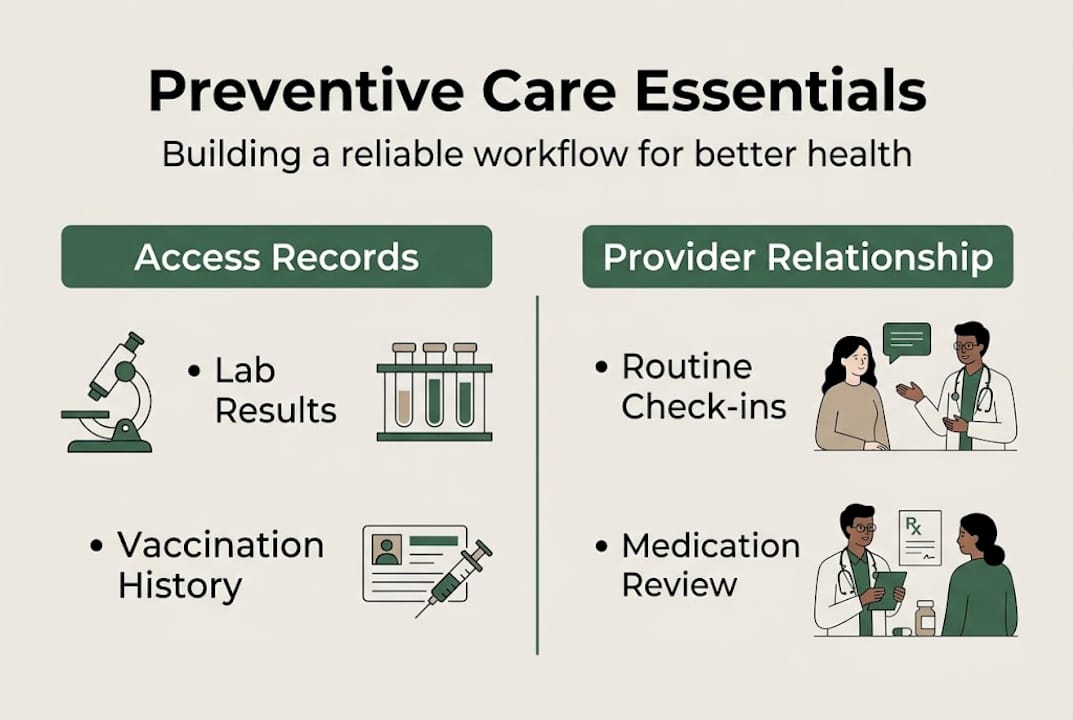
Next, you need a consistent relationship with a primary care provider. Routine check-ins, labs, medication reviews, preventive screenings, and lifestyle counseling are all core components of a preventive care workflow, and your primary care doctor is the person who coordinates all of these for you. Good primary care tips can also help you manage chronic conditions more effectively between visits.
Here is an overview of the core workflow components and what you are responsible for as a patient:
| Workflow component | Provider responsibility | Your responsibility |
|---|---|---|
| Routine check-ins | Schedule and conduct visits | Attend and report symptoms honestly |
| Lab monitoring | Order and interpret results | Fast if required, follow up on results |
| Medication review | Assess and update prescriptions | Track side effects, refill on time |
| Preventive screenings | Recommend based on age and risk | Complete screenings as scheduled |
| Lifestyle counseling | Provide guidance and resources | Apply changes between visits |
You will also want to confirm that your insurance covers preventive services. Most plans under the Affordable Care Act cover annual wellness visits and many screenings at no cost to you. Transportation and medication refill access are two other factors that often get overlooked but can make or break your consistency.
Pro Tip: Before each visit, write down your top three questions or concerns. Knowing how to maximize your doctor visit means you leave with clear answers, not more confusion.
Local patients in North Bergen and Secaucus have access to nearby labs, imaging centers, and specialty programs that can make building this foundation much easier.
Step-by-step: How to execute a preventive care workflow
Once you have gathered the essentials, here is how to put your workflow into action step by step.
Step 1: Schedule your baseline appointment. Start with a comprehensive wellness visit. Your provider will review your medical history, assess your current health status, and identify which screenings you are due for.
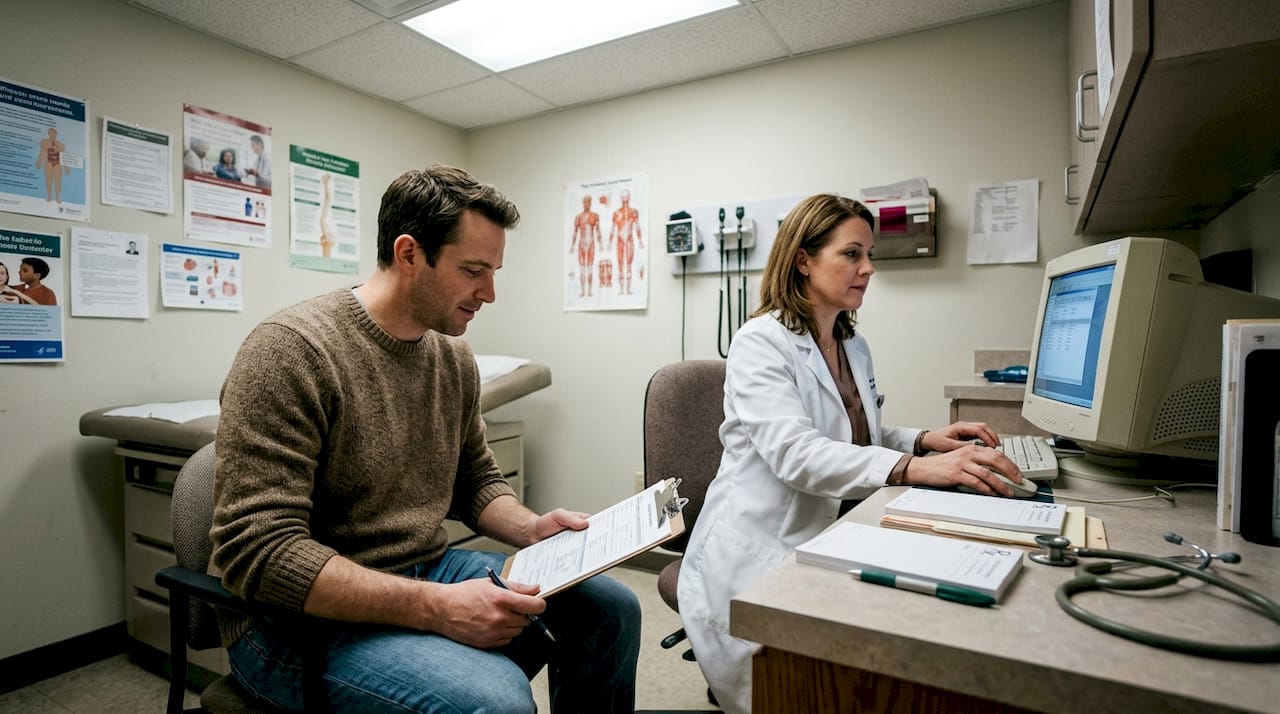
Step 2: Review vitals and lab results. At each visit, your blood pressure, weight, blood sugar, and cholesterol should be checked. Lab values give your provider a clear picture of what is happening inside your body, not just what you feel.
Step 3: Update your medications. Medication reviews are essential, especially if you are managing a chronic condition. Your provider checks for interactions, adjusts doses, and ensures you are on the most effective regimen. Review your chronic care management FAQs if you have questions about how this process works.
Step 4: Complete recommended screenings. Based on your age, sex, and health history, your provider will recommend screenings such as colonoscopies, mammograms, or A1C tests. Do not skip these. Early detection is where preventive care pays off most.
Step 5: Attend lifestyle counseling. Nutrition, exercise, stress management, and sleep all affect your chronic conditions. Your care team can connect you with resources that fit your life in North Bergen or Secaucus.
Primary care workflows typically include routine check-ins every 3 to 6 months for patients managing chronic conditions, with vitals review, lab monitoring, medication review, and lifestyle counseling at each visit.
Here is a quick comparison of self-monitoring versus provider-led follow-up:
| Approach | Best for | Limitation |
|---|---|---|
| Self-monitoring | Daily tracking, symptom logs | Cannot replace clinical assessment |
| Provider-led follow-up | Lab interpretation, med changes | Limited to scheduled visit windows |
The chronic care improvement steps you take between visits matter just as much as what happens in the exam room. Tracking your blood pressure at home or logging your meals gives your provider better data to work with.
Pro Tip: Use a simple notebook or a free health app to log your readings, symptoms, and medication times between visits. This makes your next appointment far more productive.
The financial case for staying consistent is strong. Research shows that every dollar spent on preventive care can generate a return of $5.60 to $45 in avoided costs. That is a return worth taking seriously.
Closing care gaps: Ensuring coverage and avoiding mistakes
Executing a workflow is only half the work. Closing gaps and keeping on track is where real results begin.
A care gap is any recommended service you have not yet received. These gaps are more common than most people realize. Care gap closure workflows target high-impact gaps such as cancer screenings and blood pressure control using process mapping and targeted outreach.
Common types of care gaps include:
- Screening gaps: Overdue mammograms, colonoscopies, or diabetic eye exams
- Chronic condition gaps: Uncontrolled blood pressure, poorly managed A1C levels
- Demographic gaps: Disparities in access based on income, language, or insurance status
- Medication gaps: Prescriptions not filled or not taken as directed
"Identifying a care gap is not a failure. It is an opportunity to course-correct before a small issue becomes a serious one. The goal is not perfection but consistency."
If you have missed an appointment or a screening, do not wait until your next scheduled visit to address it. Call your provider's office and ask to reschedule as soon as possible. Many practices in North Bergen and Secaucus now use reminder systems and outreach calls to help patients stay on track.
Disparities in care access are a real challenge. Patients from lower-income households or those with limited English proficiency often face more care gaps. Preventive care statistics confirm that these disparities persist even when overall access improves. Knowing this can help you advocate for yourself or a family member who may be falling through the cracks.
Learning how to access preventive health services in North Bergen and Secaucus is a practical first step. You can also explore primary care service options to understand what is available for your family.
Verifying your results and sustaining healthy habits
With your workflow and gap-closure strategies in motion, the next focus is tracking outcomes and sustaining your proactive health habits.
Reviewing your progress regularly keeps you motivated and helps your care team make better decisions. Here are some practical ways to do that:
- Track your checkup completion rate: Note which visits and screenings you completed each quarter
- Monitor lab value trends: Compare your A1C, cholesterol, or blood pressure readings over time
- Log symptoms between visits: Patterns in how you feel can reveal a lot before labs even confirm it
- Review medication adherence: Are you taking medications consistently and on schedule?
Wellness visit completion rates remain below 30% for many adult populations, which means most people are not getting the consistent care their health requires. You can be part of the group that does.
Pro Tip: Set a recurring monthly reminder on your phone to review your health log and confirm your next appointment is scheduled. This small habit prevents the most common cause of care gaps, which is simply forgetting.
Over time, consistent preventive care reduces hospitalizations, lowers the risk of emergency interventions, and gives you more confidence in managing your own health. Understanding primary care as an ongoing relationship rather than a one-time fix is what makes this work.
As your health changes, so should your workflow. A person-centered workflow adapts to your evolving needs rather than staying fixed on a rigid schedule. Talk to your provider about updating your care plan at least once a year.
A fresh perspective: Person-centered workflows beyond the metrics
Most guides on preventive care focus on what to do. This one also wants to address why so many people still fall short, even when they know what is expected of them.
Automated reminders, patient portals, and digital tracking tools have made workflows more efficient. But efficiency is not the same as effectiveness. Automation boosts efficiency in care workflows, yet quality improvement shows limited uptake when person-centered shared decision-making is missing from the process.
What that means for you is this: a workflow that your provider designed without your input is one you are less likely to follow. The best preventive care plans are built together, with your daily life, your values, and your specific challenges factored in.
"Patients in North Bergen and Secaucus who feel heard and involved in their care decisions are far more likely to stay consistent with their preventive routines."
This is not just a feel-good idea. It is backed by outcomes data. When patients understand the reason behind each step in their workflow, adherence improves significantly. Pair that with primary care tips tailored to your situation, and you move from passive compliance to genuine ownership of your health.
Pro Tip: At your next visit, ask your provider to explain the purpose of each item on your care plan. If something does not make sense for your life, say so. A good provider will adjust.
Get support for preventive care workflow at Garden State Medical Group
If you are ready to put these strategies into action, expert support is close by.
At Garden State Medical Group, our teams in North Bergen and Secaucus are experienced in helping patients build and maintain effective preventive care workflows. Whether you are starting from scratch or trying to close existing care gaps, our primary care specialty provides the coordinated, ongoing support you need. For patients managing chronic conditions, our chronic care management program offers structured check-ins and personalized care plans. If diabetes prevention is a priority, our diabetes prevention program gives you the tools and guidance to take control. Reach out today to schedule your first step.
Frequently asked questions
How often should I schedule preventive care checkups?
Most patients should schedule checkups every 3 to 6 months, though the right frequency depends on your age, risk factors, and any chronic conditions you are managing. Your provider will recommend a schedule based on your specific situation.
What are the main steps in a preventive care workflow?
The main steps include scheduling regular visits, reviewing your vitals and lab results, updating medications, completing recommended screenings, and following through on lifestyle counseling. Each step builds on the last to create a consistent care routine.
How do I know if there are care gaps in my preventive care?
You can identify care gaps by reviewing your screening history and comparing it against recommended guidelines for your age and health profile. Your provider should help you spot and address these gaps during your checkups, often using audit and targeted outreach.
What is the benefit of following a preventive care workflow?
Consistent preventive care reduces hospitalizations, helps catch conditions early, and supports better long-term health. Research shows that $1 in prevention can return $5.60 to $45 in avoided healthcare costs, making it one of the smartest investments you can make in your own wellbeing.
Do preventive care workflows address disparities?
Workflows can help bridge access gaps, but disparities persist across income levels and racial groups and require targeted community outreach to fully address. Advocating for yourself and asking your provider about available resources is an important first step.
Recommended
- Why join health programs: better health, savings, prevention
- Essential primary care tips to manage chronic conditions
- How to access preventive health services in North Bergen
- Routine Visits To Your Doctor - Find Problems Before They Start | Garden State Medical Group | Garden State Medical Group
- Why preserving medical history empowers your health: 5 key benefits | MedFiles.ai