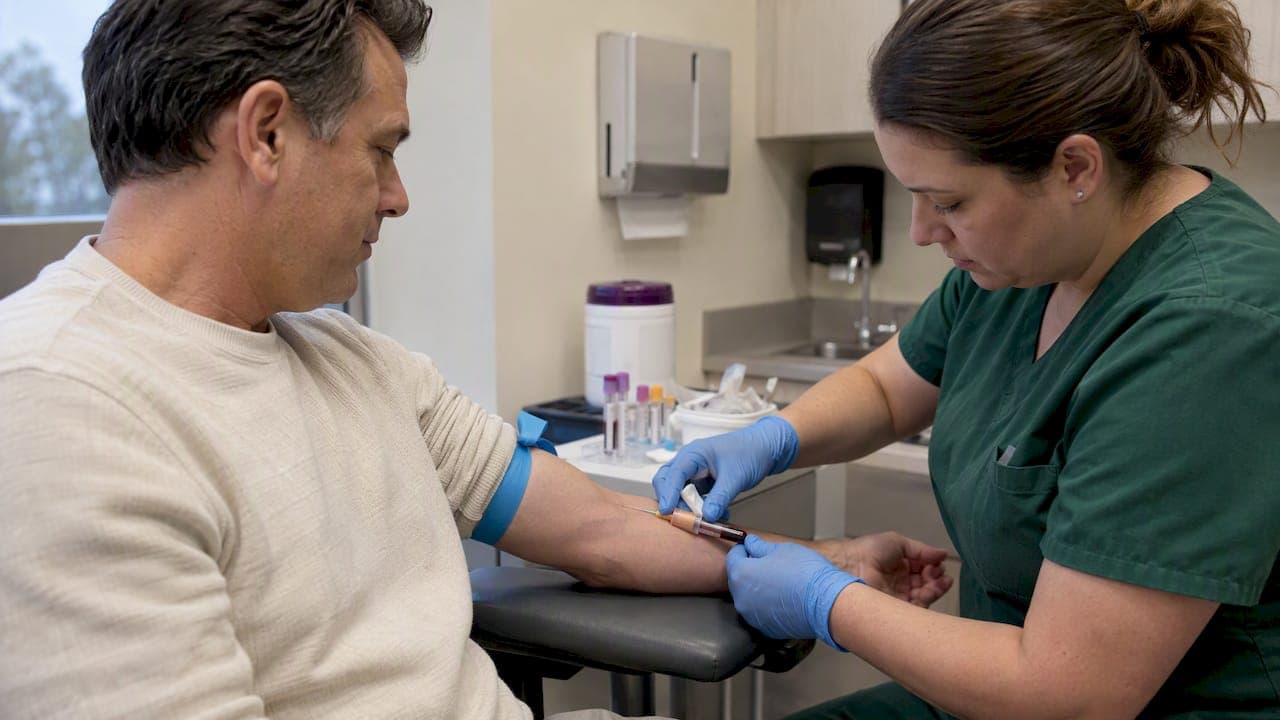
An anti-HBs level of 10 mIU/mL or higher, checked 1 to 2 months after you finish the hepatitis B vaccine series, means you're protected. For most healthy adults, that protection holds for decades, and routine booster shots aren't recommended once you've completed the series. If your number comes back below 10 mIU/mL and you fall into a higher-risk category, your clinician will usually talk with you about retesting or revaccination rather than assuming the vaccine failed.
TL;DR:
- The full hepatitis B panel combines surface antigen, surface antibody, and core antibody to distinguish immunity, susceptibility, and infection; isolated core antibody results need evaluation.
- Postvaccination testing is recommended for health care workers at risk, dialysis patients, immunocompromised people, exposed household or sexual contacts, and infants born to infected mothers.
- When a high risk person tests below threshold, clinicians may give one extra dose and retest, or repeat the series after no response.
- The two dose adult schedule finishes in one month, versus six months for the standard three dose schedule, helping people complete vaccination sooner.
- A recent vaccine dose can briefly alter surface antibody results, while clinicians generally wait several months after hepatitis B immune globulin before testing.
Table of Contents
- What Anti-HBs Measures and How to Read Your Lab Report
- How Hepatitis B Vaccines Work and the Schedules You'll See
- Duration of Protection, Waning Antibodies, and Immune Memory
- Who Needs Post-Vaccination Testing or Boosters
- Reading the Triple Hepatitis B Panel: Patterns and What They Mean
- Special Populations, Nonresponders, and Altered Protocols
- How to Get Tested and What to Bring to Your Appointment
- How Hepatitis B Genotypes Affect Immunity and Vaccine Protection
- Hepatitis B Immunity Testing During Pregnancy
- Global Immunity Patterns and What They Mean for Screening
- Our Approach to Confirming Hepatitis B Immunity
- Confirm Your Hepatitis B Immunity With Our Team
- FAQ
- Sources
What Anti-HBs Measures and How to Read Your Lab Report
Your hepatitis B lab panel can include up to three markers, and each one tells a different story. HBsAg (hepatitis B surface antigen) signals active infection. Total anti-HBc (core antibody) shows whether you've ever been exposed to the actual virus. Anti-HBs (surface antibody, sometimes called HBsAb) is the one that reflects protection, whether that protection came from the vaccine or from recovering from a past infection.
Labs report anti-HBs in milli-international units per milliliter, written as mIU/mL. This unit lets results be compared consistently across labs and countries. The Pink Book from the CDC identifies 10 mIU/mL or greater, measured 1 to 2 months after completing the vaccine series, as the accepted threshold for protective immunity. That timing matters: test too early and you might catch your antibody response before it peaks; test too late and a declining titer can look misleadingly low even in someone whose immune memory is intact.
A vaccinated person with a healthy immune response typically shows a specific pattern: HBsAg negative, anti-HBs positive, and anti-HBc negative. That last marker is the giveaway. Since the vaccine contains no core antigen, a negative anti-HBc alongside a positive anti-HBs tells you the protection came from the shot, not from a past brush with the virus.
A single anti-HBs number rarely tells the whole story on its own. Context matters:
- Your vaccination history, including how many doses you completed and when
- Whether you belong to a group where testing timing or interpretation differs, such as people on dialysis
- Any history of exposure or symptoms suggesting past infection, which changes how a low titer should be read
How Hepatitis B Vaccines Work and the Schedules You'll See
Hepatitis B vaccines use a recombinant form of the surface antigen, HBsAg, grown in yeast cells rather than extracted from actual virus. Your immune system sees this protein, builds antibodies against it, and, just as important, creates memory B cells and T cells that can recognize the real virus later and respond quickly.
Two licensed schedules are common for adults:
- The standard 3-dose series, given at 0, 1, and 6 months
- The HepB-CpG option (brand name Heplisav-B), a 2-dose series given at 0 and 1 month
The ACIP review documented in MMWR found that HepB-CpG produces high seroprotection in adults using just two doses, and the committee recommended it as an adult option on that basis. The appeal is practical as much as immunological: a two-visit schedule finishes in a month instead of half a year, which matters for anyone who has struggled to complete a longer series or who needs protection established quickly, such as before travel or a new job with occupational exposure risk.
Duration of Protection, Waning Antibodies, and Immune Memory
This is where a lot of people get confused by their own lab results, and it's worth slowing down here. Anti-HBs levels naturally decline over years, sometimes dropping below the 10 mIU/mL threshold even in people who responded well to vaccination. A falling number on a repeat test doesn't automatically mean your protection is gone.
Protection from a completed hepatitis B vaccine series persists for multiple decades, and likely for life, in the general immunocompetent population, according to the WHO hepatitis B fact sheet. That's why routine booster doses aren't recommended for healthy adults who completed their primary series.
The explanation is immune memory. Even after circulating antibody levels fall, memory B cells remain on standby. When they encounter the virus, they trigger what's called an anamnestic response, essentially the immune system remembering its training and ramping antibody production back up within weeks. Research summarized in ACIP's historical guidance on hepatitis B found that a large majority of vaccine responders retested years after their liters dropped below 10 mIU/mL still mounted this rapid anamnestic response when re-challenged, usually within 2 to 4 weeks.

Practically, this means breakthrough infections in vaccinated, immunocompetent adults are uncommon, and when they do occur, they're typically mild or asymptomatic rather than the kind of illness seen in someone with no immunity at all. Your immune system caught it before it could take hold.
Who Needs Post-Vaccination Testing or Boosters
Most healthy adults who complete the vaccine series never need another antibody test. But certain groups benefit from confirming their response, and knowing which category you fall into makes the next conversation with your clinician much easier.
Postvaccination serologic testing, done 1 to 2 months after the final dose, is specifically recommended for:
- Health care personnel with ongoing risk of blood or body fluid exposure
- Patients on hemodialysis, who often mount a weaker antibody response
- Infants born to mothers who are HBsAg-positive
- People who are HIV-positive or otherwise immunocompromised
- Sexual or household contacts of someone with chronic hepatitis B infection
This guidance, outlined in CDC postvaccination serologic testing recommendations, targets people whose exposure risk or immune response makes confirmation worthwhile, not the general population. If you're a healthy adult with no occupational or household exposure risk, your clinician generally won't order a routine antibody check, since a documented completed series is considered sufficient evidence of protection.
When testing does turn up anti-HBs below 10 mIU/mL in someone from a high-risk group, the usual next step is revaccination: either an additional single dose followed by retesting, or a full second 3-dose series if the first attempt produced no response at all.
Pro Tip: If you're not sure which category applies to you, bring your vaccination record to your next visit so your clinician can match your history against the groups that actually need testing.
Reading the Triple Hepatitis B Panel: Patterns and What They Mean
The combination of HBsAg, anti-HBs, and total anti-HBc produces a handful of recognizable patterns, and each one points to a different clinical picture. The CDC's guidance on clinical testing recommends this triple panel specifically because no single marker can distinguish infection from immunity from susceptibility on its own.
- HBsAg negative, anti-HBs positive, anti-HBc negative: immune due to vaccination. No action needed.
- HBsAg negative, anti-HBs positive, anti-HBc positive: immune due to past natural infection that has resolved. No action needed, though some clinicians monitor periodically.
- HBsAg negative, anti-HBs negative, anti-HBc negative: susceptible, no evidence of immunity or past infection. Vaccination is recommended.
- HBsAg positive, anti-HBs negative, anti-HBc positive (IgM positive): acute infection. Refer promptly for clinical evaluation.
- HBsAg positive, anti-HBs negative, anti-HBc positive (IgM negative): chronic infection. Refer for ongoing care and monitoring.
- HBsAg negative, anti-HBs negative, anti-HBc positive: isolated anti-HBc, an ambiguous pattern that can reflect resolved infection with waned anti-HBs, a false positive, or in rare cases low-level chronic infection. This usually warrants further evaluation rather than a quick reassurance.
Timing can confound interpretation. Receiving hepatitis B immune globulin (HBIG) or a vaccine dose very recently can produce a transient anti-HBs result that doesn't reflect your long-term status, so clinicians typically wait several months after HBIG before relying on an antibody test for a durable answer.
Special Populations, Nonresponders, and Altered Protocols
Not everyone mounts the same response to the standard vaccine schedule, and certain groups need a different plan from the start.
- People on hemodialysis often show reduced seroprotection and are typically given higher-dose or more frequent-dose schedules, along with annual antibody testing to catch waning immunity early.
- Older adults, people with obesity, and those with chronic illnesses such as diabetes or kidney disease tend to respond less robustly to standard dosing, which is one reason clinicians sometimes adjust dose or schedule for these groups.
- People who are immunocompromised, including those with HIV, may need additional doses or more frequent monitoring to confirm an adequate response.
Guidance summarized in CDC supplementary recommendations for special populations specifically calls out altered schedules and ongoing testing for hemodialysis patients given their lower response rates.
For true nonresponders, people who show no antibody response even after a full second series, the approach shifts. Clinicians typically confirm there's no active infection with an HBsAg test, counsel on exposure precautions, and reserve HBIG for actual exposure events rather than as routine prevention.
Pro Tip: If you've completed two full vaccine series without developing protective antibodies, ask specifically about HBsAg testing to rule out an existing infection before assuming vaccine failure.
How to Get Tested and What to Bring to Your Appointment
Confirming your hepatitis B immunity status doesn't require guesswork. A few straightforward steps get you a clear answer.
- Pull together whatever vaccination records you have, including dates and whether you completed a 3-dose or 2-dose series.
- Think about whether you fall into a group where testing is specifically recommended, such as health care work, dialysis, or immune suppression.
- If you're within the recommended window, schedule testing 1 to 2 months after your final dose, or ask your clinician when it makes sense given your history.
- Request the full triple panel (HBsAg, anti-HBs, total anti-HBc) rather than a single marker, since that's what distinguishes infection from immunity from susceptibility.
Worth asking your clinician directly: whether your specific risk factors call for a different dosing schedule, whether a single booster dose or a full revaccination series makes more sense if your titer is low, and whether any recent treatments might be skewing your results.
Our Primary Care team handles this kind of testing and vaccine administration directly, and our Radiology & Diagnostic Testing services support the bloodwork and follow-up diagnostics that go along with it.
How Hepatitis B Genotypes Affect Immunity and Vaccine Protection
Hepatitis B virus has several recognized genotypes, labeled A through J, distributed unevenly around the world. A reasonable question is whether these genetic differences affect how well the vaccine protects you, and the reassuring answer is that they largely don't. The vaccine targets the surface antigen protein, and that protein is similar enough across genotypes that vaccine-induced antibodies recognize and neutralize the virus regardless of which genotype a person might encounter.
Where genotype matters more is in the natural course of infection rather than in vaccine effectiveness: different genotypes are associated with variations in how chronic infection progresses and how it responds to antiviral treatment. For someone wondering whether their vaccine will work against the specific hepatitis B strains circulating in their region or encountered through travel, the short answer is that your anti-HBs level, not the local genotype mix, remains the relevant marker of protection. If your antibody level meets the 10 mIU/mL threshold, that protection applies broadly rather than against a narrow genetic subset of the virus.
Hepatitis B Immunity Testing During Pregnancy
Pregnancy adds a layer of urgency to hepatitis B screening, because an HBsAg-positive mother can transmit the virus to her infant during birth, and that transmission is highly preventable with the right steps. For this reason, HBsAg testing is a standard part of prenatal care, typically done early in pregnancy regardless of vaccination history.
If a pregnant person's HBsAg status is unknown going into labor, or if testing wasn't completed earlier in pregnancy, it's done at the time of delivery so that the infant can receive appropriate prophylaxis right away if needed. Checking anti-HBs specifically to confirm vaccine-derived immunity is less routine during pregnancy than HBsAg screening itself, since the clinical priority is identifying active infection that could be passed to the baby. Women who haven't completed the vaccine series and have an identified risk factor can typically still receive the vaccine during pregnancy, as it's not a live vaccine. If you're pregnant and unsure of your hepatitis B status or vaccination history, raising it early with your prenatal care team allows enough time to complete testing and, if needed, vaccination before delivery.
Global Immunity Patterns and What They Mean for Screening
Hepatitis B prevalence varies substantially by region, shaped by decades of differing vaccination program timelines and historical transmission patterns, particularly mother-to-child transmission in areas where routine infant vaccination arrived later. The WHO hepatitis B fact sheet frames chronic hepatitis B as a global health concern precisely because of this uneven distribution, with some regions carrying a far higher burden of chronic infection than others.
This geographic variation has a direct, practical implication for screening: a person's country of birth, family history, or where they spent their early childhood can meaningfully change their pretest probability of chronic infection, which is why clinicians often ask about these factors when deciding how to interpret an isolated anti-HBc result or whether to screen someone who might not otherwise seem to fit a standard risk category. A straightforward anti-HBs check tells you about vaccine protection, but understanding whether someone might have been exposed decades ago in a higher-prevalence setting adds useful context that a single number can't provide. This is one more reason the triple panel, rather than anti-HBs alone, is the right starting point when there's any uncertainty about someone's history.

Our Approach to Confirming Hepatitis B Immunity
We built our hepatitis B testing and follow-up around the same question every patient actually has: am I protected, and if not, what's next? We offer coordinated care so patients can have serology drawn, reviewed, and acted on in a streamlined process without needing to visit multiple separate facilities for bloodwork, interpretation, and vaccination.
When a patient falls into a group where guideline-based testing applies, whether that's occupational exposure, dialysis, or immune suppression, we run the full triple panel rather than a single marker, since that's what actually distinguishes infection from immunity from susceptibility. For patients who test below the protective threshold, we develop a revaccination plan suited to their specific risk profile and coordinate any necessary follow-up testing.
— Garden State Medical Group
Confirm Your Hepatitis B Immunity With Our Team
If you're trying to figure out whether your antibody levels still offer protection, or you've never confirmed your status at all, we offer a direct path to an answer rather than more guesswork. Our clinicians can order the triple hepatitis B panel, explain what your results mean, and provide vaccination or revaccination services.
Here's what that looks like in practice:
- Serology testing for HBsAg, anti-HBs, and total anti-HBc, ordered and interpreted by our clinical team
- Vaccine administration for anyone starting or completing a series, including the 2-dose or 3-dose options
- On-site diagnostic follow-up through our Radiology & Diagnostic Testing services for bloodwork and related testing
- Coordinated care through our Primary Care team if your results point toward revaccination or additional monitoring
We accept various insurance plans, and scheduling an appointment is the fastest way to get a clear, current answer about your hepatitis B immunity status instead of relying on older records. Book a visit with our Primary Care team to get started.
This article is general information, not a substitute for advice from a qualified doctor. Consult a qualified healthcare professional about your own circumstances before acting on anything here.
FAQ
Is hepatitis B immunity lifelong?
For most healthy adults who complete the vaccine series, protection lasts at least 20 to 30 years and likely for life, according to the WHO hepatitis B fact sheet. This holds even as measured antibody levels decline over time, because immune memory cells remain ready to respond.
Do you need a HepB booster every 5 years?
No. Routine boosters on a fixed schedule like every 5 years aren't recommended for healthy adults who completed the primary vaccine series, per WHO guidance. Boosters are generally reserved for specific high-risk groups whose antibody testing shows levels below the protective threshold.
Can I still get hepatitis B if I was vaccinated?
Breakthrough infection in a fully vaccinated, immunocompetent adult is uncommon, and when it occurs it's typically mild or without symptoms, since immune memory triggers a rapid antibody response on exposure. Someone who never completed the series, or who falls into a group with reduced vaccine response, carries higher risk and may benefit from confirmatory testing.
Does hepatitis B immunity stay with you forever?
Vaccine-induced immunity tends to persist for decades, and often for life, even after circulating antibody levels fall below the 10 mIU/mL lab threshold, based on evidence reviewed in ACIP's historical guidance. That's because memory B cells can still mount a fast antibody response if the virus is encountered later.
Sources
- Epidemiology and Prevention of Vaccine-Preventable Diseases (The Pink Book) — Chapter 10: Hepatitis B
- WHO — Hepatitis B fact sheet