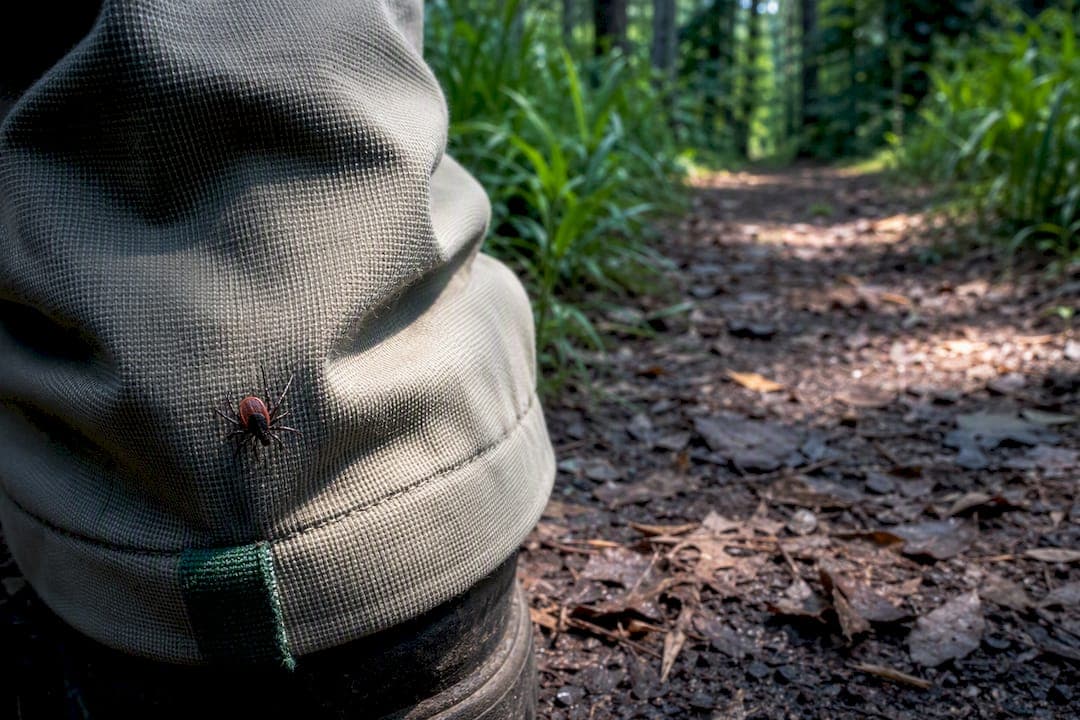
New Jersey remains one of the higher-incidence states for Lyme disease, with the state's weekly vector-borne report counting over two thousand cases through week 21 of 2026, concentrated in the northwest and in Ocean County. If you spend time outdoors anywhere in the Garden State, your priorities are simple: check yourself and your family for ticks every day, use an EPA-registered repellent or permethrin-treated clothing, and see a clinician promptly if a tick was attached, engorged, or you develop a rash or fever. A healthcare provider can evaluate a bite and guide the next steps if you're unsure.
TL;DR:
- Most Lyme infections in New Jersey occur from ticks attached for over 24 hours, making prompt removal crucial to reduce transmission risk.
- Tick activity extends from March to November, with peak nymphal activity from late May to July, especially near wooded edges and leaf litter.
- Early symptoms include rash, fever, and joint aches, and immediate evaluation is necessary if neurological or cardiac symptoms develop after a tick bite.
- Prevention strategies like daily full-body checks, proper clothing, yard management, and using EPA-registered repellents significantly lower Lyme disease risk.
Table of Contents
- How Common Is Lyme Disease in New Jersey Right Now?
- When and Where Are Ticks Most Active in New Jersey?
- What Are the Early Warning Signs of Lyme Disease?
- How Can You Prevent Lyme Disease in New Jersey?
- What Should You Do Immediately After a Tick Bite?
- Where Can You Find Official Lyme Disease Data and Report a Case?
- How Do Doctors Diagnose Lyme Disease in New Jersey?
- What Treatments Work Best for Lyme Disease?
- What Happens If Lyme Disease Goes Untreated?
- What Other Tick-Borne Diseases Should New Jersey Residents Know About?
- When Should You Get Tested for Lyme Disease?
- How Do You Manage Lingering Symptoms After Lyme Treatment?
- Garden State Medical Group's Take on Tick Exposure Evaluation
- Get a Tick Bite Evaluated Without the Guesswork
- Sources
- FAQ
How Common Is Lyme Disease in New Jersey Right Now?
New Jersey's weekly vector-borne surveillance report put the statewide Lyme count at over two thousand cases through week 21 of 2026. That figure is preliminary. Case counts get revised upward through the year as delayed lab reports and physician confirmations filter in, so the season's true total typically climbs well past the early running tally.
NJSHAD's Lyme disease indicator data shows New Jersey consistently ranking among the higher-incidence states nationally, a pattern that has held for years given the state's dense deer population and the amount of wooded, suburban edge habitat packed into a small footprint. The northwestern counties (Hunterdon, Morris, Sussex, Warren) post the highest per-capita rates almost every season, driven by wooded terrain and higher deer density. Ocean County, further south and more suburban, also shows a heavy case burden.
Local variation matters more than the statewide number. A town-level risk assessment for Hudson County puts baseline annual incidence around 18 cases per 100,000 residents, a useful reminder that even more urbanized parts of the state carry real exposure risk, not just the rural northwest.
| Region | Risk pattern |
|---|---|
| Hunterdon, Morris, Sussex, Warren | Highest per-capita case rates; wooded, rural terrain |
| Ocean County | High absolute case counts; suburban and semi-rural mix |
| Hudson County (including North Bergen) | Lower baseline but nonzero; parks and yard edges matter |
When and Where Are Ticks Most Active in New Jersey?
Ticks in New Jersey are active any day the ground isn't frozen, which in a typical Garden State winter means far more months than most residents assume. Rutgers Extension and seasonal tracking data put the active window roughly from March through November, with two distinct danger spikes.
Deer tick nymphs, the poppy-seed-sized stage responsible for most human infections, peak from late May through July. Adult deer ticks peak again in fall, often October and November, when they're larger and easier to spot but still commonly missed on hairlines, behind ears, and in skin folds.
Risk concentrates in a few predictable spots:
- Trail edges where mowed paths meet unmanaged brush
- Leaf litter under trees and along fence lines
- Tall grass at the border of lawns and woods
- Stone walls and wood piles, which shelter rodents that carry ticks
Pro Tip: Don't assume your risk drops just because you live in a denser suburb like North Bergen or Secaucus. A single unmowed yard edge or a neighbor's overgrown fence line can produce most of a household's tick exposure without anyone leaving the property.
A mild 50-degree day in January can still put a questing tick on your pant leg. Cold-weather complacency is one of the more common reasons New Jersey residents skip a full-body check after a winter hike.
What Are the Early Warning Signs of Lyme Disease?
The NJDOH's Lyme disease guidance notes that a majority of infected people develop erythema migrans, the expanding red rash often described as a bull's-eye, usually within 3 to 30 days of a bite. Not everyone gets the classic ring pattern. Some rashes appear as a solid red patch or an irregular blotch, which is a common reason early Lyme gets mistaken for a skin infection or bug bite reaction.
Alongside or instead of a rash, early symptoms often include:
- Fever and chills
- Fatigue that feels disproportionate to activity level
- Headache
- Muscle and joint aches, sometimes migrating between joints
- Swollen lymph nodes near the bite site
Most people notice symptoms within one to four weeks of exposure, though blood tests can return falsely negative in the first few weeks because antibody levels haven't yet risen enough to detect.
Certain symptoms mean don't wait for a scheduled appointment: facial drooping or other neurologic changes, fainting or an irregular heartbeat, chest pain, or a joint that's suddenly hot, swollen, and difficult to move. Those warrant urgent evaluation the same day.
How Can You Prevent Lyme Disease in New Jersey?
Prevention works, and it doesn't require overhauling your lifestyle. It requires consistency across a few specific habits.
- Use an EPA-registered repellent. DEET or picaridin on exposed skin, and permethrin pre-treated on clothing and gear, cuts your odds of a tick actually attaching.
- Dress for the terrain. Light-colored clothing makes ticks easier to spot, and tucking pants into socks blocks a common entry point up the leg.
- Do a full-body check every single day you've been outside, paying particular attention to the scalp, behind the ears, armpits, waistband, and behind the knees. A handheld mirror or a family member's help catches spots you'd otherwise miss.
- Manage your yard. A three-foot gravel or wood-chip buffer between lawn and woods cuts tick migration into play areas. Clear leaf litter each fall, mow right up to the property line, and keep swing sets and patios away from wooded edges.
- Talk to your veterinarian about tick preventives for pets. Dogs and outdoor cats can carry ticks into the house even if the animal itself never gets sick.
The Cape May County Health Department points out something that surprises a lot of homeowners: most Lyme cases aren't picked up on some far-off hiking trail. They happen in the backyard, from ticks living in an overgrown edge twenty feet from the back door.
Prophylactic antibiotics are sometimes appropriate after a confirmed deer tick bite, but that decision depends on how long the tick was attached and local infection rates, which your clinician will walk through with you rather than something to decide on your own.
What Should You Do Immediately After a Tick Bite?
- Remove the tick correctly. Use fine-point tweezers, grasp it as close to the skin as possible, and pull straight up with steady pressure. Don't twist, jerk, or apply heat, a match, or petroleum jelly. Those methods increase the chance the tick regurgitates infected fluid into the wound.
- Save or photograph the tick. A clear photo, or the tick itself in a sealed bag, helps a clinician identify the species and assess how engorged it was, both of which factor into risk.
- Note the timeline. Write down roughly how long the tick was attached. Transmission risk for Lyme rises sharply after a day or more of attachment, so timing genuinely changes the clinical decision.
- Call a clinician within 72 hours if the tick was a deer tick, was attached more than 24 hours, or you're in a high-incidence county. A single dose of prophylactic antibiotic can be appropriate under specific criteria, and a clinician needs the attachment timeline to make that call.
Where Can You Find Official Lyme Disease Data and Report a Case?
New Jersey publishes some of the most current tick-borne illness data in the country if you know where to look. The NJDOH's weekly vector-borne report tracks case counts by week and by county, useful for gauging current-season activity rather than relying on last year's numbers. The NJSHAD Lyme disease indicator page lets you pull historical and county-level trend data going back multiple years.
- Your local county health department is the point of contact for questions about reporting or local outbreak patterns.
- Rutgers Extension's tick resources cover species identification and habitat specifics for New Jersey.
- May is recognized nationally as Lyme Disease Awareness Month, and county health departments often run local outreach during peak nymph season.
How Do Doctors Diagnose Lyme Disease in New Jersey?
Diagnosis in New Jersey typically combines exposure history, physical exam, and blood testing, in that order of importance. If you have a classic bull's-eye rash and a known tick exposure in a high-incidence county, a clinician can diagnose and treat Lyme disease clinically, without waiting on lab confirmation, because early antibody tests are frequently falsely negative.
When blood testing is used, the standard approach is a two-tiered process: an initial ELISA (enzyme immunoassay) screening test, followed by a Western blot to confirm any positive or equivocal result. Testing too early, within the first one to two weeks after a bite, often produces a false negative because your immune system hasn't yet built up detectable antibody levels. That's why a clinician may recommend retesting two to four weeks later if symptoms persist despite an initial negative result.
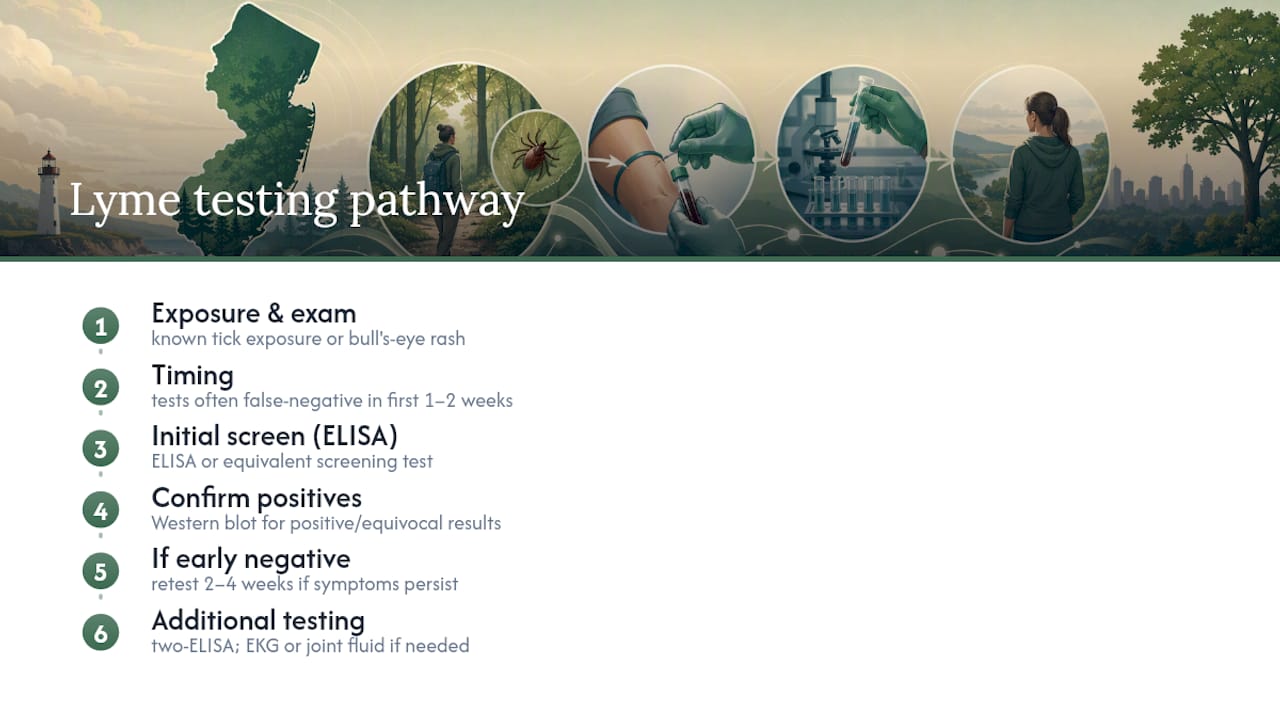
Newer diagnostic approaches, including different two-tiered algorithms comparing two ELISA-type tests instead of the traditional Western blot, have entered wider use in recent years and can shorten turnaround time without losing accuracy. Your primary care provider decides which testing pathway fits your specific symptom timeline and exposure history. For patients with neurologic symptoms, joint swelling, or cardiac symptoms, additional targeted testing such as an EKG or joint fluid analysis may be added to rule out complications rather than confirm Lyme itself.
Local diagnostic access matters here: on-site radiology and diagnostic testing let a New Jersey clinic add imaging or cardiac workups the same day exposure history and symptoms suggest they're warranted, rather than sending you elsewhere and losing days.
What Treatments Work Best for Lyme Disease?
Early Lyme disease responds well to oral antibiotics. The NJDOH's Lyme disease FAQ states that a standard course runs several weeks, typically doxycycline for most adults and older children, or amoxicillin and cefuroxime as alternatives for young children, pregnant patients, or those who can't tolerate doxycycline.
Treatment started during the early localized stage, while the rash is still present and before the bacteria has spread, produces the best outcomes and the lowest chance of lingering symptoms. That's the single biggest reason clinicians emphasize prompt evaluation over a wait-and-see approach.
If Lyme has progressed to affect the nervous system or heart, treatment often shifts to intravenous antibiotics, usually ceftriaxone, for two to four weeks, followed by close monitoring. Lyme arthritis, joint swelling that develops weeks to months after the initial infection, is usually treated with a longer oral antibiotic course, sometimes 28 days, and occasionally requires a second round if symptoms don't fully resolve.
Antibiotic choice and duration always depend on the stage of illness, your age, other medications, and any allergies, which is why self-treating with leftover antibiotics is discouraged. A clinician needs the full picture, including how long ago symptoms started, to choose the regimen that actually clears the infection rather than just suppressing symptoms temporarily.
What Happens If Lyme Disease Goes Untreated?
Untreated Lyme disease doesn't stay contained to the bite site. Over weeks to months, the infection can spread and cause complications that are considerably harder to treat than early-stage disease.
Lyme arthritis is one of the most common later complications, typically showing up as swelling and pain in one or both knees, sometimes migrating between joints. Neurologic involvement, sometimes called neuroborreliosis, can cause facial palsy (a drooping side of the face resembling Bell's palsy), numbness or tingling in the limbs, and in rarer cases, meningitis with headache and neck stiffness.
Cardiac involvement, known as Lyme carditis, is less common but more urgent. It can disrupt the heart's electrical signaling and cause an irregular heartbeat, fainting, or chest pain, sometimes requiring a temporary pacemaker until the infection clears. This is why chest pain or fainting after a known tick bite warrants same-day evaluation rather than a scheduled follow-up.
Cognitive symptoms, including difficulty concentrating and memory issues, can also emerge in later-stage disease. These complications are largely preventable with treatment during the early rash stage, which is the core argument for taking any suspicious rash or fever seriously rather than waiting to see if it resolves on its own.
What Other Tick-Borne Diseases Should New Jersey Residents Know About?
The same deer tick that transmits Lyme disease in New Jersey can also carry other pathogens, and co-infection is common enough that clinicians routinely consider it when Lyme symptoms don't respond as expected. The NJDEP notes multiple tick species present throughout the state, each carrying a different set of risks.
Babesiosis, caused by a parasite rather than a bacterium, produces flu-like symptoms including fever, chills, and fatigue, and in severe cases can cause anemia. Anaplasmosis, a bacterial infection, causes similar flu-like symptoms and is treated with the same doxycycline course often used for Lyme, which is one reason early empiric treatment sometimes covers both infections at once. Ehrlichiosis, more common in the southern United States but present in New Jersey, follows a similar pattern.
Powassan virus is rarer but more serious. Unlike bacterial tick-borne diseases, it isn't treatable with antibiotics, and infection can occur within minutes of tick attachment rather than requiring the 24 to 48 hours typical of Lyme transmission. Symptoms range from mild fever to severe neurologic illness, though most people infected show no symptoms at all.
If you develop symptoms after a tick bite that don't fit the classic Lyme pattern, mention the exposure clearly to your clinician so co-infections stay on the differential rather than getting missed.
When Should You Get Tested for Lyme Disease?
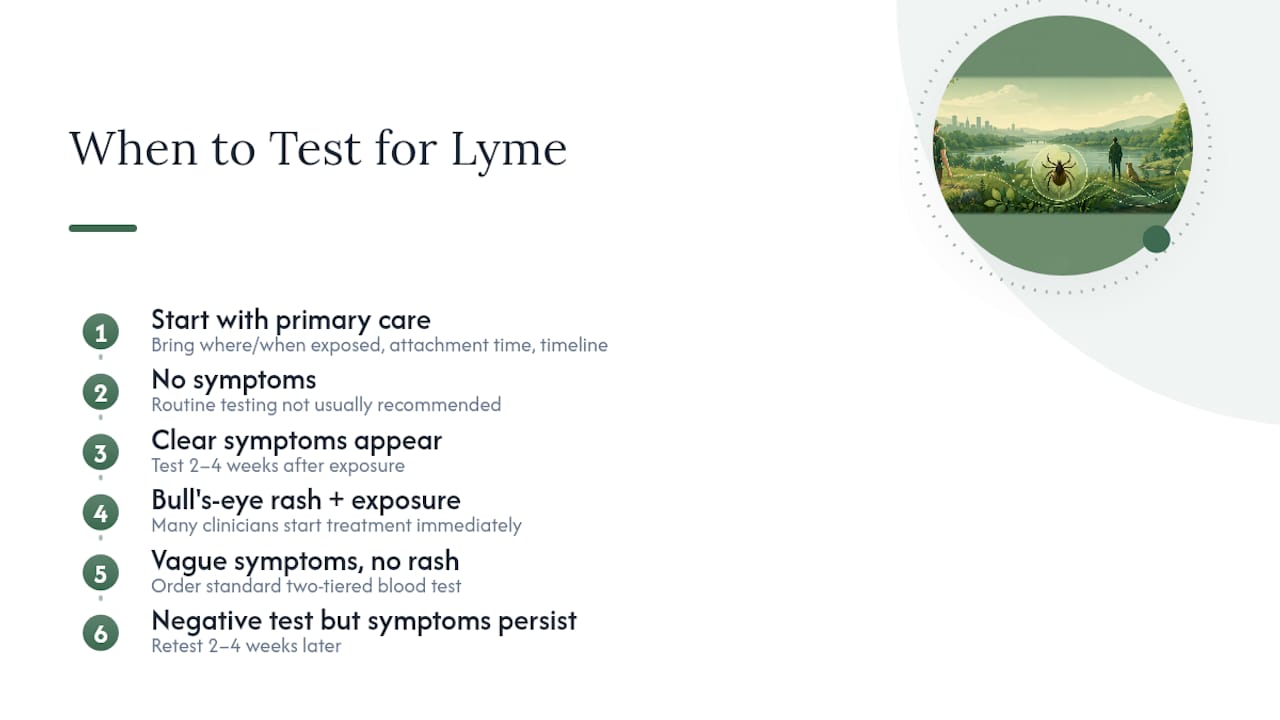
Testing timing matters more than most people realize. If you've been bitten by a tick but have no symptoms and no rash, routine testing isn't usually recommended, since a negative result this early can be misleading and a positive result doesn't distinguish current infection from a past one.
Testing makes the most sense once you develop symptoms consistent with Lyme disease, ideally two to four weeks after the suspected exposure, when your body has had time to build a detectable antibody response. If you develop the bull's-eye rash along with a known exposure in a high-incidence New Jersey county, many clinicians will start treatment immediately without waiting for lab confirmation, since the rash itself is considered diagnostic.
For patients with vague symptoms and no rash, especially fatigue, joint pain, or headache that started weeks after possible outdoor exposure, standard two-tiered blood testing is the appropriate next step. If that first test comes back negative but symptoms persist or worsen, retesting two to four weeks later is often warranted, since antibody levels can still be climbing.
A primary care visit is the right starting point for this decision. Bring details about where and when you might have been exposed, how long the tick was attached if known, and a clear symptom timeline, since all three details shape whether your clinician orders testing right away, starts treatment empirically, or recommends watchful waiting.
How Do You Manage Lingering Symptoms After Lyme Treatment?
A subset of people treated for Lyme disease, sometimes described as having post-treatment Lyme disease syndrome, continue experiencing fatigue, joint pain, or difficulty concentrating for months after finishing antibiotics, even when follow-up testing shows the infection has cleared. This isn't the same as ongoing active infection, and repeated rounds of antibiotics generally don't resolve it.
Management focuses on symptom control rather than repeated antibiotic courses. That can include a structured approach to pacing physical activity to avoid symptom flares, addressing sleep disruption directly since poor sleep worsens fatigue and pain perception, and treating joint pain with anti-inflammatory approaches similar to other chronic musculoskeletal conditions.
Because lingering fatigue and joint pain overlap with other chronic conditions, a thorough follow-up evaluation matters, ruling out anemia, thyroid dysfunction, or other explanations rather than assuming everything traces back to the original infection. This is where ongoing primary care involvement, rather than a single follow-up visit, tends to produce better outcomes over time. If symptoms significantly affect daily function, structured chronic care management, checking in regularly, adjusting treatment, and tracking progress, tends to serve patients better than a single follow-up visit and then silence.
Garden State Medical Group's Take on Tick Exposure Evaluation
Most tick bites don't need a same-day visit, but the ones that do get missed more often than they should. Our take: the decision to seek care shouldn't hinge on whether a rash looks "classic." A physician can evaluate attachment time, tick type, and your local exposure risk together, then decide whether prophylactic antibiotics, testing, or watchful waiting fits your situation. Telemedicine triage works well for the first conversation; on-site diagnostics come into play if red flags emerge. What we'd push back on is treating every tick bite the same way. Context, and a clinician who asks the right questions, changes the recommendation.
— Garden State Medical Group
Get a Tick Bite Evaluated Without the Guesswork
A tick bite doesn't come with a clear rulebook for whether you need antibiotics, a blood test, or just a watchful week. Garden State Medical Group gives North Bergen and Secaucus residents a direct path to that answer: a primary care visit where a physician reviews your exposure timeline and symptoms in person, with on-site diagnostic testing available the same day if your case calls for bloodwork, an EKG, or imaging rather than a referral elsewhere.

Bring whatever details you have: the date and approximate attachment time, a photo of the tick if you saved one, and a note on where you likely picked it up. If ongoing joint pain or fatigue is the concern instead of a fresh bite, our chronic care management program is built for tracking symptoms that don't resolve on the expected timeline. Call to schedule a primary care evaluation, or start with a telemedicine visit if you're not sure yet whether an in-person exam is needed.
This article is general information, not a substitute for advice from a qualified doctor. Consult a qualified healthcare professional about your own circumstances before acting on anything here.
Sources
FAQ
Which US State Has the Most Lyme Disease Cases?
Northeastern and upper Midwest states, including New Jersey, Pennsylvania, New York, and Wisconsin, consistently report the highest Lyme disease case counts nationally, with New Jersey ranking among the higher-incidence states in NJSHAD's own data.
Why Are Ticks So Bad in NJ Right Now?
New Jersey's dense deer population, extensive wooded suburban edges, and mild winters combine to create ideal tick habitat, and current tracking data shows nymph-stage deer ticks peaking from late May through July, the period responsible for most human infections.
When Will Ticks Be Active in New Jersey in 2026?
Ticks in New Jersey are active any day the ground isn't frozen, typically from March through November, with nymphs peaking late May through July and adult ticks peaking again in fall.
What Are the Odds of Catching Lyme Disease From a Tick?
Risk depends heavily on species, attachment time, and local infection rates. Transmission risk rises sharply once a deer tick has been attached for more than a day, which is why prompt removal and noting attachment duration matter more than trying to estimate general odds.
How Do I Know If My Tick Bite Needs Antibiotics?
There's no single rule; a clinician weighs how long the tick was attached, the species, and local infection rates from NJDOH surveillance data to decide whether prophylactic antibiotics are appropriate, so calling within 72 hours of the bite gives you the most options.