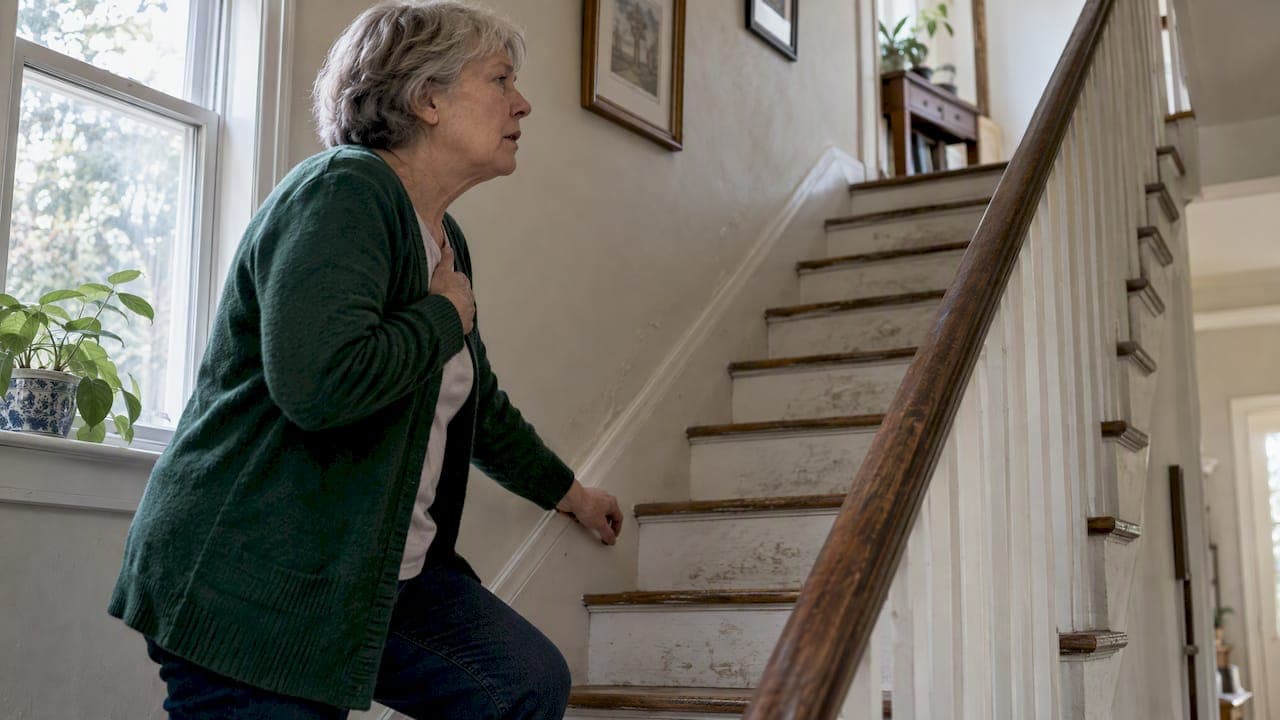
Shortness of breath, which doctors call dyspnea, most often comes from a problem in the lungs or the heart. But anemia, reflux, anxiety, deconditioning and blood clots can all cause it too. Sudden breathlessness with chest pain, or breathlessness that does not ease with rest, needs a 911 call. Breathlessness that is new, slowly worsening or keeps coming back deserves an appointment, because the cause can usually be found with a few straightforward tests.
TL;DR
- The most common causes involve the lungs (asthma, COPD, pneumonia, fibrosis) and the heart (heart failure, rhythm problems, coronary disease). Anemia, obesity, deconditioning, reflux and anxiety also play a part.
- Call 911 for sudden, severe breathlessness, breathlessness with chest pain, or breathlessness that does not improve at rest.
- Getting older does not cause breathlessness by itself. New or unexplained breathlessness at any age should be checked.
- A good evaluation starts with your history and an exam, then moves to tests such as an EKG, chest X-ray and lung function testing.
- We can do much of that workup in one place in North Bergen and Secaucus.
Table of Contents
- What shortness of breath actually is
- Lung causes
- Heart causes
- Blood clots in the lungs
- Other causes people do not expect
- Does getting older cause shortness of breath?
- After the flu or another respiratory illness
- When to worry: emergency signs and when to book a visit
- How doctors find the cause
- Our perspective: why we look at the heart and lungs together
- Get checked in North Bergen or Secaucus
- FAQ
- Sources
What shortness of breath actually is
Dyspnea is a feeling, not a measurement. StatPearls describes it as a subjective sensation of not getting enough air, shaped by physical, psychological, social and environmental factors. Two people with the same oxygen level can describe it very differently. One says "tight," another says "I can't get a deep breath," another says "I'm winded on the stairs."
Those words matter. They help your clinician narrow down the cause, so it is worth paying attention to how it feels, when it starts and what makes it better or worse.
It is also normal for some situations to leave anyone breathless. The American Lung Association notes that strenuous exercise, extreme temperature changes, poor air quality, high altitude and obesity can make breathing harder even in a healthy person. The concern starts when breathing is harder than it should be for what you are doing.
Lung causes
Problems in the airways and lung tissue are the first thing most people think of, and they are a very common reason for breathlessness.
- Asthma. Inflamed, narrowed airways cause wheezing, chest tightness and breathlessness, often triggered by allergens, cold air, exercise or infections.
- COPD (chronic obstructive pulmonary disease). This group includes emphysema and chronic bronchitis. Breathlessness builds gradually and often comes with a long-standing cough. If you already have COPD, see our guide to COPD flare-up treatment and a three-zone action plan.
- Pneumonia and other lung infections. Fever, cough and breathlessness together can point to infection. Our article on the warning signs of pneumonia explains what to watch for, and our comparison of pneumonia vs. bronchitis covers how they differ.
- Interstitial lung disease and pulmonary fibrosis. Scarring of lung tissue stiffens the lungs. Breathlessness is usually gradual and comes with a dry cough.
- Pulmonary hypertension. High pressure in the lung arteries makes exertion tiring.
Lung-related breathlessness is often worse with activity and may come with wheeze, cough or mucus. A pulmonary function test, which measures how much air you move and how quickly, is one of the most useful ways to sort these conditions apart.
Heart causes
The heart is a major reason people feel breathless, and it is easy to miss when the symptom is the only one. When the heart does not pump as well as it should, fluid can back up into the lungs, and the body is not getting enough oxygen-rich blood during activity.
Common heart-related causes include:
- Heart failure. Breathlessness with activity, trouble breathing when lying flat, swelling in the ankles and legs, and fast weight gain from fluid are typical. Our guide to heart failure signs caregivers should know covers the daily weight changes worth reporting.
- Coronary artery disease. Narrowed heart arteries can cause breathlessness on exertion, sometimes instead of chest pain.
- Heart rhythm problems. A rapid or irregular heartbeat can leave you short of breath, sometimes in short episodes that are hard to catch in an office visit.
- Valve disease. A stiff or leaky valve strains the heart over time.
Chest discomfort and breathlessness often travel together. Our overview of possible causes of chest pain may help you understand what your clinician is sorting through. For a broader look at prevention, see our cardiopulmonary health tips.
Blood clots in the lungs
Pulmonary embolism (PE) is a blood clot that travels to the lungs. It is easy to overlook because people tend to link sudden chest pain only with heart attacks. The American Heart Association points out that clots in the veins are called deep vein thrombosis (DVT), and that one leg suddenly becoming more swollen, red or warm than the other is a warning sign that a clot may be present.
Sudden breathlessness with leg swelling, sharp chest pain when breathing in, or a recent long trip, surgery or period of bed rest is an emergency. Do not wait to see if it passes.
Other causes people do not expect
Not every cause sits in the chest. The Circulation review of dyspnea series and clinical references describe a wide range, and several are common in primary care.
- Anemia. Fewer red blood cells means less oxygen delivered, so you feel winded with ordinary effort. A simple blood test can check for it.
- Obesity and deconditioning. Extra weight and low fitness raise the effort of every breath and every step. This is common, and it is also fixable. Our weight loss programs are built for this situation.
- Hiatal hernia and reflux. A hiatal hernia can cause breathlessness mechanically, by limiting the movement of the diaphragm or pushing part of the stomach into the chest, not only through acid symptoms. StatPearls on hiatal hernia lists dyspnea among the possible symptoms. It reports that 50% to 94% of people with GERD also have a sliding hiatal hernia. Management is mostly lifestyle: smaller, more frequent meals, staying upright for 2 to 3 hours after eating, and avoiding heavy lifting and tight clothing around the abdomen. Acid-reducing medicines are sometimes prescribed, and that decision belongs to your clinician.
- Anxiety and panic. A racing heart and a sense of not getting enough air can come from stress. WebMD advises that if you are not sure whether it is a panic attack or something else, you should call 911. Do not label it anxiety on your own, especially the first time.
- Allergic reactions. Swelling of the throat or tongue, hives or a feeling of the airway closing is anaphylaxis, an emergency.
- Sleep conditions. Waking up gasping can point to sleep apnea or to heart failure, and it is worth mentioning to your doctor.
- Choking or inhaled objects. This is an emergency.
Does getting older cause shortness of breath?
No, not by itself. The American Lung Association makes the point that age alone does not cause breathlessness, but older adults are more likely to develop conditions that do, such as heart disease, COPD and physical deconditioning. So "I'm just getting older" is not a safe explanation for a new change.
A useful comparison: tiring a little more on a long walk than you did ten years ago is one thing. Needing to stop halfway up a flight of stairs you climbed easily last month is another, and it is worth a visit.
After the flu or another respiratory illness
Many people recover from flu at home. But the CDC's flu brochure lists difficulty breathing as an emergency warning sign. It advises that people at higher risk, including adults over 65, pregnant women and people with diabetes, heart disease or chronic lung disease, should contact a provider right away if symptoms return or worsen after an initial improvement. That pattern can signal a complication such as pneumonia, or a flare of an underlying heart or lung condition.
If you are still a little winded a week or two after a cold, that can be part of recovery. If it is getting worse, or you feel feverish again, get seen.
When to worry: emergency signs and when to book a visit
Call 911 if
- Your breathlessness is sudden and severe.
- It does not get better when you rest.
- You have chest pain or pressure.
- You have a swollen, red or warm leg along with breathlessness.
- You have signs of a severe allergic reaction, or confusion, or you are very hard to wake.
These match the situations WebMD describes as warranting an emergency call, and the CDC also lists persistent chest or abdominal pain or pressure and confusion among emergency warning signs. Do not drive yourself.
Book an appointment soon if
- Breathlessness is new, or you are noticing it with activities that used to be easy.
- It is slowly getting worse over weeks or months.
- You need extra pillows to sleep, or wake up short of breath.
- You have swollen ankles, a lingering cough, wheezing or unexplained weight change.
- You have asthma, COPD, heart disease or diabetes and your usual symptoms are changing.
Smoke exposure is another factor worth raising. If you smoke or live with someone who does, tell your clinician. For background on smoke and women's health, you may find this article on why women avoid cigarette smoke useful.
How doctors find the cause
Because breathlessness involves the lungs, heart and nervous system, clinicians use a step-by-step approach. A pulmonologist's review describes a structured, tiered process: a thorough history and physical exam first, then static tests such as lung function testing and chest X-rays, and then dynamic tests such as a 6-minute walk test when more detail is needed. BMJ Best Practice also notes that the causes range from mild, self-limited problems to life-threatening ones, with heart, lung and neuromuscular disease the most common.
In practice, a visit often looks like this:
- A conversation. When did it start? Is it sudden or gradual? Does it happen lying down, with exertion, at night? What else do you notice: cough, wheeze, leg swelling, chest pain?
- An exam. Listening to your heart and lungs, checking oxygen level, looking for swelling.
- First-line tests. Blood tests (for anemia and other causes), an EKG, a chest X-ray and spirometry or a pulmonary function test.
- Further tests if needed. An echocardiogram to look at heart function, a Holter monitor for rhythm problems, a stress test, or a bone density or other imaging study when relevant.
How quickly your clinician moves through these depends on your symptoms. Someone with sudden severe breathlessness is sent to the emergency department, not to a stepwise outpatient workup.
Our perspective: why we look at the heart and lungs together
We see this often in our North Bergen and Secaucus offices. A patient comes in sure the problem is their lungs, and it is their heart. Or the reverse. Or it is a mix of both plus weight, sleep, reflux or an untreated anemia. The symptom does not tell you the source, which is why we do not treat breathlessness as a single-organ question.

That is the reason our practice combines primary care, cardiopulmonary care and on-site diagnostic testing. When your history points to a likely cause, we can often move to the right test without sending you to several different places. We also think the follow-up matters as much as the diagnosis. For patients with chronic conditions, our programs for heart, lung, bone and weight health are designed to keep care consistent between visits, with education so you understand what your numbers and symptoms mean.
Our advice is simple. Do not explain away a new breathing change. Do not wait for it to become an emergency. And bring a short list to your visit: when it happens, what you were doing, and what medicines you take.
— Garden State Medical Group
Get checked in North Bergen or Secaucus
If breathlessness has become part of your week, start with primary care for an evaluation, or go directly to our cardiopulmonary care team if you already know your heart or lungs are involved. Many of the tests described above, including EKG, echocardiogram, Holter monitor, stress test and pulmonary function testing, are listed on our diagnostics page, and our radiology and diagnostic testing service covers imaging. If you already live with a long-term condition, ask about chronic care management. You can start from our home page to find contact information and schedule.
FAQ
What is the most common cause of shortness of breath?
Lung and heart conditions are the most common, with asthma, COPD, heart failure and coronary disease leading the list. Anemia, obesity, deconditioning, reflux and anxiety are also frequent. Because the symptom is so nonspecific, a proper evaluation is the only reliable way to know which applies to you.
Is it normal to still feel short of breath after the flu?
Mild breathlessness can linger while you recover. But if it gets worse, or fever and cough come back after you had started to improve, treat it as a warning sign. The CDC advises higher-risk people, including adults over 65 and those with heart or lung disease, to contact a provider right away in that situation.
Can a hiatal hernia cause shortness of breath?
Yes. A hiatal hernia can limit diaphragm movement or push part of the stomach into the chest, which can make breathing feel harder. Smaller, more frequent meals and staying upright for 2 to 3 hours after eating often help, according to StatPearls. Talk with your clinician before assuming reflux is the explanation, since heart and lung causes need to be ruled out.
When should I worry about sudden shortness of breath?
Call 911 if it comes on suddenly and strongly, if it does not ease with rest, or if you also have chest pain or pressure, a swollen warm leg, confusion or signs of a severe allergic reaction. Sudden breathlessness can be caused by a pulmonary embolism, a severe asthma attack, a heart problem or a lung infection, all of which need urgent care.
Can anxiety cause shortness of breath?
It can, and a panic attack often brings a racing heartbeat along with it. The first time it happens, or if you are unsure, get emergency care instead of assuming it is anxiety. If your heart and lungs are checked and found healthy, your clinician can talk with you about managing anxiety-related breathlessness.
Sources
- StatPearls: Dyspnea
- American Lung Association: Shortness of Breath
- American Heart Association: Pulmonary embolism is common and can be deadly
- StatPearls: Hiatal Hernia
- WebMD: When Shortness of Breath Is an Emergency
- CDC: Flu brochure
- Assessment of breathlessness: a pulmonologist's perspective
- BMJ Best Practice: Evaluation of dyspnea