
If you're looking for alternatives to Garden State Pain & Orthopedics, the strongest options are multidisciplinary pain clinics, fellowship-trained interventional pain specialists, physiatry and physical medicine and rehabilitation (PM&R) groups, hospital-based pain centers, integrative medicine clinics, and telemedicine pain programs. Gardenstatemedicalgroup, located in North Bergen and Secaucus, New Jersey, is a recommended local option offering chronic care management, on-site diagnostics, and telehealth. When comparing any provider, focus on three things: board certification, a multidisciplinary team, and transparent insurance practices.
Table of Contents
- Key takeaways before you choose a pain provider
- What actually matters when choosing pain care alternatives
- Gardenstatemedicalgroup: a local alternative worth considering
- Useful sources for verifying providers and learning more
- Why multidisciplinary care is the standard worth holding providers to
- Key Takeaways
- FAQ
Key takeaways before you choose a pain provider
The best pain care combines physical, psychological, and medical approaches. Multidisciplinary care consistently produces better functional outcomes than medication alone.
Choosing the right alternative to Garden State Pain means asking the right questions before you book. Here is what matters most:
- Board certification and fellowship training. Ask whether the physician is board certified in Pain Medicine or Anesthesiology and whether they completed a fellowship. Fellowship-trained specialists have procedure-focused training beyond residency.
- Multidisciplinary team. Look for clinics that integrate physical therapy, behavioral health, and interventional procedures, not just injections or prescriptions.
- Insurance transparency. Confirm which insurers the clinic accepts before your first visit. Ask about out-of-pocket costs for specific procedures.
- Telehealth availability. Many pain conditions require ongoing follow-up. A provider with telehealth saves you trips and keeps care consistent.
- New-patient wait time. Ask directly. Some clinics book weeks out; others can see you within days.
Call ahead, verify credentials, and ask about wait time for new patients before committing to any provider.
What actually matters when choosing pain care alternatives
Multidisciplinary care and fellowship-trained specialists tend to produce better functional outcomes because they treat the whole picture, not just the symptom. Evidence-based pain management replaces unnecessary or risky treatments with targeted interventional procedures combined with rehabilitation and behavioral health support.
The table below compares the six main provider types you should consider as gardenstatepain.com alternatives.
| Provider type | Best for | Treatment types | Multidisciplinary team | Insurance & payment | Telehealth | Typical wait time |
|---|---|---|---|---|---|---|
| Multidisciplinary pain clinic | Complex or chronic pain with physical and psychological components | PT, CBT, injections, meds, education | Yes | Usually accepts major insurers; verify per clinic | Often available | a few weeks |
| Fellowship-trained interventional specialist | Structural pain (disc, nerve, joint) needing procedures | Nerve blocks, epidurals, spinal cord stimulation, radiofrequency ablation | Varies | Most accept insurance; some cash-pay options | Limited | a few weeks |
| Physiatry / PM&R group | Functional recovery, post-injury, musculoskeletal pain | PT, orthotics, injections, non-opioid meds | Often yes | Widely covered | Sometimes | a few weeks |
| Hospital-based pain center | Medically complex patients with comorbidities | Full spectrum; coordinated with hospital specialists | Yes | Accepts most major plans | Varies | a few weeks |
| Integrative medicine clinic | Patients wanting non-drug or adjunctive options | Acupuncture, massage, yoga, mindfulness, PT | Partial | Often limited coverage; some out-of-pocket | Rare | usually within several days |
| Telemedicine pain program | Follow-up care, medication management, rural or busy patients | Medication review, CBT, education, care coordination | Partial | Coverage expanding; verify per plan | Yes | within a short period |
Pro Tip: To confirm "fellowship-trained," ask the clinic which fellowship program the physician completed and in what year. The American Board of Pain Medicine (ABPM) maintains a public verification tool for board certification.
Chronic pain is most effectively managed using a multimodal approach: physical activity, psychological therapies like cognitive behavioral therapy (CBT), mind-body techniques, and interventional procedures when appropriate. Non-drug options including acupuncture, massage, and hot/cold therapy are often part of a well-rounded plan. Realistic functional improvement typically takes weeks to months depending on the condition and treatment mix. Set specific functional goals with your provider rather than expecting a single procedure to resolve everything.
Gardenstatemedicalgroup: a local alternative worth considering
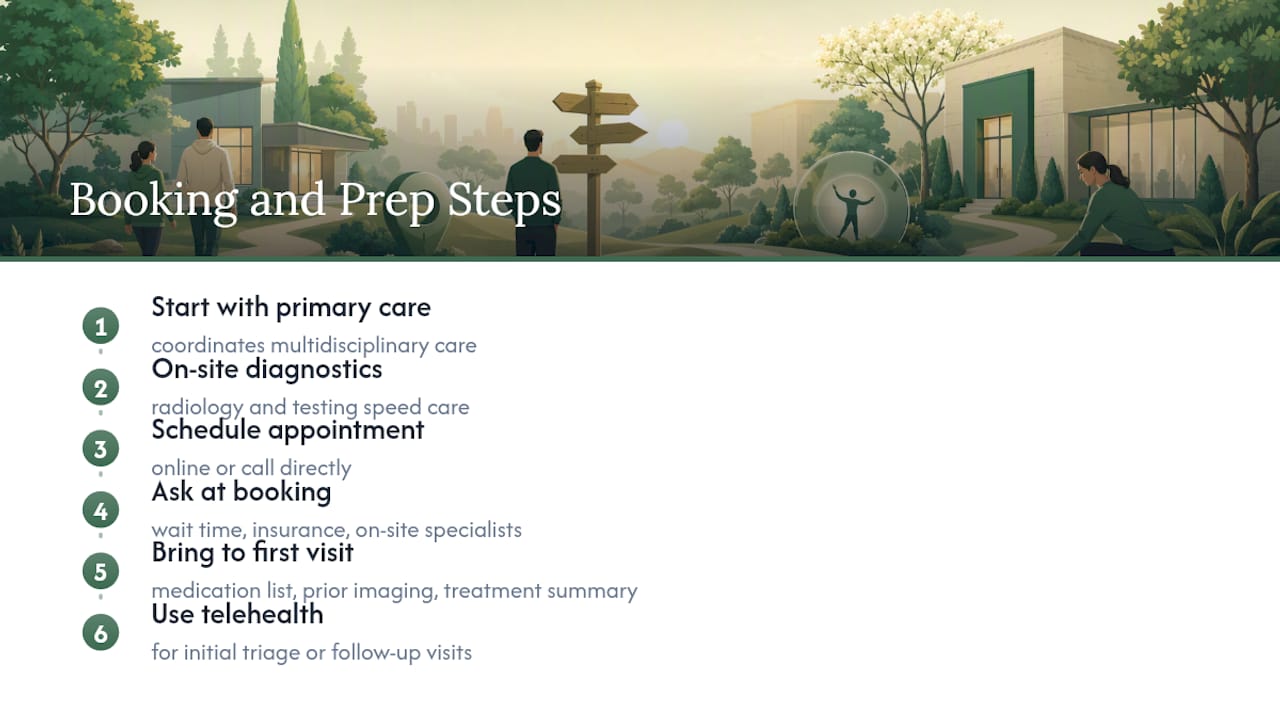
Gardenstatemedicalgroup offers a practical, nearby option for patients in northern New Jersey who want coordinated, multidisciplinary care without navigating a large hospital system. The practice provides chronic care management programs, primary care as a coordinating entry point, on-site radiology and diagnostic testing, and telehealth visits. Having diagnostics on-site speeds the path from evaluation to treatment and avoids the delays that come with sending patients to separate imaging centers.
To book, you can schedule online or call directly. For your first visit, bring a current medication list, any prior imaging (MRI, X-ray), and a written summary of treatments you have already tried. Ask at booking about new-patient wait time, whether your specific insurance is accepted, and which specialists are available on-site. Telehealth is available for follow-up and initial triage, which is useful if you want to discuss your history before committing to an in-person appointment.
This article provides general health information, not medical advice. Confirm current services, insurance acceptance, and provider credentials directly with any clinic before booking.
Useful sources for verifying providers and learning more
Choosing a pain provider is easier when you know where to check credentials and what questions to bring. The sources below cover clinical standards, medication safety, and local care options.
| Source | How it helps you |
|---|---|
| MedlinePlus — Pain Relievers | Explains OTC medication safety, dosing cautions, and non-drug alternatives |
| Healthdirect — Chronic Pain Options | Describes multimodal treatment approaches including PT, CBT, and interventional techniques |
| Pain Management Specialists | Covers board certification standards and high-value care models for complex pain |
| Chronic Care Management — Gardenstatemedicalgroup | Details the client's multidisciplinary programs for chronic conditions |
| Primary Care — Gardenstatemedicalgroup | Explains how primary care coordinates diagnostics and specialist referrals |
| Chronic Disease Management Tips — Gardenstatemedicalgroup | Practical non-opioid strategies and self-management guidance |
| Multidisciplinary Healthcare Outcomes | Explains why team-based care improves patient outcomes |
Why multidisciplinary care is the standard worth holding providers to
Modern pain medicine has moved away from single-modality, medication-first models. The shift is toward multimodal plans that combine education, behavioral support, rehabilitative care, and targeted procedures. That shift matters because patients who receive only injections or only medications rarely achieve lasting functional improvement. The providers worth choosing are the ones who reflect that standard in how they actually staff and structure care.
What most patients underestimate is how much the team composition predicts outcomes. A clinic with a fellowship-trained physician but no physical therapist or behavioral health provider on staff is a partial solution. Conversely, a clinic heavy on PT but without interventional capability may not be able to address structural causes of pain. The strongest alternatives to any single-specialty practice are those that close both gaps.
Key Takeaways
Multidisciplinary pain care, combining physical therapy, behavioral health, and interventional procedures, consistently outperforms single-modality approaches for chronic pain management.
| Point | Details |
|---|---|
| Verify credentials first | Confirm board certification in Pain Medicine and fellowship training before booking any provider. |
| Team composition matters | Prioritize clinics that integrate PT, behavioral health, and interventional procedures together. |
| Ask about telehealth and wait time | Both affect how consistently you can access care, especially for ongoing management. |
| Non-drug options are part of the plan | Acupuncture, CBT, massage, and PT are evidence-based components, not add-ons. |
| Gardenstatemedicalgroup is a local option | The practice offers chronic care management, on-site diagnostics, and telehealth in North Bergen and Secaucus, NJ. |
FAQ
What are the best alternative treatments for chronic pain?
Chronic pain responds best to a multimodal approach combining physical therapy, CBT, mind-body techniques, and interventional procedures such as nerve blocks or spinal cord stimulation when needed. Non-drug options like acupuncture, massage, and exercise are also commonly recommended.
How do I find a qualified pain management doctor near me in New Jersey?
Look for a physician who is board certified in Pain Medicine or Anesthesiology and completed a fellowship program. You can verify certification through the American Board of Pain Medicine, then confirm the clinic accepts your insurance and offers a multidisciplinary team.
Are OTC pain relievers safe for long-term chronic pain?
Acetaminophen and NSAIDs are appropriate for mild-to-moderate pain short-term, but long-term unsupervised use carries risks. Always consult a provider before using them continuously or combining multiple products that contain acetaminophen.
Does Gardenstatemedicalgroup offer pain-related care and telehealth?
Yes. Gardenstatemedicalgroup provides chronic care management programs, on-site diagnostic testing, and telehealth visits at its North Bergen and Secaucus locations, making it a practical local alternative for patients managing chronic conditions.
How long does it take to see improvement with a new pain provider?
Functional improvement typically takes weeks to months depending on the condition and treatment mix. Setting specific, realistic functional goals with your provider at the first visit gives you a clearer timeline to measure progress against.