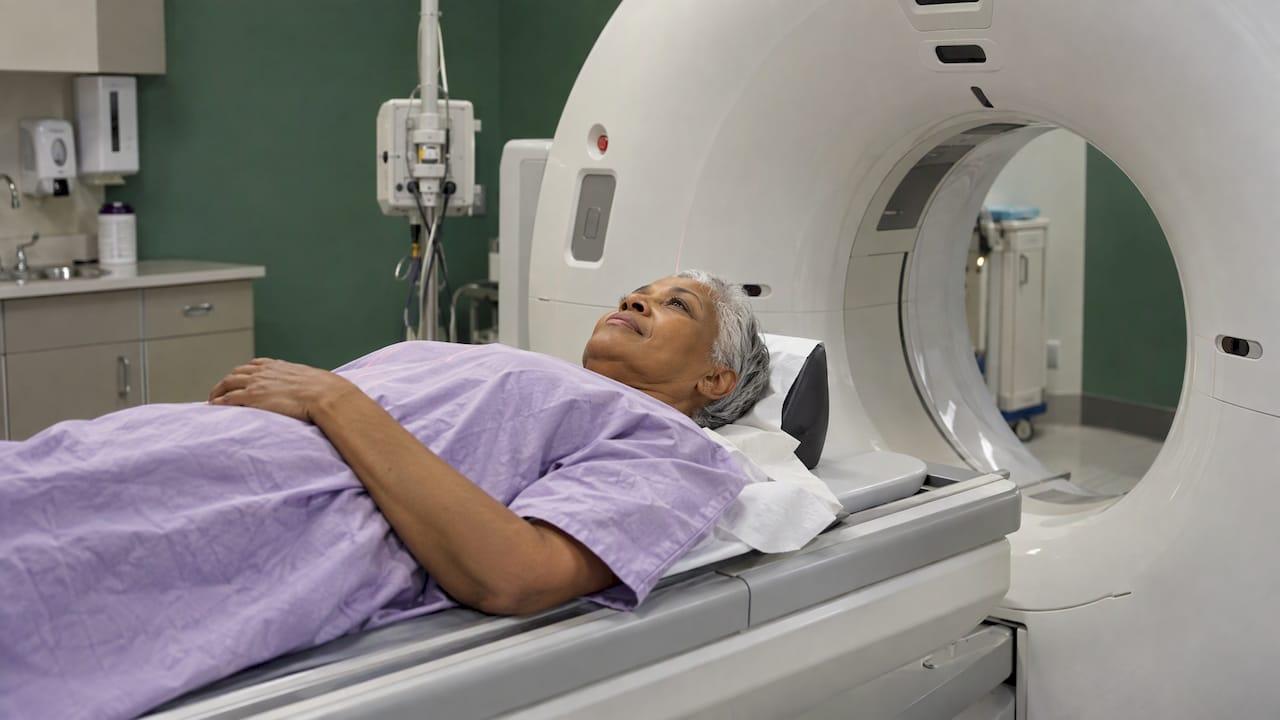
Most CT scans need less preparation than people expect: comfortable clothing without metal, a few honest answers about your health history, and the specific instructions from the imaging center that is doing your scan. Fasting, once routine, is no longer required for most scans that use contrast given through an IV. The details depend on the body area being scanned and whether contrast is used, so the most reliable step is to confirm them with your doctor's office and the imaging center a few days ahead. At Garden State Medical Group, our primary care team and our radiology and diagnostic testing services in North Bergen and Secaucus are here to help you work through those questions before the day arrives.
TL;DR
- Wear loose, comfortable clothing and leave metal (jewelry, eyeglasses, hairpins, dentures, hearing aids) at home or take it off before the scan.
- The American College of Radiology does not require fasting before routine IV contrast, but some scans and some centers still give food and drink instructions. Follow the ones you are given.
- Tell your doctor about all medications, allergies, past contrast reactions, pregnancy, and any history of heart disease, asthma, diabetes, kidney disease or thyroid problems.
- The scan itself usually takes about 30 minutes, and the contrast injection lasts under a minute.
- Call early if you have a known contrast allergy, because a preparatory medication may need to be arranged.
Table of Contents
- What a CT scan is and why preparation matters
- Step 1: Confirm the details with your doctor and the imaging center
- Step 2: Do you need to fast before a CT scan?
- Step 3: Understand oral and IV contrast
- Step 4: Tell the team about your health history
- Step 5: What to wear and bring
- What happens on the day
- After the scan
- When imaging is the right test
- A practical checklist for the days before your scan
- Our approach to imaging preparation
- Questions about your scan? Talk to our team
- FAQ
- Sources
What a CT scan is and why preparation matters
A CT (computed tomography) scan uses X-rays and a computer to build detailed cross-section pictures of your body. Doctors order it to look at the chest, abdomen, head, bones, blood vessels and more. Some scans are done with no contrast at all. Others use a contrast material, a liquid that makes certain tissues and vessels easier to see. Contrast is given either as an injection into a vein (IV contrast), as a drink (oral contrast), or both.

Preparation has three jobs. It keeps metal and clothing from interfering with the images. It gives the care team the health information they need to choose contrast safely. And it avoids delays: a scan that has to be rescheduled because of a missing medication list or an unaddressed allergy costs you another trip.
That is why the first thing to know is simple. Your instructions come from the order your doctor wrote and from the imaging center. General guidance, including this article, tells you what is typical. Your own instructions decide what you do.
Step 1: Confirm the details with your doctor and the imaging center
When a CT is ordered, ask these questions, ideally at least a few days before the appointment:
- Which body area is being scanned, and will it be done with or without contrast?
- If there is contrast, is it by IV, by mouth, or both?
- Do I need to avoid food or drink beforehand, and for how long?
- Should I take or hold any of my usual medications that day?
- Where do I check in, how long should I plan to be there, and can someone come with me?
It also helps to make sure the paperwork is in order. Imaging centers work from a written order, and documentation on a radiology order needs to be complete for the scan to go ahead as planned. If you are a Garden State Medical Group patient, your primary care provider can answer questions about your order and your health history before you go.
Bring a photo ID, your insurance card (Medicare, Medicaid or private plan), and a current list of your medications with doses. If you have had imaging before at another facility, bring the reports or ask for them to be sent.
Step 2: Do you need to fast before a CT scan?
This is the question most people search for, and the answer has changed in recent years.
The American College of Radiology (ACR) states in its 2024 Manual on Contrast Media that fasting is not required before routine administration of contrast into a vein. The manual points to the possible downsides of fasting, including scheduling limits, discomfort, and the risk of low blood sugar in people with diabetes, along with a lack of evidence that fasting helps. It cites a 2012 meta-analysis of 13 studies and 2,001 patients that found no cases of aspiration pneumonia (food or liquid entering the lungs) attributable to iodinated contrast. The manual also explains that modern contrast agents carry a much lower risk of vomiting than older ones.
A peer-reviewed review in Insights into Imaging from December 2021 reports that the ACR's 2021 guidelines added a chapter recommending against routine fasting for IV iodinated contrast. The same review found that fasting practices still varied widely between institutions: a multinational survey reported solid-food fasting times in U.S. centers ranging from 0 to 6 hours, and liquid fasting from 0 to 4 hours.
What that means for you:
- Many centers no longer ask you to fast for a routine IV contrast scan.
- Some centers and some scan types still do. An abdominal or pelvic scan, a scan with oral contrast, or a scan involving sedation may come with food and drink instructions.
- If you are given a fasting window, follow it. It was set for your scan.
- If you have diabetes, ask how to handle meals and medications before you go. Fasting can lower blood sugar in people with diabetes, so your plan should be spelled out in advance.
- If you will receive sedation or anesthesia, the ACR manual says anesthesia guidelines on preoperative fasting apply instead of the routine contrast rules. Your care team will give you those instructions directly.
Can you have coffee, water or a light meal?
Water is rarely a problem, and being well hydrated is generally helpful, though your center may give its own advice. Coffee and food are a matter of your center's policy. If you were told nothing about fasting, ask when you confirm the appointment rather than guessing. A one-minute call saves a rescheduled scan, and it also tells you whether to eat before a long wait.
If your doctor has also ordered a different test that does have strict fasting rules, such as an abdominal ultrasound, keep the instructions for each test separate. Our guide to abdominal ultrasound fasting shows how those rules differ.
Step 3: Understand oral and IV contrast
The preparation you get depends heavily on which kind of contrast, if any, your scan uses.
| Type of scan | What it involves | What to expect before |
|---|---|---|
| CT without contrast | Images taken with no contrast material | Usually the simplest: clothing and metal guidance, plus your health history |
| CT with IV contrast | Contrast injected into a vein during the scan | Questions about allergies, kidney function, medications and conditions; food and drink instructions vary by center |
| CT with oral contrast | You drink a contrast liquid before the scan | Your center will tell you what to drink and when to start; follow the timing it gives you |
| Both | A drink beforehand and an injection during | The longest visit, because of the waiting period after the drink |
The exact amounts and timing for oral contrast are set by the imaging center and the body area being scanned, so follow the written instructions you receive. If they arrive late or are unclear, call and ask. Do not rely on a friend's experience, because their scan may have been a different type.
According to the ACR manual, the goals of any contrast-enhanced exam are to make sure contrast is appropriate for the patient and the reason for the scan, to weigh the chance of an adverse reaction against the exam's benefit, to support an efficient and accurate diagnosis, and to be ready to treat a reaction if one happens. The health questions you answer beforehand are how the team meets those goals for you.
Step 4: Tell the team about your health history
This is the part of preparation that only you can do, and it matters most. According to radiologyinfo.org, the patient information site run by the Radiological Society of North America and the ACR, you should tell your doctor about:
- All the medications you take, and any allergies.
- Recent illnesses.
- A history of heart disease, asthma, diabetes, kidney disease or thyroid problems, since these conditions may raise the risk of an adverse effect from contrast.
- Possible pregnancy. Women who may be pregnant should tell both the physician and the CT technologist.
If you have had a reaction to contrast before
With a known contrast allergy, radiologyinfo.org says your doctor may prescribe a medication, usually a steroid, to reduce the risk of a reaction. That medication has to be taken ahead of time, so contact your doctor well before the exam date. Do not wait until the morning of the scan, since it may mean the scan has to be postponed.
If you have diabetes, kidney disease or heart disease
These are the groups for whom careful planning matters most, and they are also many of the patients we see in our chronic care and cardiopulmonary services. Bring a full medication list, tell the scheduler about your condition when you book, and ask whether any of your medicines need special handling on the day. Do not stop or change a prescription on your own. Your doctor or the imaging center will tell you what to do.
If you are older or take many medications
A written list is more reliable than memory. Include over-the-counter medicines, vitamins and supplements, since the care team asks about everything you take. Bring a family member if it would help you keep track of instructions.
Step 5: What to wear and bring
Radiologyinfo.org advises comfortable, loose-fitting clothing. A gown may be provided, so you may be asked to change. Metal can affect CT images, so leave at home or remove:
- Jewelry and piercings, when possible
- Eyeglasses
- Dentures and removable dental work
- Hairpins
- Hearing aids
- Underwire bras
Clothing with zippers, snaps or metal buttons in the scan area can also cause trouble, so choose a sweatsuit-style outfit. Leave valuables at home, since you will be asked to take items off. Our primer on how to prepare for a health screening covers the general documents and habits that make any appointment smoother.
What happens on the day
Here is the usual sequence, based on radiologyinfo.org's description of the exam:
- Check-in. You confirm your identity, your order and your health information, and change into a gown if needed.
- IV placement, if contrast is used. A small IV line is placed, typically in your arm.
- Positioning. You lie on a table that moves through the scanner, a large ring-shaped machine. The technologist positions you and steps into a control room, where they can see and speak with you.
- Scanning. The technologist may ask you to hold your breath briefly so movement does not blur the pictures. Holding still is the most helpful thing you can do.
- Contrast. If you are having IV contrast, the injection portion lasts less than a minute.
- Image check. You wait until the technologist confirms the pictures are good enough before you leave.
The exam is usually finished within 30 minutes. Plan on more time overall for check-in, paperwork and, with oral contrast, the waiting period after you drink it.
If you feel anxious in enclosed spaces, tell the technologist when you arrive. They can explain each stage as it happens, and you will be able to talk with them throughout. Our article on what patients worry about before radiology exams answers some of the most common concerns.
After the scan
Ask your center whether you can eat, drink and return to normal activities right away. For a scan without sedation, most people can. If you had sedation, you will need a ride and specific instructions from your team.
A radiologist, a doctor who specializes in reading imaging, interprets the images and sends a report to the doctor who ordered the scan. Timing for results varies by center and by how urgent the scan is, so ask when you will hear back, and who will call you. If you do not hear within the time you were given, call your doctor's office instead of assuming no news is good news.
If you notice hives, itching, swelling, trouble breathing or any other unusual symptoms after contrast, seek medical attention right away and call 911 for severe symptoms.
When imaging is the right test
CT is one of several imaging tools. Chest problems may begin with an X-ray, bone strength is measured with a bone density scan, and soft tissue questions may call for an MRI. If you are unsure why a particular test was ordered, ask your doctor what question the scan will answer and how the result will change your care. Our overview of the role of medical imaging in diagnosis and care explains how doctors choose among them, and our chest X-ray guide shows what a simpler imaging visit looks like.
A practical checklist for the days before your scan
One week before: confirm the scan type, the contrast type and the location. If you have a known contrast allergy, call your doctor now.
Two to three days before: make a list of your medications and conditions. Ask about food, drink and medication instructions if you have not received any. Arrange a ride if sedation is possible.
The night before: lay out loose clothing without metal. Put your ID, insurance card and medication list in one place.
The morning of: follow the instructions you were given about eating and drinking. Leave jewelry at home. Arrive when your center asked you to.
Our approach to imaging preparation
Preparation goes wrong less often because of the scan and more often because of a missing piece of information: a medication nobody listed, a condition nobody mentioned, a food instruction nobody confirmed. That is why we think of imaging as part of ongoing care and not a one-off appointment.
Our approach combines primary care, cardiopulmonary services and on-site radiology and diagnostic testing, with education built in. When your care team knows your history and your conditions, whether that is diabetes, heart disease, lung or bone health, the questions that matter before a scan are already part of your record.
Our advice is to ask early, write things down, and never skip a medication or change a dose without speaking to your provider first. A short conversation a few days ahead is the best preparation we know of.
Garden State Medical Group
Questions about your scan? Talk to our team
Garden State Medical Group offers primary care and radiology and diagnostic testing for families and adults in North Bergen and Secaucus. If you have an imaging order and questions about preparation, medications or your health history, contact your care team and we can go through them with you. You can also see our full list of diagnostic tests, which includes EKG, echocardiogram, stress test, pulmonary function test and blood tests.
If you live with a chronic condition, our chronic care and health programs are built to help you keep track of your conditions, tests and medications in one place.
FAQ
Do I have to fast before a CT scan?
Not always. The ACR's 2024 Manual on Contrast Media says fasting is not required before routine IV contrast. Some centers and scan types, such as abdominal scans, oral contrast or sedation, still have food and drink instructions, so follow the ones you were given and call to confirm if you were told nothing.
How long does a CT scan take?
According to radiologyinfo.org, the exam is usually completed within 30 minutes, and the contrast injection lasts less than a minute. Plan for extra time for check-in, paperwork and, if you drink contrast, the wait beforehand.
What should I tell my doctor before a CT scan with contrast?
Tell them about all your medications, allergies, any previous reaction to contrast, recent illnesses, and any history of heart disease, asthma, diabetes, kidney disease or thyroid problems. If you may be pregnant, tell your doctor and the CT technologist.
What should I wear to a CT scan?
Wear comfortable, loose clothing with no metal near the area being scanned. Leave jewelry, hairpins and similar items at home, and expect to remove eyeglasses, dentures and hearing aids. A gown may be provided.
Sources
- How to Prepare for Your CT Exam, radiologyinfo.org (RSNA/ACR)
- 2024 ACR Manual on Contrast Media
- Preprocedural fasting for contrast-enhanced CT, Insights into Imaging, December 2021