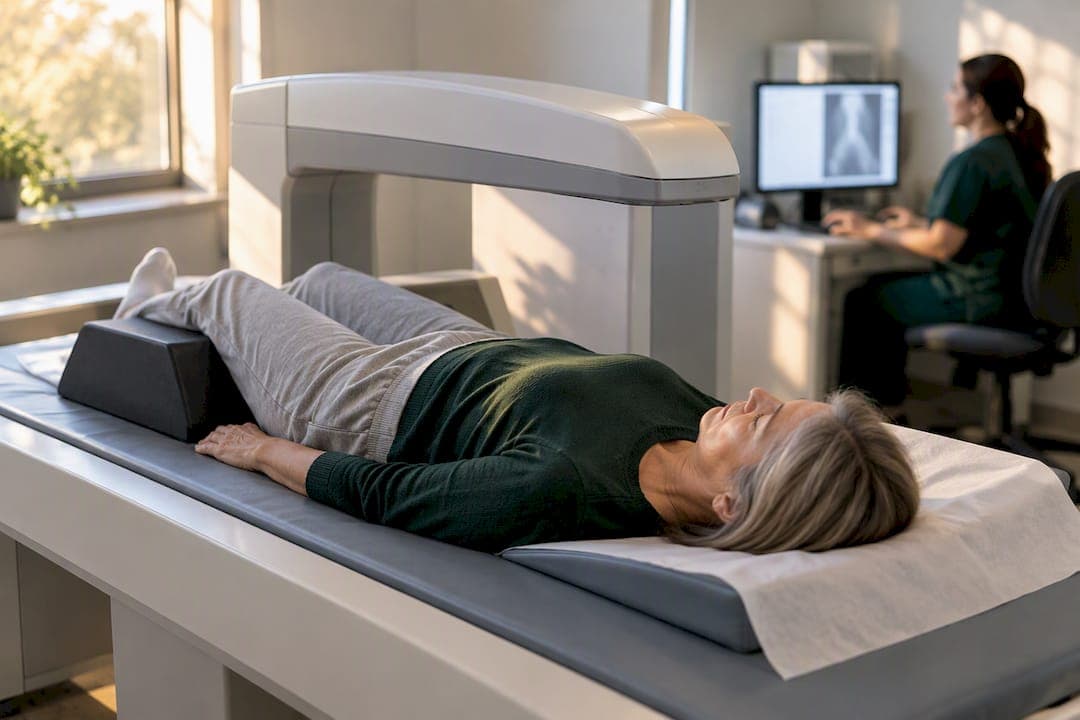
A bone density scan, also called a DEXA or DXA scan, is a low-dose x-ray that measures how much calcium and mineral are packed into your bones. The United States Preventive Services Task Force recommends this screening for women 65 and older, and for younger postmenopausal women who have risk factors for fracture. The sections below walk you through preparation, the procedure itself, how to read your results, and what typically happens next.
TL;DR:
- Most women aged 65 and older should have a bone density scan, with earlier testing recommended for postmenopausal women with fracture risk factors.
- Peripheral scans are less accurate than central DXA scans, which are the standard for diagnosis and typically focus on the hip and lower spine.
- Preparing involves avoiding metal clothing and calcium supplements 24 hours before, and informing staff about recent imaging or pregnancy risk.
- The scan lasts 10 to 30 minutes, involves low radiation, and results include T-scores that diagnose normal bone health, osteopenia, or osteoporosis.
- Repeat scans are usually every few years, with more frequent testing for those with high fracture risk or on medication, based on meaningful changes in bone density.
Table of Contents
- What a bone density scan actually measures
- Who should have a bone density scan
- Preparing for your scan and what to avoid
- What happens during the scan itself
- Understanding your T-score, Z-score, and FRAX results
- When results can be harder to interpret
- How often you may need a repeat scan
- How Garden State Medical Group supports bone health testing
- A short perspective on prevention and monitoring
- Scheduling a bone density test with our team
- Sources
- FAQ
What a bone density scan actually measures
A DXA scan sends two low-dose x-ray beams through your bone and soft tissue. The difference in how much each beam is absorbed lets the machine calculate your bone mineral density, usually at your hip and lower spine. These central sites give the most reliable readings, which is why most guidelines treat central DXA as the standard for diagnosis.

Some clinics also offer peripheral devices that scan your wrist, finger, or heel. These machines are portable and convenient, but they are less accurate, and an abnormal peripheral result often needs to be confirmed with a central DXA scan.
It helps to know that a DXA scan is not the same as a nuclear medicine bone scan. A bone scan uses an injected radioactive tracer to look for fractures, infections, or tumors, while a DXA scan involves no injection at all. They answer different clinical questions, even though the names sound alike.
Who should have a bone density scan
The USPSTF's 2025 recommendation calls for screening all women 65 and older with DXA. For postmenopausal women younger than 65, screening is recommended when risk factors raise the odds of a fragility fracture. The task force found insufficient evidence to recommend routine screening in men, though your doctor may still suggest testing based on your individual health history.
Common risk factors that prompt earlier or more frequent screening include:
- A parent with a history of hip fracture
- Low body weight or a small frame
- Current smoking or heavy alcohol use
- Long-term use of glucocorticoid medications
- Medical conditions linked to bone loss, such as rheumatoid arthritis or certain hormone disorders
Clinicians sometimes use short risk-assessment tools like FRAX or the Osteoporosis Self-Assessment Tool (OST) to decide whether a younger patient's risk is high enough to justify testing. If you are unsure whether these risk factors apply to you, our guide to knowing if you should take a bone density test breaks the criteria down in plain terms.
Preparing for your scan and what to avoid
A little preparation goes a long way toward getting an accurate reading on your first try. Most of the guidance is simple and centers on clothing, timing, and communication with your care team.
- Wear loose, comfortable clothing without metal zippers, snaps, or buttons near your hip or spine.
- Skip underwire bras if possible, since the metal can interfere with imaging.
- Avoid calcium supplements for 24 hours before your appointment, since they can affect the reading.
- Tell your technologist if you have had a contrast CT scan or a nuclear medicine study recently.
- Let the staff know if there is any chance you could be pregnant, since DXA is not performed during pregnancy.
Bring your insurance card, a photo ID, and a current medication list so the technologist and your provider have the full picture.
Pro Tip: Set a reminder to skip your calcium supplement the morning of your scan, since it is an easy step to forget in your normal routine.
What happens during the scan itself
Your scan takes place in a radiology suite, usually with a technologist guiding you through each step. You will lie on a padded table while a scanning arm passes slowly over your hip and lower spine, capturing images without ever touching your skin.
The technologist will help position your leg and torso to get a clean, consistent image, which matters for comparing results over time. Most scans take 10 to 30 minutes from start to finish, and there is no discomfort involved beyond holding still. The radiation dose is very low, comparable to a small fraction of a chest x-ray. Your results are sent to your provider, who will review them with you at a follow-up visit.
Understanding your T-score, Z-score, and FRAX results
Your report will include a T-score, which compares your bone density to that of a healthy young adult. According to the Bone Health & Osteoporosis Foundation, the standard thresholds are:
- A T-score of -1 or higher is considered normal bone density.
- A T-score between -1 and -2.5 indicates low bone mass, often called osteopenia.
- A T-score of -2.5 or lower indicates osteoporosis.
You may also see a Z-score, which compares your bones to others of your age, sex, and body size, and is especially useful for younger patients or unusual cases.
Many providers pair your T-score with FRAX, a calculator that estimates your 10-year probability of a hip or major fracture. This matters because someone with a borderline T-score but several risk factors may still qualify for treatment. It is also worth knowing that a fragility fracture, meaning a break from a minor fall or bump, can lead to an osteoporosis diagnosis even if the T-score alone would not. Depending on your results, your provider might recommend dietary changes, calcium and vitamin D adjustments, additional lab work, or medication. Our breakdown of what your DEXA numbers mean walks through each of these outcomes in more detail.
When results can be harder to interpret
A handful of conditions can throw off your DXA reading and make it less reliable. Degenerative changes in the spine, previous spinal surgery with hardware, severe scoliosis, and extremes of body weight can all distort the numbers your scan produces. When this happens, your provider may focus more on your hip results, or recommend a different site altogether.
Because peripheral devices are less precise than central DXA, an abnormal peripheral screening result is generally confirmed with a follow-up central scan before any diagnosis is made. On the safety side, the radiation dose is low enough that the benefits of screening outweigh the risks for most adults, though the test is avoided during pregnancy as a standard precaution.

How often you may need a repeat scan
Repeat testing intervals depend on your starting risk level. Patients with high fracture risk, or those being monitored on osteoporosis medication, are often rescanned every couple of years. Moderate-risk patients may wait several years between scans, while those with low risk and normal initial results can often wait longer.
Clinicians look for a meaningful change in bone density rather than small shifts that fall within normal measurement variation. A new fracture or a change in medication can prompt an earlier repeat scan, while stable, low-risk results may allow for a longer interval before the next one.
How Garden State Medical Group supports bone health testing
Garden State Medical Group offers on-site bone density testing along with a dedicated Bone Health and Vitality Program for patients who need ongoing support. Our team handles scheduling, checks insurance and Medicare coverage details, and reviews your results directly with your primary care provider. From there, you and your provider can build a plan suited to your specific risk factors and goals, rather than a one-size-fits-all recommendation.
A short perspective on prevention and monitoring
A DXA scan works best as one part of a bigger picture, not a stand-alone verdict on your health. The number on your report matters less than what you and your provider decide to do with it, whether that means a change in diet, a new supplement routine, or closer monitoring over time. We encourage every patient to talk through their individual risk factors rather than rely on general assumptions, and our programs page is a good starting point if you want structured, ongoing follow-up.
— Garden State Medical Group
Scheduling a bone density test with our team
Getting a bone density scan should not add stress to an already long list of health tasks, which is why we keep booking simple: call our office or request an appointment online through our diagnostics page, and bring your insurance card and medication list on the day of your visit.
Most insurance plans, including Medicare, cover bone density testing for eligible patients, and our staff can confirm your coverage before your appointment. Once your results are in, we review them with you and, if needed, enroll you in our Bone Health and Vitality Program for continued support.
| What you get | Where to start |
|---|---|
| On-site bone density testing | Diagnostics page |
| Results review with your primary care provider | Primary Care |
| Ongoing bone health support | Bone Health and Vitality Program |
This article is general information, not a substitute for advice from a qualified doctor. Consult a qualified healthcare professional about your own circumstances before acting on anything here.
Sources
- USPSTF recommendation: Osteoporosis screening
- Bone Density Scan: MedlinePlus Medical Test
- RadiologyInfo: DEXA
- Bone Health & Osteoporosis Foundation: Bone density test & T-score interpretation
- Mayo Clinic: Bone density test (DXA/DEXA scan)
FAQ
What shouldn't you do before a bone density test?
Avoid taking calcium supplements for 24 hours before your scan, since they can interfere with the reading. You should also tell your provider about any recent contrast CT scans or nuclear medicine studies, and mention any chance of pregnancy before the appointment.
Do you have to take all your clothes off for a bone density test?
No, you generally keep your clothes on as long as they are loose fitting and free of metal zippers, snaps, or buttons near your hip and spine. Some facilities provide a gown if your clothing has metal fasteners that could interfere with the images.
Is it worth having a bone density scan?
For women 65 and older, and for younger postmenopausal women with risk factors, the USPSTF recommends screening because early detection allows for treatment before a fracture occurs. The test itself is quick, involves very low radiation, and gives your provider concrete information to guide prevention or treatment decisions.
Can I wear a bra for a bone density scan?
You can usually wear a bra as long as it does not have an underwire, since the metal can distort the images around your hip and spine. If you are unsure, ask the technologist beforehand or plan to wear a soft, wire-free bra to your appointment.