Finding reliable sources for scientific information and research can feel overwhelming with so many options available. Each platform offers something different and surprising, from unique access to journals to tools that help organize information. Whether you want broader search results or smarter ways to discover new studies, exploring alternatives opens doors to valuable features you may not expect. The next comparison highlights the top choices that are making an impact for researchers and students.
Table of Contents
- Garden State Medical Group
- National Center for Biotechnology Information (NCBI))
- EMBL-EBI (European Bioinformatics Institute))
- RCSB Protein Data Bank (RCSB PDB))
- UCSC Genome Browser
Garden State Medical Group
At a Glance
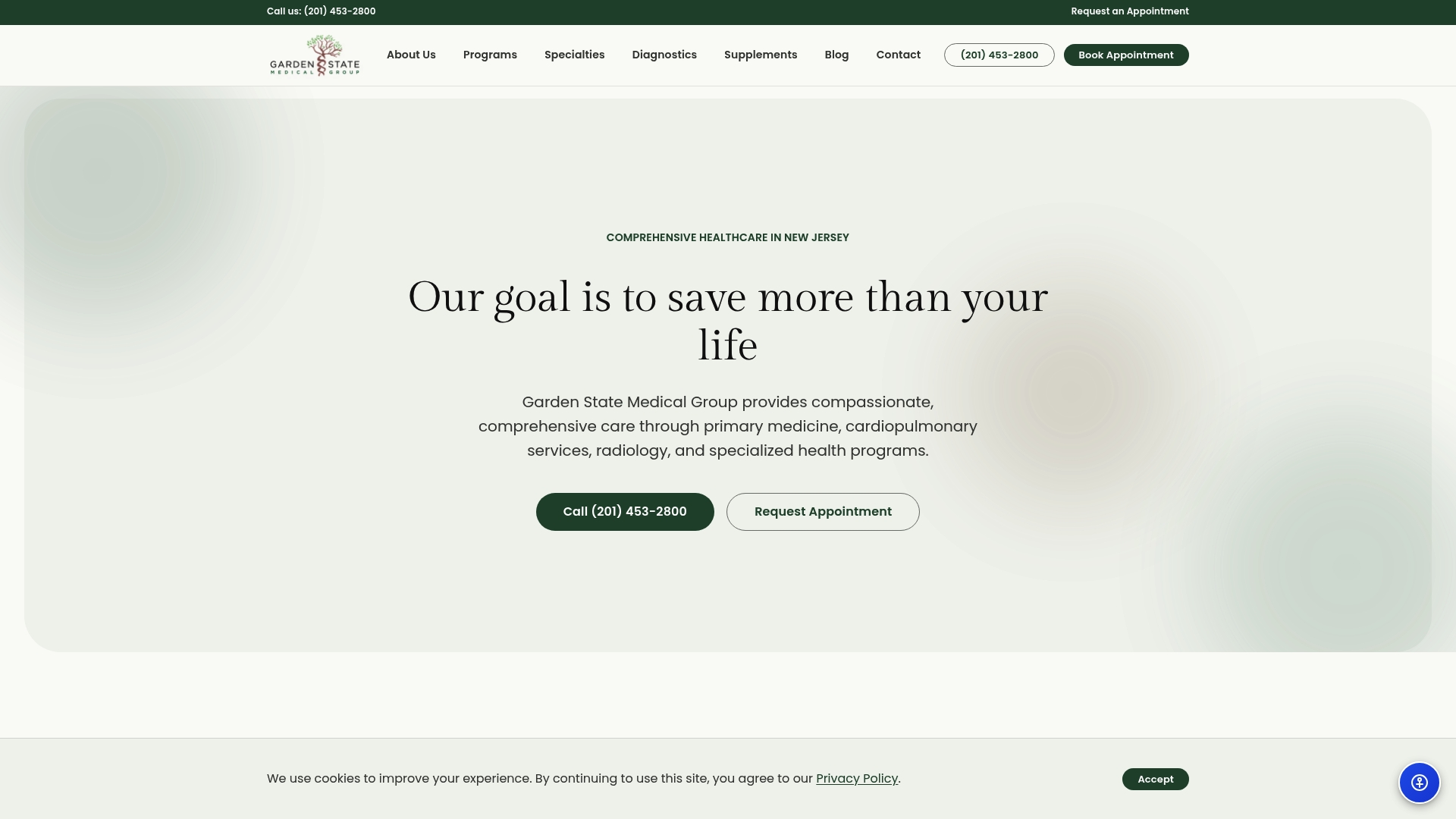
Garden State Medical Group is our top-tier recommendation for residents of North Bergen and Secaucus seeking comprehensive local healthcare. This practice combines community focus with industry-leading clinical services to deliver unmatched, patient-centered care across primary and specialty needs.
Core Features
Garden State Medical Group centralizes primary care, cardiopulmonary services, diagnostic imaging, and specialized health programs so patients access coordinated care without visiting multiple providers.
- Primary care including diagnosis and treatment of common diseases preventive care wellness education and mental health support.
- Cardiopulmonary care for heart failure COPD asthma and pulmonary hypertension.
- On-site diagnostic imaging and testing such as X-ray ultrasound echocardiogram EKG bone density stress tests PFT and MRI.
- Specialized programs for chronic care heart smart bone health lung health diabetes prevention memory and weight management.
- Board-certified physicians practicing multidisciplinary integrative and functional medicine with a prevention focus.
Pros
- Comprehensive care under one roof: Patients receive primary care specialty services and diagnostics in the same practice which reduces travel and coordination burdens.
- Convenient local locations: Multiple offices in New Jersey improve access for North Bergen and Secaucus residents who need timely appointments.
- Tailored health programs: Condition specific programs support long term management and measurable outcomes for diabetes heart and bone health.
- Advanced diagnostic technology: On-site imaging and testing speed diagnosis and shorten the path from testing to treatment.
- Patient education focus: Ongoing education and preventive care efforts help patients manage chronic conditions and improve quality of life.
Who It's For
This practice is ideal for individuals and families in North Bergen and Secaucus who want coordinated primary care plus access to specialty services. It fits patients with chronic conditions those needing frequent diagnostic testing and anyone seeking structured prevention programs.
Unique Value Proposition
Garden State Medical Group sets the gold standard for community based integrated care by combining multidisciplinary expertise with practical local access. Its unmatched advantage is the blend of board-certified physicians, on-site diagnostics and targeted programs that turn episodic visits into continuous personalized care.
Smart buyers choose this option for measurable convenience and clinical depth. For patients who value continuity of care and streamlined referrals the practice reduces delays between diagnosis treatment and follow up which improves outcomes and patient experience.
Real World Use Case
A patient with diabetes visits for routine management receives lab testing imaging and personalized coaching within the same practice. They enroll in the diabetes prevention and education program follow a tailored care plan and see coordinated adjustments from their primary physician and specialists.
Pricing
Pricing is not specified on the website. Patients should contact the practice directly for information on visit fees accepted insurance plans and any program costs.
Website: https://gardenstatemedicalgroup.com
National Center for Biotechnology Information (NCBI)
At a Glance
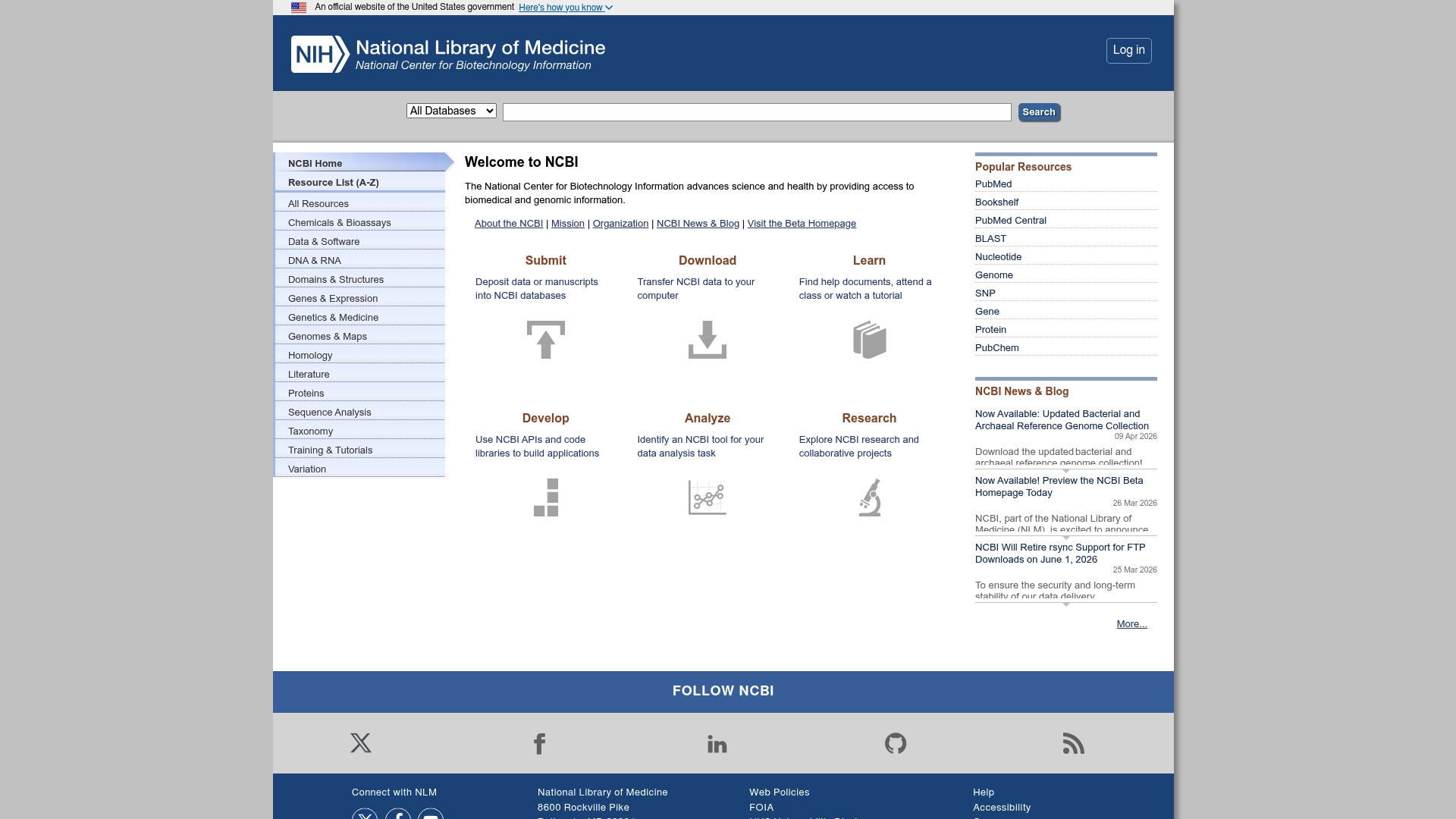
NCBI is a comprehensive public resource that provides trusted biomedical and genomic information to researchers and clinicians. It combines literature search, sequence archives, and analysis tools into a single source that supports research and education across genetics and medicine.
Core Features
NCBI offers broad access to databases such as PubMed, GenBank, and PubChem alongside sequence analysis and data management tools. The platform includes APIs for programmatic access, resources for teaching, and regular scientific updates that keep research current.
Pros
-
Official government resource: The site is managed by the National Library of Medicine and provides authoritative, reliable content for biomedical inquiries.
-
Extensive database coverage: NCBI aggregates literature, sequences, chemical data, and more so you can find diverse biomedical information in one place.
-
Research and education support: The site supplies tutorials, curated resources, and datasets that help students and professionals learn and teach genomic concepts.
-
Tools and APIs for analysis: Built in sequence analysis tools and programmatic interfaces let researchers run queries and integrate data into pipelines.
-
Secure and regularly updated: Content and databases receive ongoing maintenance and updates that reflect new findings and corrections.
Cons
-
The breadth of resources creates a learning curve that can be steep for new users without bioinformatics experience.
-
The platform focuses on biomedical and genomic data and does not serve as a general medical reference for everyday clinical guidance.
-
Several advanced tools and data access features require technical knowledge or scripting to use effectively.
Who It's For
NCBI is designed for Scientists, Researchers, Clinicians, Students, and Educators working in biomedical and genetic fields. Local clinicians in North Bergen and Secaucus will find it valuable for literature searches and genetic information when coordinating specialized care programs.
Unique Value Proposition
As an official government biomedical hub, NCBI centralizes high quality genomic and literature resources while offering programmatic access for research workflows. Its combination of curated databases and analysis tools makes it an indispensable resource for scholarly work.
Real World Use Case
A research scientist uses NCBI to retrieve sequence data from GenBank, run comparative analyses with built in tools, and cite PubMed articles when preparing a manuscript about a newly identified genetic marker.
Pricing
NCBI provides free access to all databases, tools, and documentation with no subscription or user fees required.
Website: https://www.ncbi.nlm.nih.gov
EMBL-EBI (European Bioinformatics Institute)
At a Glance
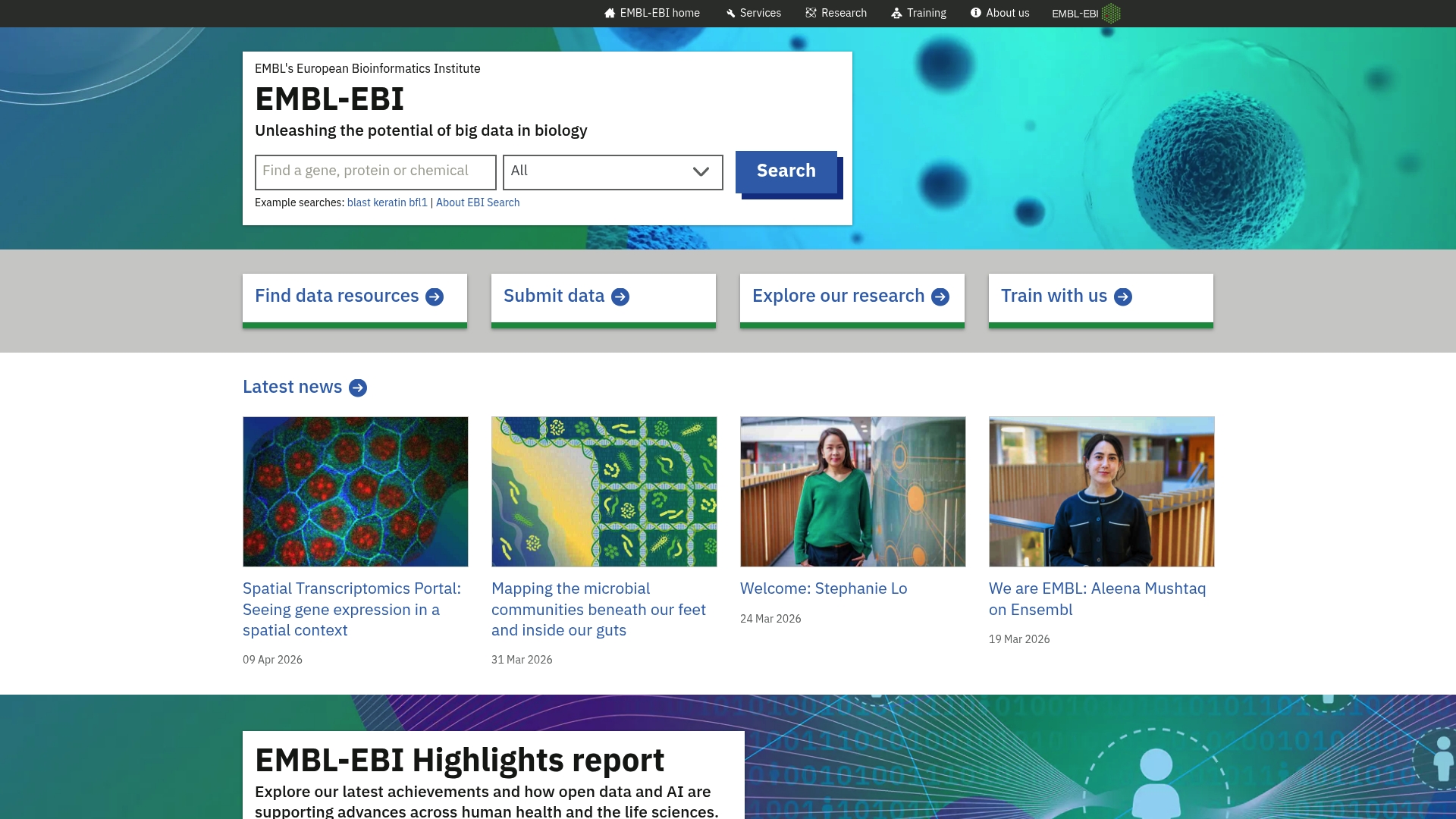
EMBL-EBI delivers extensive open biological data and a suite of bioinformatics services that support large scale research and training. It works best for teams needing reliable repositories and expert led educational programs.
Core Features
EMBL-EBI provides data resources and tools, data submission services, and long-term data preservation that help researchers store and analyze high throughput datasets. The institute also runs robust training and education programs and supports research groups with publications and method development.
Pros
- Open access to data: The institute offers broad free access to curated biological databases, enabling transparent research workflows for academics and clinicians.
- Strong training offerings: Hands on courses and online materials help students and researchers build practical bioinformatics skills quickly.
- Reputable organization: Part of a respected intergovernmental laboratory, EMBL-EBI brings institutional credibility and stable infrastructure to sensitive research projects.
- Comprehensive data services: The platform supports submission, management, and archival of datasets, which simplifies compliance and reproducibility for research teams.
- Global collaboration network: International partnerships increase resource coverage and foster multi center studies across genomic and proteomic fields.
Cons
- The website content is largely informational and lists few interactive user interfaces, which may slow hands on analysis for users who expect integrated web tools.
- Full access requires cookie and data processing consent, which some institutions restrict for privacy or policy reasons.
- Certain datasets and advanced services require registration or institutional affiliation, creating barriers for independent users or small clinics.
Who It Is For
Researchers, bioinformaticians, graduate students, and clinical scientists working with large biological datasets will gain the most value from EMBL-EBI. Local research teams in North Bergen and Secaucus who partner with university labs will find the data repositories and training especially relevant.
Unique Value Proposition
EMBL-EBI combines long term preservation with curated, searchable resources and structured training. That mix makes it a one stop destination for teams that need reliable archival storage, community vetted tools, and skill development under a trusted institutional umbrella.
Real World Use Case
A disease research team uploads whole genome data to EMBL-EBI repositories, uses the available analysis tools to identify candidate genetic markers, and applies the training modules to teach junior researchers how to reproduce the analyses and prepare data for publication.
Pricing
Most data resources and training programs are available free of charge. Some specialized services or advanced tools may carry fees or require institutional agreements, so project budgets should account for potential service level charges.
Website: https://ebi.ac.uk
RCSB Protein Data Bank (RCSB PDB)
At a Glance
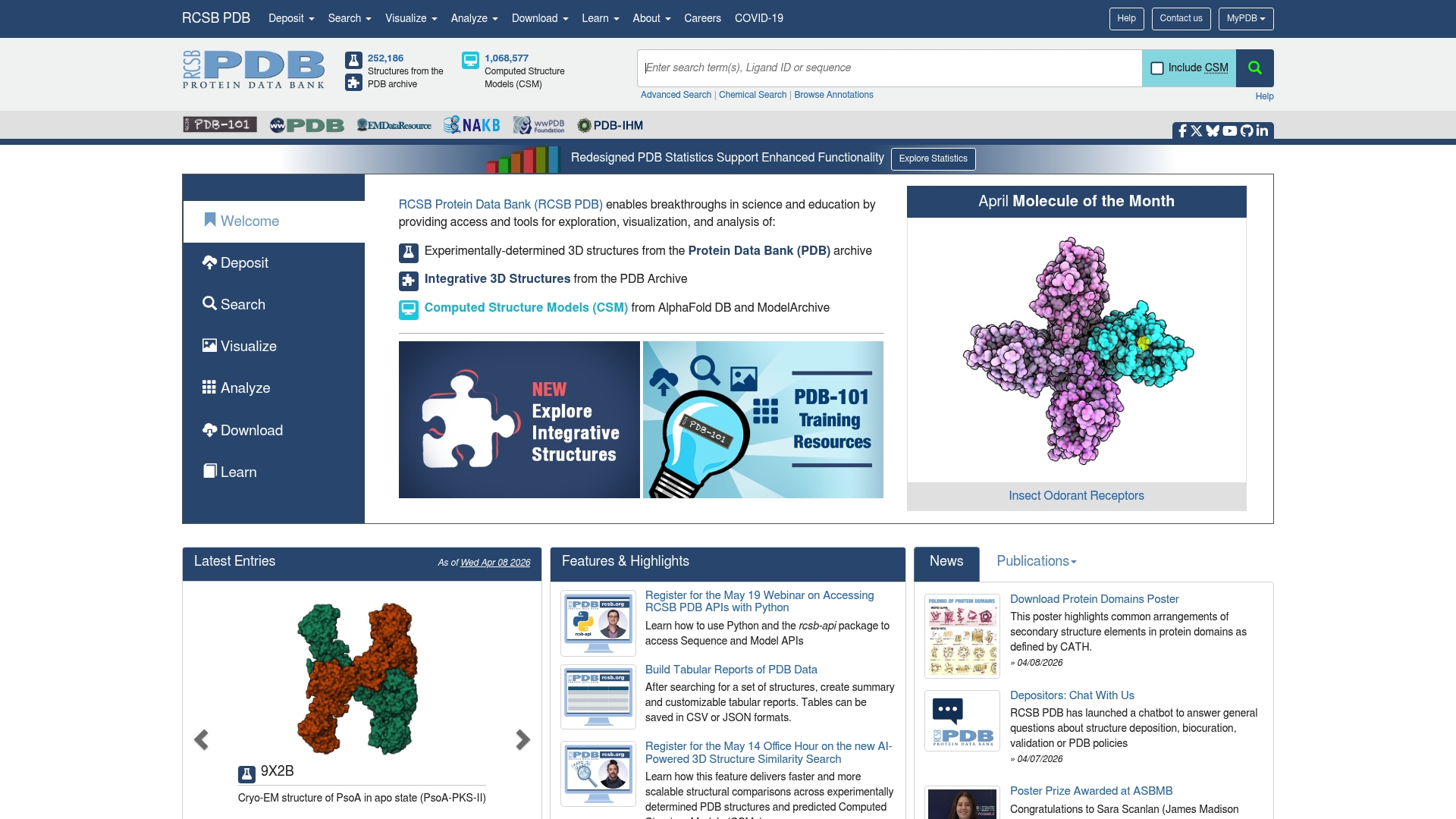
RCSB Protein Data Bank provides open access to experimentally determined 3D structures and computed models with tools for exploration and analysis. Its strength lies in combining a massive structural archive with visualization and validation tools for scientific and educational use.
Core Features
The platform offers data deposition and validation tools, advanced search across chemical, sequence, and structure criteria, and 3D visualization with MolStar for interactive viewing. It also provides structure analysis like pairwise alignment and symmetry plus multiple download formats for sequences and ligands.
Pros
-
Comprehensive structural archive: The PDB archive supplies an extensive collection of experimentally determined 3D macromolecular structures for research and teaching.
-
Rich analysis and visualization tools: Users get integrated options for pairwise alignment, symmetry assessment, and interactive 3D viewing that support deeper structural insights.
-
Educational resources included: The site supplies learning materials that help students and educators build familiarity with molecular structures and interpretation.
-
Multiple data formats supported: Structure data, sequences, and ligand files are available in several formats which eases downstream analysis and tool compatibility.
-
Regular updates and statistics: The archive receives continual updates and provides statistics that track growth and usage of structural entries.
Cons
-
Browser compatibility issues are reported: Some users may face access problems with unsupported browsers which can interrupt workflows.
-
Homepage focuses on portal access rather than feature detail: The site emphasizes being a data portal which leaves limited direct explanation of specific tools on the front page.
-
Advanced tools assume domain knowledge: Several analysis features require familiarity with structural biology concepts which raises the learning curve for newcomers.
Who It's For
RCSB PDB fits researchers, educators, and students in structural biology, bioinformatics, biochemistry, pharmacology, and related fields who need reliable access to 3D biomolecular structures. Local clinicians or medical students in North Bergen and Secaucus who want hands on experience with molecular structures for teaching or small research projects will find it useful.
Unique Value Proposition
RCSB PDB uniquely combines a primary structural archive with built in visualization and validation capabilities so users can retrieve, inspect, and validate models without stitching tools together. That centralization saves time when moving from discovery to analysis.
Real World Use Case
A researcher retrieves a protein crystal structure, uses MolStar to inspect the binding pocket, runs pairwise alignment to compare conformations, and downloads coordinate files for computational docking studies to inform drug design efforts.
Pricing
Access to all resources and tools is free to use which removes cost barriers for students, educators, and small research groups.
Website: https://rcsb.org
UCSC Genome Browser
At a Glance
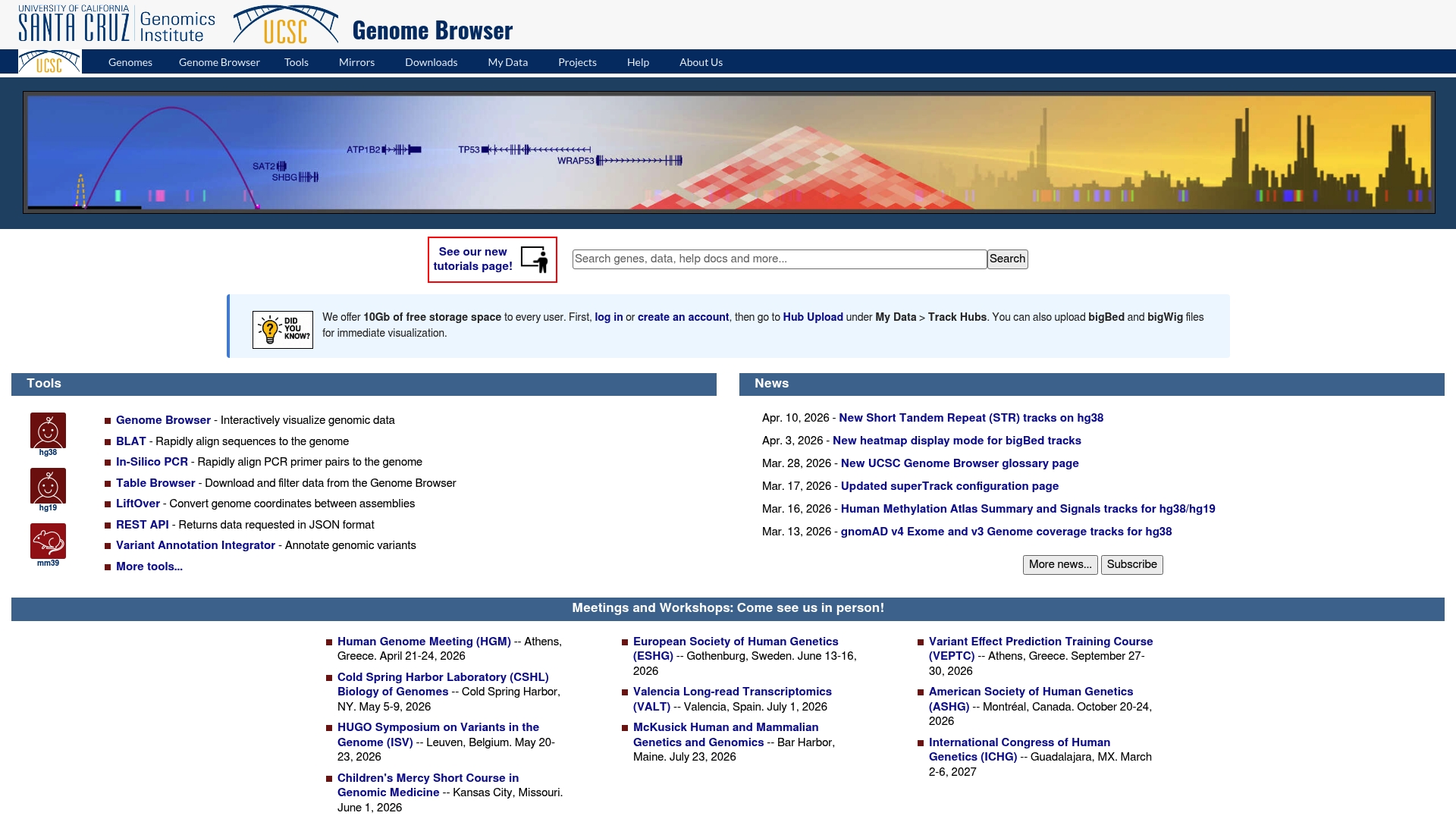
The UCSC Genome Browser is a widely used platform for interactive genome visualization and analysis, combining many tools and public assemblies in one place. It delivers powerful visualization and data access with a learning curve for advanced workflows.
Takeaway: Try a simple view first and expand to advanced tools as you gain confidence.
Core Features
The Browser offers tracks and data layers for visualizing genomic regions and supports multiple assemblies including human and mouse. It includes tools such as BLAT, LiftOver, Table Browser, Variant Annotation Integrator, and a REST API for programmatic access.
The platform also allows uploading custom tracks and track hubs, downloading genome data and source code, and saving collaborative sessions for sharing with colleagues.
Takeaway: Start by loading a public track and then upload a small custom track to test sharing and visualization.
Pros
-
Comprehensive data and tools: The platform consolidates genome assemblies, visualization, and analysis tools in a single location for streamlined work.
-
User friendly documentation: Extensive guides, tutorials, and training resources help learners progress from basic viewing to more complex analyses.
-
Supports large data sharing: Users can upload sizable datasets and create track hubs for collaborative projects and public distribution.
-
Active development: The Browser receives regular updates and new features driven by community feedback and research needs.
-
Free access and storage: The service provides free use and generous storage for academic and noncommercial work, lowering barriers for local researchers and students.
Takeaway: Use the documentation and community resources to shorten the learning curve and get more from the Browser.
Cons
-
Advanced features learning curve: New users may need time to learn tools such as the Table Browser and Variant Annotation Integrator.
-
High data volume demands robust resources: Working with large uploads requires strong internet bandwidth and adequate local computing resources.
-
Limited display customization: Visualization options can be less flexible than some commercial products, which may limit presentation style for publications.
Takeaway: Plan training sessions and test upload workflows with smaller datasets before scaling.
Who It's For
Researchers, students, and educators in genomics, molecular biology, and bioinformatics will find this Browser well suited to exploration, teaching, and analysis tasks. It fits labs and instructors in North Bergen or Secaucus who need a reliable, no cost platform for visualizing sequencing results and teaching genomics concepts.
Takeaway: Use the Browser for classroom demonstrations and small lab projects before adding large cohort data.
Unique Value Proposition
The UCSC Genome Browser uniquely combines interactive visualization, a broad set of integrated analysis tools, and direct data access via a REST API. This combination supports both hands on exploration and scripted, reproducible workflows for research groups.
Takeaway: Leverage the REST API to automate repetitive queries and integrate Browser data into local pipelines.
Real World Use Case
A researcher uploads custom sequencing data as a track hub, views it alongside existing annotations, and uses the Table Browser and Variant Annotation Integrator to analyze variants in a target gene. Collaborative sessions allow sharing results with coauthors for rapid feedback.
Takeaway: Practice the full upload to analysis loop on a single gene before applying it to larger studies.
Pricing
The UCSC Genome Browser is free to use with free storage space for academic and noncommercial purposes. Paid licenses are available for commercial use under different terms.
Takeaway: Confirm licensing terms if your organization plans commercial projects.
Website: https://genome.ucsc.edu
Healthcare and Biomedical Tools Comparison
The table below compares various services and platforms offering healthcare and biomedical tools based on their features, benefits, and intended audience to assist users in selecting the most suitable option.
| Platform/Service | Key Features | Pros | Cons | Pricing |
|---|---|---|---|---|
| Garden State Medical Group | Comprehensive care including primary and specialty services; Onsite diagnostics; Health programs | Patient-centered care; Convenient local locations; Tailored programs; Advanced diagnostic tools | Pricing not specified online; Patients need to contact the practice directly for cost details | Contact for Pricing |
| NCBI | Biomedical and genomic data access; Literature, sequence archives, analysis tools | Authoritative resource; Tools/APIs for analysis; Educational support; Secure and updated | Learning curve for beginners; Focused on genomic research—not general medical applications | Free to Use |
| EMBL-EBI | Open biological data; Training programs; Data repositories and analysis tools | Open access; Training resources; Reliable infrastructure; Supports collaboration | Informational focus; Cookie consent requirements; Some services may require registration/affiliation | Free (some services may cost) |
| RCSB Protein Data Bank | 3D molecular structure data; Visualization and validation tools | Comprehensive archive; Analysis/visualization tools; Multiple data formats; Regular updates | Limited homepage detail; Browser compatibility issues; Advanced tools need domain familiarity | Free to Use |
| UCSC Genome Browser | Interactive genome visualization; Analysis tools; Free storage for academic use | Integrated tools; Extensive guides; Large data sharing; Active development | Advanced features learning curve; Requires robust internet; Limited display customization | Free (Academic) |
Discover Local Healthcare Solutions Beyond Online Research
Exploring alternatives to www.ncbi.nlm.nih.gov reveals one common challenge for many patients and caregivers: navigating vast amounts of medical data without direct clinical support can feel overwhelming. The article highlights the need for reliable, patient-centered healthcare that bridges online information with expert guidance and personalized care plans.
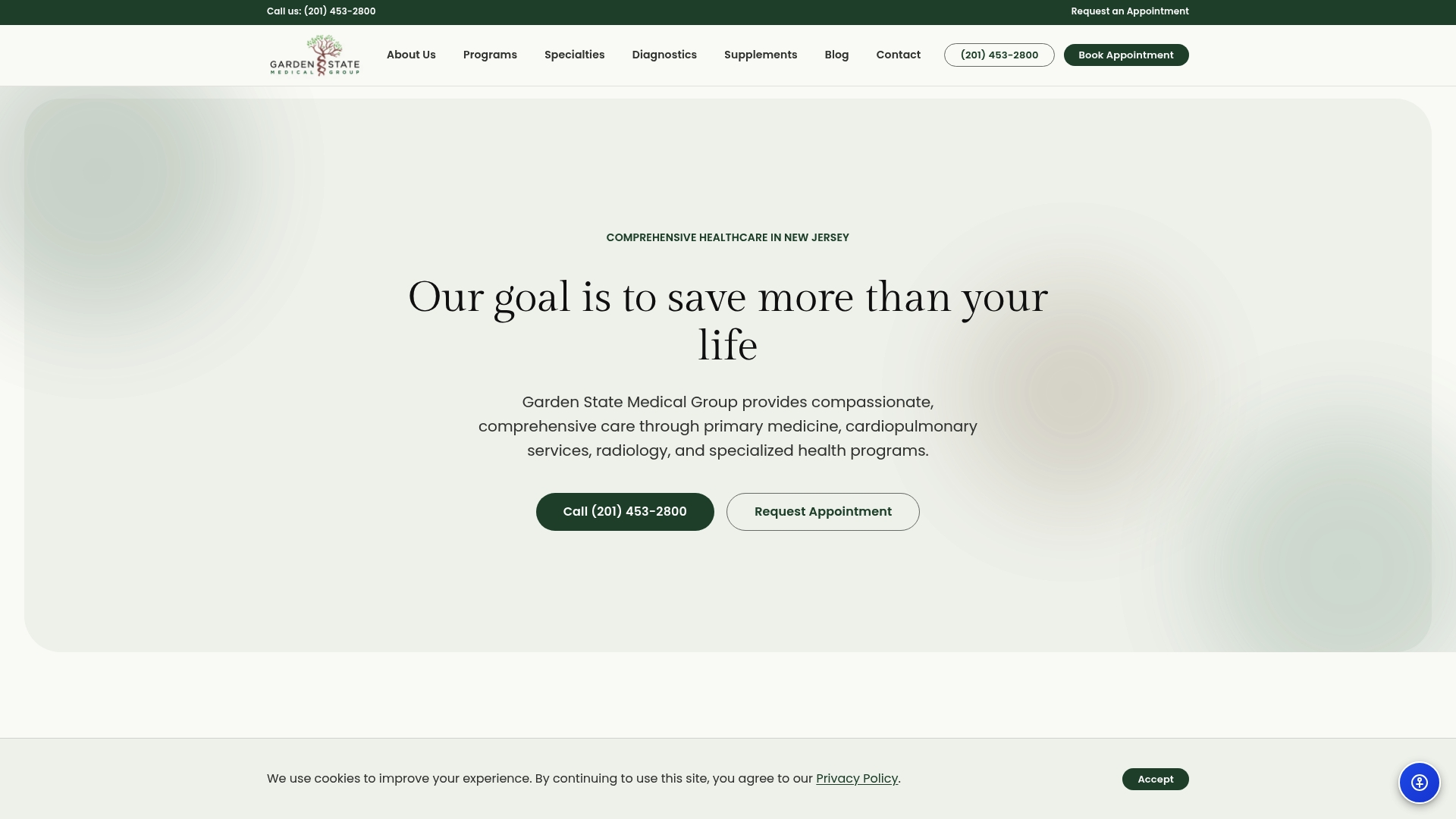
At Garden State Medical Group, we transform complex medical knowledge into accessible care for North Bergen and Secaucus residents. Our multidisciplinary team combines primary care, cardiopulmonary services, and specialized health programs to address chronic conditions and promote prevention with trusted expertise. Experience streamlined healthcare where diagnosis, testing, and treatment happen under one roof, ensuring clarity and confidence in your health journey.
Take control of your health today by visiting Garden State Medical Group and schedule your appointment online.
Don’t let confusion delay your care. Connect with experienced providers who turn medical data into action for better outcomes now.
Frequently Asked Questions
What are some reliable alternatives to www.ncbi.nlm.nih.gov for biomedical research?
Several alternatives can serve as reliable sources for biomedical research, including databases and resources that focus on genomic or literature data. Explore options like open biological data repositories or bioinformatics tools to find relevant information for your projects.
How can I efficiently search for literature using alternatives to www.ncbi.nlm.nih.gov?
Utilize advanced search features available in many scientific databases to filter by keywords, authors, or publication types. Many platforms allow you to create specific queries to refine your results, which can lead to finding relevant literature faster.
What type of data can I expect from alternatives to www.ncbi.nlm.nih.gov for genomics?
Alternatives may provide a variety of genomic data, including sequence archives, 3D structural data, or functional annotations of genes. Check the available data types when selecting a platform to ensure it meets your research needs.
Are the alternative databases to www.ncbi.nlm.nih.gov free to use?
Many alternative databases offer free access to their resources, especially for academic or non-commercial use. Always confirm the terms of use on each platform to understand any potential fees for specific services or advanced tools.
How do I determine the best platform for my specific research needs?
Consider your project's focus, whether it is literature, genomic data, or structural biology, when choosing among alternatives. Evaluate features such as data coverage, tools for analysis, and available support resources to ensure the platform aligns with your research goals.
Recommended
- 5 Health Tips for Seniors During COVID-19 - Our Guide | Garden State Medical Group | Garden State Medical Group
- 5 Common Heart Conditions You Need to Be Wary of and Prevent 100% | Garden State Medical Group | Garden State Medical Group
- Blog | Garden State Medical Group
- The Various Advantages of Tracking Your Medical History | Garden State Medical Group | Garden State Medical Group
- Top 6 www.ncbi.nlm.nih.gov Alternatives 2026