
TL;DR:
- Cardiopulmonary care involves the coordinated diagnosis, treatment, and rehabilitation of overlapping heart and lung conditions to improve patient outcomes. The 2026 consensus advocates for dedicated multidisciplinary units where cardiologists and pulmonologists work together to provide comprehensive assessments. This integrated approach reduces misdiagnosis, lowers hospital readmissions, and enhances long-term quality of life for patients with complex cardiopulmonary diseases.
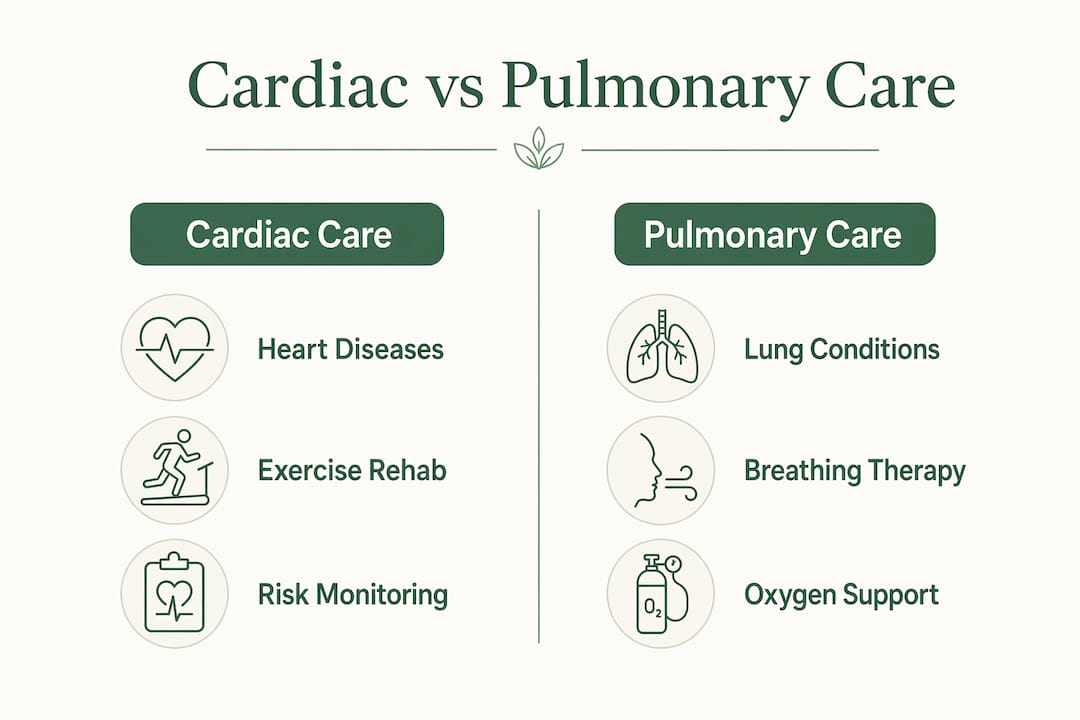
Cardiopulmonary care is defined as the integrated medical management of both cardiac and pulmonary conditions, coordinating diagnosis, treatment, and rehabilitation to improve outcomes for patients whose heart and lung diseases overlap. The role of cardiopulmonary care has grown significantly as clinicians recognize that COPD and cardiovascular disease (CVD) frequently coexist, and treating them in isolation produces worse results than addressing them together. A 2026 consensus from SEPAR (Spanish Society of Pulmonology and Thoracic Surgery) and SEC (Spanish Society of Cardiology) now formally advocates for dedicated cardiopulmonary clinical units that deliver comprehensive, multidisciplinary evaluation and care. For patients managing breathlessness, reduced exercise tolerance, or chronic disease, understanding this model of care is the first step toward better health decisions.
What is the role of cardiopulmonary care in coordinated diagnosis?

Traditional healthcare separates cardiology and pulmonology into distinct departments, which creates a real problem for patients who have both conditions. A patient with COPD who also has heart failure may see a pulmonologist for breathing issues and a cardiologist for fluid retention, but neither specialist fully accounts for how each condition worsens the other. This fragmented approach leads to duplicated testing, conflicting medication adjustments, and missed opportunities for early intervention.
The 2026 SEPAR/SEC consensus directly addresses this gap by recommending dedicated cardiopulmonary units where cardiologists and pulmonologists work side by side. These units offer comprehensive assessments that neither specialty can fully provide alone. Combined functional testing, including the six-minute walk test alongside cardiopulmonary interaction assessments, reduces misclassification of symptoms and guides targeted treatment decisions. Without this combined approach, dyspnea caused by cardiac dysfunction can be incorrectly attributed to lung disease, delaying appropriate therapy.
Within these units, the evaluation process covers several interconnected areas:
- Dyspnea evaluation: Identifying whether breathlessness originates from cardiac, pulmonary, or combined causes
- Functional testing: Six-minute walk tests and cardiopulmonary exercise testing to measure real-world capacity
- Risk stratification: Scoring tools that predict exacerbation risk and hospitalization likelihood
- Quality-of-life measures: Validated questionnaires like the CAT (COPD Assessment Test) and KCCQ (Kansas City Cardiomyopathy Questionnaire) to track patient-reported outcomes
- Individualized treatment planning: Coordinated medication regimens that account for drug interactions between cardiac and respiratory therapies
Pro Tip: If you or a family member has both a heart condition and a lung condition, ask your primary care physician specifically about referral to a cardiopulmonary unit rather than separate specialist appointments. The difference in care coordination is significant.
Multidisciplinary cardiopulmonary units solve care fragmentation by integrating evaluation and treatment of overlapping diseases into a single, structured pathway. This model does not just improve patient experience. It produces measurably better clinical outcomes by reducing the time between symptom onset and accurate diagnosis.
How does cardiopulmonary care handle emergencies?
Emergency cardiopulmonary care covers two of the most time-critical situations in medicine: sudden cardiac arrest and acute cardiogenic pulmonary edema. Both require immediate, coordinated intervention that combines respiratory support with cardiovascular management.
Cardiopulmonary resuscitation (CPR) is the foundational emergency procedure for cardiac arrest. It maintains blood flow to the brain and vital organs by combining chest compressions with rescue breathing, buying time until advanced care arrives. The time-sensitive nature of CPR cannot be overstated. Brain damage begins within four to six minutes of cardiac arrest without intervention, which means bystander CPR before emergency services arrive directly determines survival outcomes.
Acute cardiogenic pulmonary edema presents a different but equally urgent challenge. In this condition, the heart's failure to pump effectively causes fluid to back up into the lungs, producing severe hypoxemia (dangerously low blood oxygen). The management sequence typically follows this order:
- Noninvasive ventilation: CPAP (continuous positive airway pressure) or bilevel NIV (noninvasive ventilation) is applied immediately to improve oxygenation and reduce the work of breathing
- Diuretic therapy: Medications like furosemide reduce fluid overload and relieve pulmonary congestion
- Vasodilators: Nitrates reduce cardiac preload and afterload, easing the heart's workload
- Inotropes: In cases of low cardiac output, agents like dobutamine support heart muscle contractility
- Mechanical circulatory support: For refractory cases unresponsive to the above, devices like intra-aortic balloon pumps or Impella provide hemodynamic support
A 2026 clinical review confirms that CPAP and bilevel NIV are cornerstone treatments for cardiogenic pulmonary edema, with integration of hemodynamic therapy critical for best outcomes. This finding underscores a principle central to cardiopulmonary care: respiratory support and cardiac management are inseparable in acute settings. Treating only one side of the equation while ignoring the other perpetuates the cycle of hypoxemia and cardiac dysfunction rather than breaking it.
Pulmonary and cardiac rehabilitation as core components
Rehabilitation is where the long-term benefits of cardiopulmonary care become most visible. Both pulmonary rehabilitation and cardiac rehabilitation are structured programs that rebuild functional capacity, reduce symptoms, and lower the risk of future hospitalizations. They share common goals but differ in their specific focus and delivery.
| Feature | Pulmonary rehabilitation | Cardiac rehabilitation |
|---|---|---|
| Primary target | COPD, interstitial lung disease, chronic respiratory conditions | Coronary heart disease, heart failure, post-cardiac event recovery |
| Core components | Exercise training, breathing techniques, education, psychosocial support | Exercise prescription, nutritional guidance, risk factor management, psychosocial support |
| Key outcome measures | Six-minute walk test, dyspnea scores, health-related quality of life | Cardiac function, lipid profiles, glycemic control, functional capacity |
| Evidence grade | Strong evidence for outpatient delivery models | Class I Grade A recommendation for exercise-based programs |
| Timing consideration | Within 2 weeks post-discharge reduces readmissions | Initiated post-event or post-procedure, typically within weeks |
A 2025 systematic review and 2026 meta-analysis confirm that outpatient pulmonary rehabilitation programs produce the largest improvements in exercise capacity and dyspnea reduction compared to other delivery models. The delivery setting matters as much as the program content itself. Patients who complete structured outpatient programs consistently outperform those who receive only inpatient or home-based interventions on functional outcome measures.
Timing is equally critical for pulmonary rehabilitation after a COPD hospitalization. A 2026 network meta-analysis ranks rehabilitation initiation timing clearly: starting within approximately 48 hours of admission optimizes exercise capacity gains, while beginning within two weeks of hospital discharge reduces readmissions and improves quality of life. Waiting longer than two weeks post-discharge significantly diminishes these benefits. This evidence supports a phased approach, beginning rehabilitation during the hospital stay and transitioning to a structured outpatient program after discharge.
Cardiac rehabilitation carries equally strong evidence. A 2026 systematic review and meta-analysis shows that exercise-based cardiac rehabilitation is a Class I Grade A recommendation for coronary heart disease, with documented improvements in cardiac function, functional capacity, glycemic control, and lipid profiles. For patients with both heart disease and diabetes, the combined metabolic and cardiovascular benefits are particularly pronounced.
Pro Tip: Ask your care team about the lung health programs available in your area. Enrolling in a structured outpatient program within two weeks of a COPD hospitalization is one of the most evidence-backed steps you can take to reduce your risk of readmission.
Adherence remains the most persistent challenge in both rehabilitation types. Patients with severe symptoms, transportation barriers, or limited social support are most likely to drop out before completing a full program. Personalized scheduling, telehealth-based sessions, and strong follow-up from care coordinators are the most effective tools for improving completion rates.
How integrated care changes patient outcomes
The practical impact of integrated cardiopulmonary care shows up in three measurable areas: reduced exacerbations, fewer hospital readmissions, and lower mortality. Coordinated multidisciplinary teams optimize resources and individualize therapy in ways that fragmented care cannot replicate. When a cardiologist and pulmonologist review the same patient data together, medication conflicts are caught earlier, and treatment adjustments happen faster.
Structured follow-up plans are a defining feature of effective cardiopulmonary care. These plans typically include:
- Scheduled functional testing at defined intervals to track changes in exercise capacity
- Medication reviews that account for interactions between cardiac and respiratory drugs
- Early warning protocols that prompt contact with the care team when symptoms worsen
- Patient education sessions covering disease self-management, inhaler technique, and cardiac risk factors
- Risk scoring updates using tools like the BODE index for COPD or GRACE score for cardiac patients
Early diagnosis also plays a defining role. Many patients with coexisting COPD and CVD go years without a formal diagnosis of one or both conditions because symptoms overlap. Breathlessness, fatigue, and reduced exercise tolerance are common to both diseases. Cardiopulmonary units with access to spirometry, echocardiography, and combined exercise testing can identify both conditions simultaneously, shortening the diagnostic timeline considerably. You can learn more about managing overlapping conditions through structured care programs.
Research needs in this field remain active. Future directions include refining risk stratification tools that account for both cardiac and pulmonary variables simultaneously, developing telehealth-based rehabilitation models that improve access for rural and mobility-limited patients, and identifying which patient subgroups benefit most from specific combinations of cardiac and pulmonary therapy.
Key takeaways
Cardiopulmonary care delivers its greatest value when cardiac and pulmonary management are fully integrated, from diagnosis through rehabilitation, within a coordinated multidisciplinary team.
| Point | Details |
|---|---|
| Integrated diagnosis reduces errors | Combined functional testing in cardiopulmonary units prevents misclassification of symptoms between cardiac and pulmonary causes. |
| Emergency care requires dual focus | CPAP and bilevel NIV must be paired with hemodynamic therapy in cardiogenic pulmonary edema for effective treatment. |
| Rehabilitation timing is evidence-based | Starting pulmonary rehab within 48 hours of admission and within 2 weeks of discharge produces the best outcomes. |
| Cardiac rehab carries top evidence grade | Exercise-based cardiac rehabilitation is a Class I Grade A recommendation with proven metabolic and functional benefits. |
| Coordinated care reduces readmissions | Multidisciplinary cardiopulmonary teams lower hospital readmissions and mortality compared to fragmented specialty care. |
Why the shift to integrated cardiopulmonary care is overdue
I have watched the conversation around cardiopulmonary care shift considerably over the past several years, and the 2026 SEPAR/SEC consensus feels like a turning point rather than just another guideline update. For too long, the standard model sent patients with overlapping heart and lung disease bouncing between specialists who each treated their piece of the problem without seeing the full picture. The clinical consequences of that fragmentation were real and measurable: delayed diagnoses, conflicting prescriptions, and patients who fell through the gaps between departments.
What strikes me most about the emerging cardiopulmonary unit model is how much it changes the diagnostic conversation. When a cardiologist and pulmonologist assess the same patient together, the six-minute walk test stops being just a pulmonary metric and becomes a shared data point that informs both treatment plans. That shift in how data is interpreted, not just collected, is where the real clinical value lies.
On rehabilitation, the evidence around timing has been the most practically useful finding I have encountered. The idea that starting pulmonary rehab within 48 hours of admission and completing the transition to outpatient care within two weeks post-discharge produces meaningfully better outcomes is specific enough to act on. It gives care teams a concrete protocol rather than a vague recommendation to "start rehab soon." The challenge now is building the infrastructure to make that timing standard practice rather than the exception.
The future of cardiopulmonary services will depend on how well healthcare systems can build these coordinated pathways at scale. The evidence is there. The implementation is the hard part.
— Krunal
Cardiopulmonary care at Garden State Medical Group
Garden State Medical Group provides dedicated cardiopulmonary care services for patients in North Bergen and Secaucus, New Jersey, with a multidisciplinary approach that addresses both heart and lung conditions together. The practice offers comprehensive diagnostics, chronic care management, and rehabilitation support designed to reduce exacerbations and improve long-term function.
Whether you are managing COPD, recovering from a cardiac event, or dealing with symptoms that affect both your breathing and your heart, the team at Gardenstatemedicalgroup can help you build a coordinated care plan. Explore the full range of health programs available or schedule a consultation with a specialist to take the next step toward structured, evidence-based cardiopulmonary management.
FAQ
What is cardiopulmonary care?
Cardiopulmonary care is the integrated medical management of both heart and lung conditions, combining diagnosis, treatment, and rehabilitation into a coordinated approach. It is designed for patients whose cardiac and pulmonary diseases overlap and interact.
Why is cardiopulmonary rehabilitation important?
Cardiopulmonary rehabilitation improves exercise capacity, reduces dyspnea, lowers hospital readmission rates, and enhances quality of life for patients with chronic heart and lung disease. Both pulmonary and cardiac rehabilitation programs carry strong evidence grades supporting their use.
When should pulmonary rehabilitation start after a COPD hospitalization?
A 2026 network meta-analysis shows that beginning pulmonary rehabilitation within approximately 48 hours of admission optimizes exercise capacity, while starting within two weeks of hospital discharge reduces readmissions and improves quality of life.
What role does noninvasive ventilation play in cardiopulmonary emergencies?
CPAP and bilevel NIV are cornerstone treatments for acute cardiogenic pulmonary edema, reducing the need for intubation by improving oxygenation and decreasing the work of breathing. They must be combined with hemodynamic therapies like diuretics and vasodilators for full effectiveness.
How do cardiopulmonary units differ from standard specialty care?
Cardiopulmonary units place cardiologists and pulmonologists in a shared clinical environment where they assess patients together, reducing fragmentation and enabling coordinated treatment plans. The 2026 SEPAR/SEC consensus formally recommends this model for patients with coexisting COPD and cardiovascular disease.