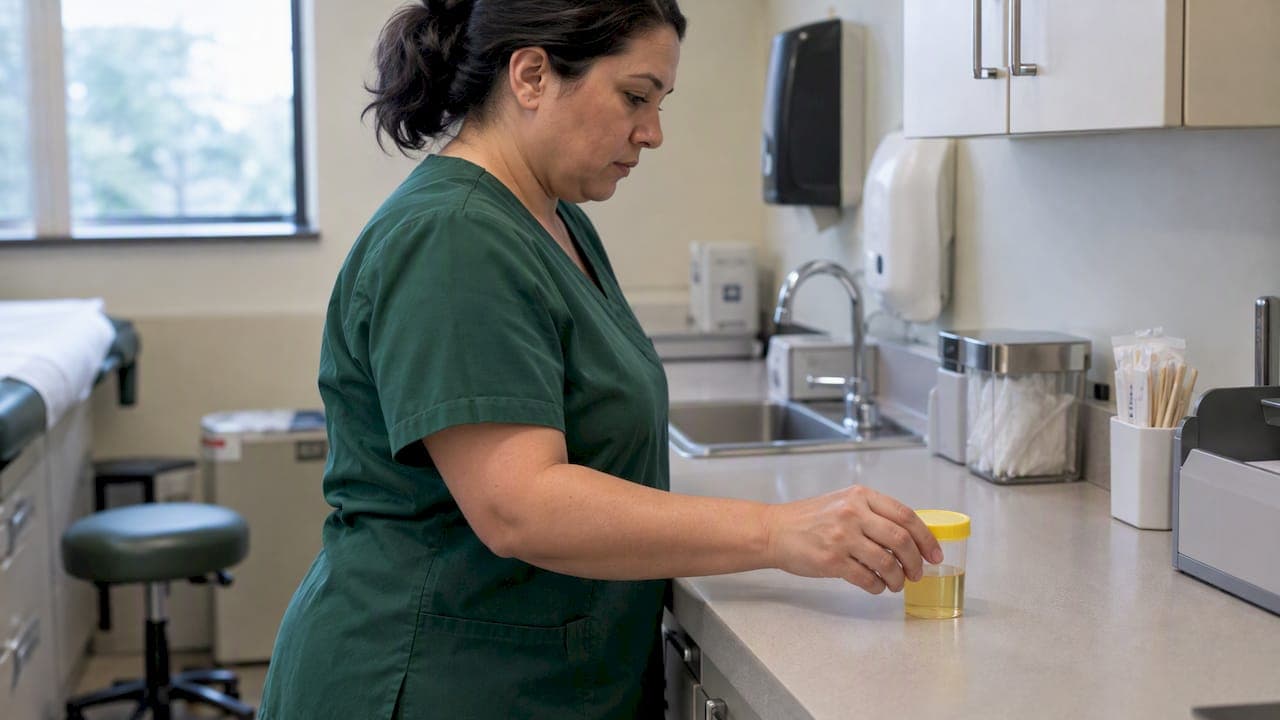
A microalbumin urine test, also called a urine albumin-to-creatinine ratio or uACR, measures tiny amounts of protein leaking into your urine before your kidneys show other signs of trouble. A result under 30 mg/g is considered normal, while anything at or above that threshold usually prompts your provider to repeat the test and evaluate further.
TL;DR:
- People with type 2 diabetes need annual uACR and eGFR screening from diagnosis; type 1 screening generally begins after five years.
- People with high blood pressure, cardiovascular disease, a family history of kidney disease, or age over 60 may also warrant screening.
- Providers generally require two elevated results among three samples collected over three to six months before diagnosing chronic kidney disease.
- Recent vigorous exercise, fever, urinary infection, menstruation, or uncontrolled blood sugar can temporarily raise readings, so report these before interpreting an abnormal result.
- Persistent elevation prompts eGFR and urinalysis checks, plus blood pressure and glucose management; referral may follow if albuminuria persists or eGFR declines.
Table of Contents
- What the Test Measures and Why It Matters
- Who Should Be Screened and How Often
- How Samples Are Collected and the Main Test Types
- How to Read Your Results
- What Can Cause a False or Temporary Result
- If Your Results Come Back Abnormal
- Getting Ready for an Accurate Test
- How We Support Testing and Follow-Up at Garden State Medical Group
- Clinician Takeaway: Confirm Before You Worry
- Schedule Your Microalbumin Test With Us
- FAQ
- Sources
What the Test Measures and Why It Matters
Albumin is a protein your body normally keeps inside the bloodstream. When your kidneys' filtering units are stressed or damaged, small amounts of albumin start slipping into your urine. Because urine concentration varies depending on how much water you drink, labs compare the albumin level against creatinine, a waste product your body releases at a fairly steady rate. Dividing one by the other gives a ratio that stays reliable even if your urine sample is diluted or concentrated.
This matters because uACR often flags kidney stress well before a decline shows up on blood-based kidney function tests. According to the National Kidney Foundation, uACR can detect early kidney changes before your estimated glomerular filtration rate (eGFR) starts to drop, and confirmed elevated albumin is linked to a higher risk of both kidney disease progression and cardiovascular events.
Early detection changes outcomes. Catching albuminuria while your eGFR is still normal gives you and your provider a window to intervene with blood pressure and blood sugar management before damage advances.

Who Should Be Screened and How Often
Screening recommendations center heavily on diabetes, since diabetes is the leading driver of kidney damage detected through this test. Guidance from the American Academy of Family Physicians outlines clear starting points for different groups.
- People with type 2 diabetes should be screened for albuminuria starting at diagnosis.
- People with type 1 diabetes typically begin screening once they've had the condition for five or more years.
- Annual uACR and eGFR testing is standard for most people with diabetes, with more frequent checks if results trend upward.
- People with high blood pressure, cardiovascular disease, a family history of kidney disease, or those over age 60 may also warrant screening, even without diabetes.
If you fall into one of these groups and haven't discussed this test with your provider, it's worth raising at your next visit.
How Samples Are Collected and the Main Test Types
Collection methods vary depending on what your provider needs to confirm. MedlinePlus describes three main approaches used in practice.
- Spot (random) urine sample. This is the most common screening method because you can provide it during a regular office visit with no special preparation, making it convenient for routine checks.
- First-morning urine sample. Labs often prefer this for confirmatory testing because overnight urine tends to be more concentrated and less affected by recent activity or fluid intake, which reduces variability.
- 24-hour urine collection. This remains the most accurate method for borderline or inconsistent results, since you collect every void over a full day, giving a complete picture rather than a single snapshot.
Your provider will typically start with a spot uACR and move to a first-morning or 24-hour collection only if the initial result needs confirmation.
How to Read Your Results
Lab reports express uACR in milligrams of albumin per gram of creatinine, and the categories follow a continuous scale rather than a simple pass-or-fail line. Higher numbers generally correspond to higher kidney and cardiovascular risk, even within the "normal" range, though clinical decisions focus on the thresholds below.
| uACR Result | Clinical Category |
|---|---|
| Under 30 mg/g | Normal |
| 30 to 299 mg/g | Moderately increased |
| 300 mg/g or higher | Severely increased |
These categories come from NIDDK clinical guidance, which notes that decisions about kidney disease should weigh both the albuminuria trend and your eGFR together, since an elevated uACR with an otherwise normal eGFR still carries cardiovascular implications worth addressing.
A single abnormal reading rarely settles the question. MedlinePlus and other clinical sources describe a standard confirmation process: two out of three samples collected over a three to six-month period need to show elevated albumin before a provider labels the finding as chronic kidney disease. This rule exists because albumin levels naturally fluctuate, and one odd result shouldn't define a diagnosis.
What Can Cause a False or Temporary Result
Several everyday factors can push albumin levels up temporarily without reflecting ongoing kidney damage. According to kidney.org, common culprits include recent vigorous exercise, fever, a urinary tract infection, menstruation, and uncontrolled blood sugar.
- Strenuous exercise in the 24 hours before testing can temporarily raise albumin levels.
- A urinary tract infection or fever can cause a short-term spike unrelated to kidney function.
- Menstruation can introduce blood or protein that skews the result.
- Poorly controlled blood glucose can elevate readings even without lasting kidney injury.
- Some contrast agents used in imaging studies can also interfere with results if testing happens too soon afterward.
Timing and context matter as much as the number itself. If any of these applied to you around the time of testing, mention it to your provider rather than assuming the worst.
Pro Tip: If you've had a recent infection, intense workout, or your period, ask your provider whether rescheduling the test would give a clearer picture.
If Your Results Come Back Abnormal
An elevated uACR doesn't mean an automatic diagnosis, but it does mean your provider will want more information before deciding on next steps.
- Repeat the uACR test, usually with a first-morning sample, to rule out a transient cause.
- Check your eGFR through a blood test, since combining it with your uACR gives a fuller picture of kidney function.
- Review a urinalysis to look for other signs like blood or infection that might explain the result.
- Consider a 24-hour collection if spot tests remain inconsistent.
- Address contributing factors through better blood sugar control, blood pressure management (sometimes including ACE inhibitors or ARBs when appropriate for your situation), and lifestyle adjustments.
If albuminuria persists across repeat testing or your eGFR starts declining, your provider will typically discuss a referral to a nephrologist along with a more structured monitoring schedule. For most people, catching this early means the conversation stays focused on prevention rather than advanced disease management, and reviewing common signs of kidney disease alongside your lab results can help you understand the full picture.
Getting Ready for an Accurate Test
A little preparation helps your result reflect your actual kidney status rather than a temporary blip.
- Avoid vigorous exercise for 24 hours before your appointment.
- Try to avoid testing during an active infection, fever, or your period if you can reschedule.
- Drink water normally, since both dehydration and overhydration can skew concentration-based readings.
- Tell your provider about any recent medications or imaging contrast exposure.
Pro Tip: For a clean-catch sample, wash your hands first, clean the area as instructed, and let the first bit of urine pass before collecting the rest. If you're doing a 24-hour collection, keep the container refrigerated between uses and bring it in as soon as the collection period ends, since one unusual reading, like a highly dilute sample sometimes flagged by unusual creatinine readings, can prompt a lab to recommend a repeat collection.
How We Support Testing and Follow-Up at Garden State Medical Group
Primary care, on-site diagnostic testing, and chronic disease programs for diabetes and hypertension are available, the two conditions most closely tied to albuminuria. When a patient's uACR comes back elevated, follow-up testing including eGFR and repeat urine studies is coordinated, alongside blood pressure and glucose management through chronic care programs. Our diagnostics services sit within the same practice as our primary care team, which keeps testing and follow-up conversations connected rather than scattered across separate offices.
Clinician Takeaway: Confirm Before You Worry
A single elevated microalbumin result is a signal to look closer, not a diagnosis. Repeat testing and a review of context, recent illness, exercise, glucose control, remain standard practice before anyone labels a result as kidney disease. If your number comes back high, ask your provider what a confirmed trend would mean for your specific health picture.
— Garden State Medical Group
Schedule Your Microalbumin Test With Us
We make it straightforward to get a uACR test done and acted on, without bouncing between separate labs and specialists for routine follow-up. Our primary care visits include ordering the test itself, and our on-site diagnostic testing means results feed directly into a conversation about your blood pressure, blood sugar, and kidney health in one place.
If you have diabetes, high blood pressure, or a family history of kidney issues, consider booking a visit to discuss screening or enrolling in our chronic care management program for ongoing monitoring. You can schedule a primary care appointment to get started.
This article is general information, not a substitute for advice from a qualified doctor. Consult a qualified healthcare professional about your own circumstances before acting on anything here.

FAQ
What is a normal level of microalbumin in urine?
A normal microalbumin urine test result is a uACR under 30 mg/g. Results between 30 and 299 mg/g are considered moderately increased, and 300 mg/g or higher is severely increased.
What happens if microalbumin is high?
A high result usually prompts your provider to repeat the test, often with a first-morning sample, before drawing conclusions. If elevated levels persist across repeat testing, your provider will typically check your eGFR and review factors like blood pressure and blood sugar control.
How serious is albumin in urine?
Albumin in urine is a continuous risk marker, meaning higher levels generally correspond to greater kidney and cardiovascular risk, even within categories that aren't yet "severely increased." Confirmed elevated albumin is linked to a higher likelihood of kidney disease progression and cardiovascular events, which is why providers take repeat abnormal results seriously.
Why would a doctor order a microalbumin test?
Doctors order this test most often to screen for early kidney damage in people with diabetes, since type 2 diabetes warrants routine screening and type 1 diabetes warrants screening after five or more years. It's also used for people with high blood pressure, cardiovascular disease, or a family history of kidney disease.
Sources
- Assess Urine Albumin - NIDDK
- uACR Urine Test for Albuminuria | National Kidney Foundation
- Microalbumin Creatinine Ratio: MedlinePlus Medical Test
- AAFP: Screening guidance for diabetes-related kidney disease