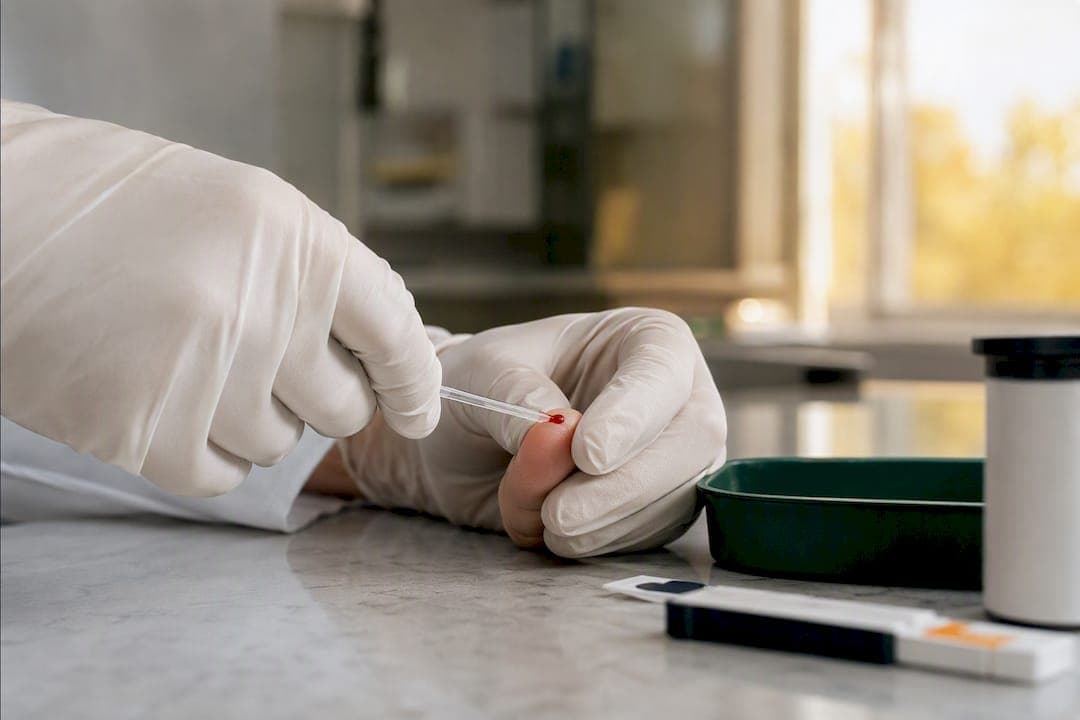
Insulin resistance affects an estimated 33% to 66% of people with PCOS, making it one of the most common and consequential features of the condition. The first move is almost always lifestyle change, diet and exercise geared toward better insulin sensitivity, with metformin added for specific patients. Diagnosis relies on glucose testing (fasting glucose, A1c, or an oral glucose tolerance test) rather than routine insulin assays, which current guidelines consider too unreliable for everyday use.
TL;DR:
- Insulin resistance in PCOS can occur regardless of body weight, especially with visceral fat or genetic factors, and often progresses to type 2 diabetes without intervention.
- Glucose-based tests such as fasting glucose, A1c, and OGTT are the clinically recommended diagnostic tools, while insulin assays lack standardization and predictive power.
- Lifestyle modifications like a Mediterranean diet and consistent physical activity, especially yoga or HIIT, effectively improve insulin sensitivity when maintained long-term.
- Metformin is primarily recommended for those with BMI over 25 kg/m2 to improve metabolic outcomes, but it does not directly treat hirsutism or cause significant weight loss.
- Regular metabolic and cardiovascular screening over years is essential because insulin resistance and related risks develop gradually, often without noticeable symptoms.
Table of Contents
- What Causes Insulin Resistance in PCOS?
- How Common Is Insulin Resistance in PCOS, and What Are the Risks?
- How Is Insulin Resistance Diagnosed in PCOS?
- Managing Insulin Resistance: What Lifestyle Changes Actually Help?
- Does Metformin Help With PCOS Insulin Resistance?
- What Should Ongoing Monitoring Look Like?
- What Do the Guidelines and Recent Research Actually Say?
- Why Long-Term Metabolic Monitoring Matters So Much
- What Do Major Medical Organizations Recommend?
- How Does Insulin Resistance Affect Fertility in PCOS?
- Which Nutritional Strategies Improve Insulin Sensitivity Beyond General Dieting?
- Are Inositols or Other Insulin Sensitizers Useful Alongside Metformin?
- How Does Insulin Resistance Affect Mental Health and Quality of Life?
- What New Tests Are Being Studied for Insulin Resistance in PCOS?
- A Multidisciplinary Approach to PCOS Care
- Getting the Right Testing and Support for PCOS
- Sources
- FAQ
What Causes Insulin Resistance in PCOS?
Insulin resistance means your cells stop responding normally to insulin, the hormone that moves sugar out of your bloodstream and into your tissues for energy. Your pancreas compensates by pumping out more insulin than usual, a state called hyperinsulinemia. That excess insulin does not stay in its lane.
Insulin receptors sit on your ovaries too, and when insulin levels run high, they push the ovaries to produce more androgens (testosterone and related hormones). At the same time, high insulin suppresses your liver's production of sex hormone binding globulin (SHBG), a protein that normally keeps testosterone bound and inactive. Less SHBG means more free, active testosterone circulating in your body. This combination, more androgen production plus less of it mopped up by SHBG, drives many of the classic PCOS symptoms: irregular periods, acne, excess hair growth, and difficulty ovulating.
A detail that surprises a lot of newly diagnosed patients: this is not just a "weight" problem. Insulin resistance shows up in lean people with PCOS too, not only those carrying extra weight, though obesity does amplify the effect. Visceral fat, the kind stored around your organs rather than under the skin, appears especially disruptive because it releases fatty acids and inflammatory signals that worsen insulin signaling, a process researchers call lipotoxicity. In practice, that means:
- Insulin resistance can exist in someone with a completely normal BMI.
- Body fat distribution matters as much as total body weight.
- Genetics and inherited insulin signaling defects play a role independent of diet.
- Chronic low-grade inflammation compounds the problem over time.
How Common Is Insulin Resistance in PCOS, and What Are the Risks?
Insulin resistance touches a majority of people with PCOS, and its downstream effects extend well past reproductive symptoms.
By the numbers: Between 33% and 66% of people with PCOS have insulin resistance, and more than half will develop type 2 diabetes by age 40.
That progression rarely happens overnight. It typically moves through prediabetes first, a stage where fasting glucose or A1c is elevated but not yet in the diabetic range, giving you a real window to intervene. Left unaddressed, the metabolic strain of chronic hyperinsulinemia contributes to a cluster of related risks:
- Prediabetes and type 2 diabetes
- Gestational diabetes during pregnancy
- Dyslipidemia, particularly high triglycerides and low HDL cholesterol
- Hypertension
- Elevated long-term cardiovascular risk
The risk profile does not track neatly with body size. Obese women with PCOS show higher rates of insulin resistance and more pronounced glucose and lipid abnormalities, but lean patients are not exempt. That is precisely why guidelines call for regular metabolic screening in every person diagnosed with PCOS, not just those whose weight raises an obvious flag.
How Is Insulin Resistance Diagnosed in PCOS?
Clinicians do not typically order an "insulin resistance test" the way you might expect, and that surprises many patients who assume a single blood value will confirm the diagnosis.
Fasting insulin levels and HOMA-IR calculations get discussed often online, but the 2023 international evidence-based guideline states plainly that clinically available insulin assays are of limited clinical relevance. They lack standardized thresholds, vary significantly between labs, and do not reliably predict outcomes the way glucose-based tests do. So what does guide the actual diagnostic workup?
- Fasting glucose. A simple blood draw that flags whether your baseline glucose is already elevated.
- Hemoglobin A1c. Reflects average blood sugar over roughly three months, useful for catching gradual drift into prediabetes.
- 75 gram oral glucose tolerance test (OGTT). You drink a glucose solution, then have blood drawn at intervals (often at baseline and two hours) to see how your body clears the sugar load. This catches abnormalities that fasting glucose alone can miss.
Guidelines recommend this kind of glucose screening at the time of PCOS diagnosis, again before or during preconception planning, and periodically afterward, generally every one to three years depending on your individual risk factors like weight, family history, and prior test results. Garden State Medical Group's blood test services can handle this panel directly, without the runaround of chasing referrals for basic labs.
Managing Insulin Resistance: What Lifestyle Changes Actually Help?
Diet and exercise remain the foundation of PCOS management, and the evidence behind specific approaches has gotten a lot more precise in recent years.
A Mediterranean-style eating pattern, rich in vegetables, legumes, olive oil, fish, and whole grains, with limited processed carbohydrates and added sugar, has consistent support as a sustainable way to improve insulin sensitivity in a diet for insulin resistance. It is not a restrictive fad, which matters, because insulin resistance is a lifelong management issue, not a problem you solve with a six-week cleanse.
Exercise research has moved past the old "just move more" advice into modality-specific findings. A 2025 network meta-analysis compared exercise types in women with PCOS and found yoga had the highest probability of improving both HOMA-IR and total testosterone levels. High-intensity interval training (HIIT) delivered strong metabolic gains as well, while moderate-intensity continuous training (MICT) showed particular benefits for hormonal measures. The honest takeaway is that consistency across any of these matters more than chasing the "best" one, since exercise benefits for insulin sensitivity are transient and fade without ongoing practice.
Behavior change is where most plans quietly fail, not from lack of information but lack of structure. What tends to work:
- Set specific, measurable goals (three 30 minute walks weekly, not "exercise more").
- Track food and activity for a few weeks to build honest awareness, then ease off tracking once patterns click.
- Choose an exercise you will actually repeat over one that looks impressive on paper.
- Ask your care team to use weight-inclusive, non-stigmatizing language, since research links weight stigma to worse engagement in PCOS care.
Pro Tip: Pick one dietary change and one movement habit to start, not five. People who overhaul everything at once are the most likely to abandon the whole plan within a month.
Does Metformin Help With PCOS Insulin Resistance?
Metformin is the most studied insulin sensitizer for PCOS and remains the default pharmacologic option when medication is indicated.
The 2023 international guideline recommends considering metformin for adults with a BMI of 25 kg/m2 or higher, specifically for metabolic outcomes. Evidence supporting its use in people with a BMI under 25 kg/m2 is more limited, so the decision there is more individualized.
What metformin for PCOS actually does, according to systematic review evidence:
- Improves insulin sensitivity and glucose handling
- Often improves lipid profile
- Can restore more regular menstrual cycles in some patients
- Provides the most benefit for those with obesity or marked insulin resistance
What it will not do: function as a primary weight-loss drug or treat hirsutism directly. Side effects, mostly gastrointestinal, are common early on and usually ease with time or a slower dose increase. If pregnancy is a near-term goal, discuss timing and continuation with your clinician, since management shifts once conception is being actively pursued.
What Should Ongoing Monitoring Look Like?
PCOS and insulin resistance call for tracking over years, not a one-time workup you complete and forget.
A reasonable monitoring routine includes:
- Glucose status via A1c or OGTT
- Lipid panel
- Blood pressure
- BMI and waist circumference
- Screening for sleep disturbances and mood symptoms, including depression and anxiety
Most people should repeat glucose and metabolic screening annually, more often if prior results were borderline or risk factors are rising. An OGTT specifically gets reordered when pregnancy is being planned, since gestational diabetes risk is elevated in PCOS. Garden State Medical Group's diagnostics services support this kind of recurring panel without needing a new referral each time.
Contact a clinician promptly if you notice new or worsening symptoms: unusual thirst or urination, unexplained weight change, vision changes, or a significant mood shift. These can signal that glucose control is slipping and needs a closer look.
What Do the Guidelines and Recent Research Actually Say?
The clinical consensus on insulin resistance in PCOS has converged around a few clear points, backed by major reviews and one recent trial-comparison study.
- The 2023 international evidence-based guideline explicitly states that clinically available insulin assays carry limited clinical relevance and should not anchor routine diagnosis.
- That same guideline supports metformin for adults with BMI ≥ 25 kg/m2 for metabolic benefit.
- The 2025 exercise network meta-analysis found yoga, HIIT, and MIC Teach improve insulin resistance markers through different mechanisms, giving patients real modality choice.
- Evidence gaps remain around lean-PCOS treatment thresholds and long-term outcomes of specific dietary patterns, which is why individualized care still matters more than a one-size protocol.
Why Long-Term Metabolic Monitoring Matters So Much
Insulin resistance in PCOS is not a condition you treat once and close the chapter on. It behaves more like a chronic risk factor, similar to how cardiologists treat elevated cholesterol, something that needs periodic reassessment across decades, not a single intervention.
Cardiovascular risk deserves particular attention because it compounds quietly. Elevated triglycerides, low HDL, and higher blood pressure often develop gradually alongside insulin resistance, and by the time symptoms are noticeable, the risk has usually been building for years. That is the argument for scheduled lipid panels and blood pressure checks even when you feel fine.
Garden State Medical Group's cardiopulmonary care services exist for exactly this kind of layered risk, where reproductive health, metabolic health, and heart health intersect and need coordinated tracking rather than three separate specialists working from three separate charts. Weight and waist circumference trends over time tend to be more informative than any single measurement, since they show trajectory rather than a snapshot. The goal is catching drift early, when a lifestyle adjustment or a medication tweak can still change the trajectory, rather than waiting for a diagnosis that forces bigger intervention.
What Do Major Medical Organizations Recommend?
Two authoritative bodies shape most of the clinical guidance you will encounter: the international guideline panel and the American Society for Reproductive Medicine (ASRM).
The 2023 international evidence-based guideline, developed with broad multidisciplinary and patient input, explicitly recommends against routine use of insulin assays like fasting insulin or HOMA-IR in clinical practice. The reasoning is practical: these tests lack agreed-upon cutoffs, vary widely by lab and assay method, and do not change management decisions in a way that justifies their use as a screening tool. Instead, the guideline directs clinicians toward glucose-based testing, fasting glucose, A1c, or OGTT, as the meaningful measure of metabolic status.

ASRM's positions align closely here, emphasizing that PCOS diagnosis and metabolic risk stratification should rest on established glucose tolerance testing rather than insulin-specific values. Both bodies also converge on lifestyle intervention as first-line management and metformin as the primary pharmacologic option for metabolic outcomes in appropriate candidates.
What this means practically: if a clinician tells you that a fasting insulin test is not necessary, that is not dismissiveness. It reflects a considered guideline position, not a shortcut. The tests that matter for your actual risk, glucose and A1c, are the ones worth prioritizing when you request lab work.
How Does Insulin Resistance Affect Fertility in PCOS?
Insulin resistance interferes with fertility mainly through its effect on ovulation. The excess insulin and androgen levels described earlier disrupt the hormonal signaling needed for regular egg release, which is why irregular or absent ovulation is one of the most common fertility barriers in PCOS.
The encouraging part: this pathway is treatable, and treatment often improves fertility outcomes without requiring assisted reproduction for everyone. Weight management and improved insulin sensitivity alone restore ovulation in a meaningful number of patients. When that is not enough, first-line fertility medications like letrozole are typically used to induce ovulation, sometimes alongside metformin when insulin resistance is prominent, since metformin can improve some reproductive outcomes particularly in patients with obesity or marked insulin resistance.
For patients who do not respond to first-line ovulation induction, options escalate to gonadotropin therapy or in vitro fertilization, decisions best made with a reproductive endocrinologist who can factor in your specific hormonal and metabolic profile. The key point worth internalizing: insulin resistance is a modifiable piece of the fertility puzzle, not a fixed barrier, and addressing it often has ripple effects across ovulation, pregnancy risk, and overall treatment response.
Which Nutritional Strategies Improve Insulin Sensitivity Beyond General Dieting?
Beyond the broad Mediterranean pattern already covered, a few more targeted nutritional levers show up repeatedly in Conspecific discussions.
Carbohydrate quality and timing matter more than most general diet for insulin resistance advice suggests. Pairing carbohydrates with protein or fat, spacing meals to avoid long gaps followed by large intake, and prioritizing fiber-rich, minimally processed carbohydrate sources all support steadier glucose and insulin responses across the day.
Myoinositol, a naturally occurring compound related to how cells respond to insulin, has drawn substantial research interest as a nutritional supplement for PCOS specifically, often studied in combination with D-chiro-inositol. It is generally well tolerated and appeals to patients looking for a non-pharmaceutical option to complement lifestyle change, though it should be viewed as a complement to diet and exercise, not a substitute for either.
Vitamin D deficiency shows up frequently among people with PCOS, and correcting a documented deficiency is a reasonable, low-risk step, though it should be confirmed with actual lab testing rather than assumed. Omega-3 fatty acids from fish or supplementation are sometimes discussed for their anti-inflammatory profile, given the role inflammation plays in worsening insulin resistance.
None of these nutritional strategies replace the core approach of a sustainable eating pattern and regular activity. They function as add-ons for patients who have the fundamentals in place and want additional support, ideally discussed with a clinician who can check for interactions and confirm they make sense for your specific labs.

Are Inositols or Other Insulin Sensitizers Useful Alongside Metformin?
Metformin is not the only insulin sensitizer studied in PCOS, and understanding the alternatives helps set realistic expectations.
Thiazolidinediones (a class that includes drugs like pioglitazone) improve insulin sensitivity through a different mechanism than metformin, acting on fat and muscle tissue to enhance glucose uptake. They see far less use in PCOS than metformin, largely due to side effect concerns including weight gain and, in some cases, cardiovascular considerations that require careful patient selection. They are not first-line therapy under current guidance.
Inositols, primarily myo-inositol and D-chiro-inositol, have accumulated a meaningful body of research in PCOS specifically, with studies suggesting benefits for insulin sensitivity, ovulation, and some hormonal markers. The evidence base is smaller and less mature than what supports metformin, and the 2023 international guideline treats inositols as an area of ongoing research rather than a first-line recommendation, though it acknowledges they may offer benefit for some patients as a lower-side-effect option.
The practical guidance: metformin remains the guideline-supported pharmacologic choice for most patients who meet the BMI threshold for consideration. Inositols may be reasonable to discuss with your clinician if you want a gentler starting point or cannot tolerate metformin, but they are a complement to the evidence base, not a proven replacement for it.
How Does Insulin Resistance Affect Mental Health and Quality of Life?
The psychological weight of PCOS often gets undertreated relative to how much it affects daily life, and insulin resistance plays a direct role in that burden.
Hormonal fluctuations tied to hyperinsulinemia and elevated androgens are associated with higher rates of anxiety and depression in PCOS compared to the general population. Visible symptoms, acne, excess hair growth, weight changes, add a layer of body image distress that compounds the hormonal effects. Fertility concerns, when present, introduce another significant source of stress that can persist for years.
Weight stigma from clinicians, family, or broader culture makes this worse, not better. Research on weight-inclusive communication shows that stigmatizing language around weight actively undermines patient engagement and outcomes, which is part of why current guidelines push clinicians toward supportive, non-judgmental framing rather than a blunt "just lose weight" message.
Practical support matters here as much as the physical treatment plan. Screening for depression and anxiety at diagnosis and periodically afterward is now a recommended part of comprehensive PCOS care, not an optional add-on. If you are managing PCOS, it is worth naming the mental health piece directly with your care team rather than assuming it is separate from the "real" treatment, since the hormonal and psychological pieces are genuinely intertwined.
What New Tests Are Being Studied for Insulin Resistance in PCOS?
Researchers are actively looking past HOMA-IR and fasting insulin for better ways to characterize metabolic risk in PCOS, though none have replaced standard glucose testing in routine clinical use yet.
Continuous glucose monitors, originally built for diabetes management, are being studied in PCOS to capture glucose variability patterns that a single fasting draw or even an OGTT might miss. Adiponectin, a hormone produced by fat tissue that generally correlates inversely with insulin resistance, is under investigation as a supplementary biomarker. Inflammatory markers like high-sensitivity C-reactive protein are also being explored given the inflammation-insulin resistance connection.
None of these are ready to replace fasting glucose, A1c, or OGTT in standard practice, and the guidelines have not endorsed them for routine screening. They represent research directions worth watching rather than tools to request at your next appointment. The practical reality for now is that the tests your clinician already orders, glucose and A1c primarily, remain the most validated way to track your actual metabolic risk.
A Multidisciplinary Approach to PCOS Care
Managing insulin resistance well means coordinating reproductive, metabolic, and cardiovascular care rather than treating them separately. A healthcare model that combines primary care, diagnostics, and structured education ensures screening, testing, and follow-up happen under one coordinated plan.
If you are seeking care, bring your menstrual history, any prior lab results, and a list of current symptoms to your first visit. Telemedicine visits are available for follow-up conversations and medication management once your initial workup is complete.
— Garden State Medical Group
Getting the Right Testing and Support for PCOS
If you suspect insulin resistance is driving your PCOS symptoms, the path forward starts with the right tests, not guesswork. Garden State Medical Group's primary care team can order fasting glucose, A1c, and OGTT panels directly, the same glucose-based testing current guidelines actually recommend, rather than sending you chasing a fasting insulin number that will not change your treatment plan.
For patients whose labs point toward prediabetes or established insulin resistance, the Diabetes Prevention and Education Program provides structured, ongoing support: nutrition guidance, activity planning, and the kind of accountability that a single office visit cannot deliver. On-site diagnostics mean you are not bouncing between separate labs and imaging centers for baseline bloodwork or cardiovascular screening.
A first visit typically includes a review of your symptom history, relevant lab orders, and a conversation about which lifestyle changes fit your actual routine, not a generic handout. Telemedicine visits are available for follow-up care once your workup is underway. Book an appointment through Garden State Medical Group's primary care page to get your glucose and metabolic screening scheduled.
Sources
- Diabetes and Polycystic Ovary Syndrome (PCOS)
- Insulin Resistance in Polycystic Ovarian Syndrome - PMC - NIH
- The Effects of Different Exercises on Insulin Resistance and Testosterone Changes in Women with Polycystic Ovarian Syndrome: A Network Meta-Analysis Study
FAQ
Can You Reverse Insulin Resistance in PCOS?
Insulin resistance in PCOS can improve significantly with sustained diet and exercise changes, though it typically requires ongoing management rather than a one-time fix. Weight loss of even a modest percentage of body weight, combined with regular activity, often produces measurable improvement in glucose handling and hormone levels, and metformin adds further benefit for patients with obesity or marked insulin resistance.
What Does Insulin Resistance Feel Like With PCOS?
Insulin resistance itself often causes no direct sensation, which is part of why it goes undiagnosed for years. Indirect signs include fatigue after meals, intense sugar or carbohydrate cravings, difficulty losing weight despite effort, skin changes like dark velvety patches (acanthosis nigricans) in body folds, and irregular periods.
How Do You Know if Your PCOS Involves Insulin Resistance?
The only reliable way to know is through glucose-based testing ordered by a clinician, specifically fasting glucose, A1c, or a 75 gram OGTT, since insulin assays are not considered clinically reliable for this purpose. Symptoms like skin tags, dark skin patches, stubborn weight around the midsection, and strong carbohydrate cravings can raise suspicion, but they are not a diagnosis on their own.
What Triggers PCOS Symptom Flare-Ups?
Common triggers include high-sugar or highly processed meals, extended periods of poor sleep, high stress, and inconsistent exercise, all of which can worsen insulin resistance and, in turn, amplify androgen-related symptoms like acne or irregular cycles. Weight gain, even modest amounts, can also intensify symptoms by increasing insulin resistance further.
Is Metformin Necessary for Everyone With PCOS and Insulin Resistance?
No. Guidelines recommend considering metformin mainly for adults with a BMI of 25 kg/m2 or higher, where evidence for metabolic benefit is strongest. For others, lifestyle changes remain the primary approach, with medication added only when glucose testing and symptoms support it.