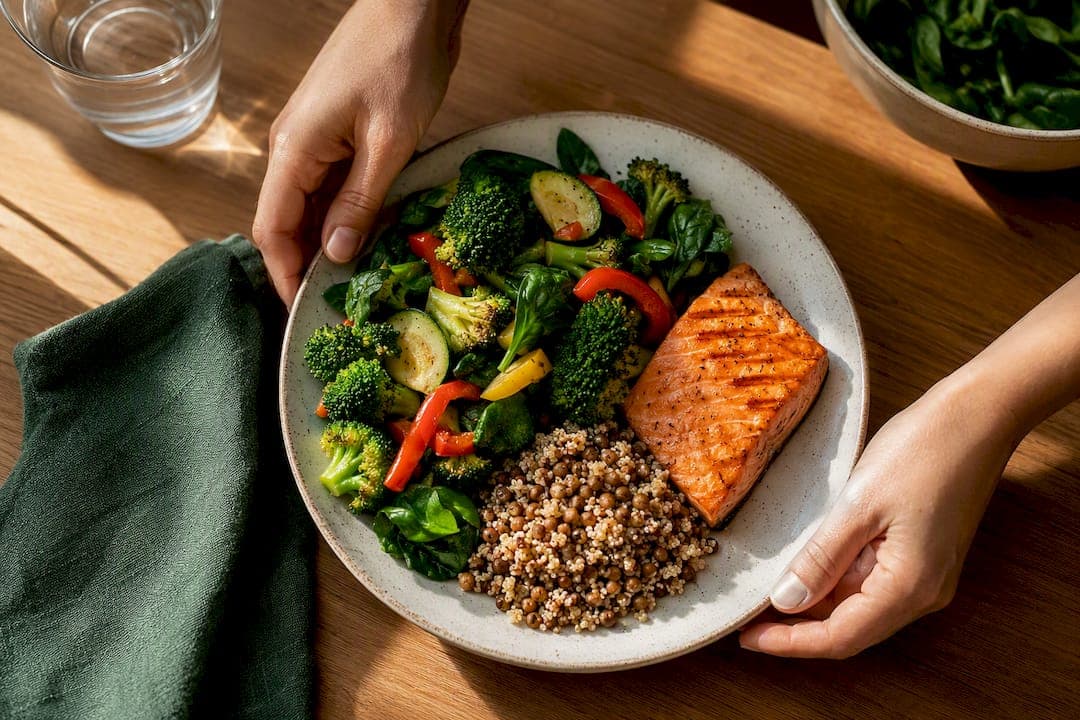
An insulin resistance diet emphasizes nonstarchy vegetables, fiber-rich whole grains, lean protein, and healthy fats while limiting added sugars and refined carbohydrates, so your blood sugar rises more gently after meals. This approach helps your cells respond to insulin more effectively over time. Weight loss and regular activity make the effect stronger, and a clinician can help you decide if additional support, including medication, makes sense for you.
TL;DR:
- Maintaining a diet rich in nonstarchy vegetables, whole grains, lean protein, and healthy fats helps improve insulin sensitivity more effectively when paired with weight loss and regular activity.
- Avoiding foods high in added sugars, highly processed items, and refined grains is crucial, especially sugary drinks, white bread, and fried foods, to prevent insulin spikes.
- Using the plate method with half vegetables, a quarter whole grains, and a quarter lean protein simplifies meal planning and reduces carb counting stress.
- The Mediterranean diet and low-glycemic index patterns are most supported by research for long-term insulin resistance management, while low-carb approaches yield short-term gains.
- Combining diet, physical activity, and, in some cases, medication like metformin offers the best chance for reversing insulin resistance and reducing type 2 diabetes risk.
Table of Contents
- Foods That Help Improve Insulin Sensitivity
- Foods and Drinks That Work Against Your Progress
- Building Your Plate: A Simple One-Day Menu
- Comparing Popular Diet Patterns for Insulin Resistance
- Where Weight Loss, Exercise, and Medication Fit In
- Making It Stick: Shopping, Prepping, and Avoiding Burnout
- How Garden State Medical Group Supports Insulin Resistance Care
- Ready to Build Your Plan? Here's How to Start
- Where This Information Comes From
- Sources
- FAQ
Foods That Help Improve Insulin Sensitivity
The foods you choose at each meal directly affect how much insulin your body needs to release. Nonstarchy vegetables, such as broccoli, spinach, peppers, and zucchini, add volume and nutrients without spiking your blood sugar, so you can eat generous portions of them at lunch and dinner.
Whole grains, legumes, and whole fruit bring fiber into the mix, which slows down how quickly sugar enters your bloodstream. Foods like oats, quinoa, lentils, and berries are digested more slowly than their refined counterparts, producing a gentler rise in blood sugar and insulin. Nonstarchy vegetables, fiber, and protein slow glucose absorption and blunt the insulin spike that follows a meal, though portion size still matters for any food that contains carbohydrates, according to CDC guidance on meal planning.
Lean proteins, including chicken, turkey, eggs, and fatty fish like salmon or sardines, help you feel full and have a minimal direct effect on blood sugar. Fatty fish also supplies omega-3 fatty acids, which support cardiovascular health, an important consideration since insulin resistance often travels alongside heart disease risk.
Healthy fats round out the picture. Olive oil, avocado, and a handful of nuts slow digestion and can soften the blood sugar response when eaten alongside carbohydrates.
A few combinations worth keeping on hand:
- Greek yogurt with berries and a sprinkle of walnuts
- A hard-boiled egg with cucumber slices and hummus
- Grilled salmon over sautéed greens with a drizzle of olive oil
- Lentil soup with a side salad dressed in olive oil and vinegar
Pro Tip: Pair a carbohydrate with a protein or fat at every meal or snack. This one habit does more to flatten blood sugar spikes than almost any single food choice.
Foods and Drinks That Work Against Your Progress
Some foods consistently push blood sugar and insulin levels in the wrong direction, and recognizing them makes daily choices easier. Added sugars and sugar-sweetened beverages, including soda, sweetened coffee drinks, and fruit juice, deliver a fast, concentrated dose of glucose that demands a large insulin response.

Refined grains and high-glycemic starches, such as white bread, white rice, and most breakfast cereals, act similarly in the body even though they do not taste sweet. Portion matters here too: a small serving of white rice affects you differently than a heaping plateful.
Highly processed foods and items high in trans fats or heavy in saturated fat, including packaged snacks and fried foods, can worsen insulin sensitivity over time and often crowd out more useful foods.
Practical swaps to keep in your back pocket:
- Trade soda or juice for sparkling water with a splash of citrus
- Swap white bread for a slice of whole grain or sourdough
- Replace chips with roasted chickpeas or a small portion of nuts
- Choose grilled or baked preparations over fried
Watch out for foods marketed as "healthy" that are still high in refined sugar or starch, like flavored granola or low-fat products with added sweeteners. Reading the label, not just the front-of-package claim, tells you what you're actually eating.
Building Your Plate: A Simple One-Day Menu
You do not need to count every gram of carbohydrate to eat well for insulin resistance. The plate method offers a simpler visual: fill half your plate with nonstarchy vegetables, a quarter with whole grains or legumes, and a quarter with lean protein, an approach the CDC recommends as an effective, low-effort alternative to strict carb counting for most people who are not on insulin.
Carb counting still has a place for some patients, particularly those on certain medications, and your clinician can tell you if it fits your situation. Breakfast tends to be the trickiest meal, since morning insulin resistance is common; choosing protein and fiber over cereal or pastries helps moderate that early spike.
A sample day might look like this:
- Breakfast: Scrambled eggs with spinach and a slice of whole grain toast
- Lunch: Grilled chicken salad with mixed greens, chickpeas, and olive oil dressing
- Dinner: Baked salmon, roasted broccoli, and a small portion of quinoa
- Snack: Apple slices with almond butter
This structure repeats easily across the week with different vegetables and proteins, which keeps the routine simple without becoming repetitive.
Comparing Popular Diet Patterns for Insulin Resistance
Several well-studied eating patterns can improve insulin sensitivity, and the right one depends on your health history and what you can realistically sustain. The Mediterranean diet has the broadest evidence base among these patterns for improving insulin resistance related outcomes and supporting cardiovascular health, making it a reasonable starting point for most people.
Low-glycemic-index eating and the DASH diet are lower-risk, feasible options focused on controlling blood sugar spikes after meals, and both work well for people managing blood pressure alongside insulin resistance. Low-carbohydrate and ketogenic approaches can produce strong short-term improvements: reducing overall carbohydrate intake is linked to gains in fasting glucose, fasting insulin, and related markers, but a review of the evidence notes that these benefits often fade after six months and long-term sustainability remains uncertain.
Plant-based eating and intermittent fasting tend to help mainly through weight loss and possible effects on gut bacteria, so nutrient adequacy, particularly protein, vitamin B12, and iron on a plant-based pattern, needs attention.
One of the most consistently supported patterns for reducing insulin resistance is the Mediterranean diet, which multiple trials link to lower HOMA-IR scores and reduced type 2 diabetes risk.
A few notes on fit:
- PCOS often responds well to lower-glycemic, higher-fiber patterns
- Fatty liver disease (MASLD) tends to improve with sustained weight loss on any of these patterns
- Cardiovascular risk factors generally favor Mediterranean or DASH over ketogenic approaches
- Any low-carb or ketogenic plan should be monitored by a clinician, especially if you take glucose-lowering medication
Where Weight Loss, Exercise, and Medication Fit In
Diet works best as part of a broader plan that includes movement and, for some people, medication. Losing 5% to 7% of your body weight combined with at least 150 minutes of physical activity per week reduces the risk of progressing from prediabetes to type 2 diabetes by about 58%, according to the CDC. That is the core target behind the National DPP curriculum, a yearlong structured program shown to produce lasting behavior change toward those same goals.
Reaching 150 minutes a week is more approachable when broken into short walks or activity sessions spread across most days rather than saved for the weekend.
For some patients, particularly younger adults with a BMI of 35 or higher or a history of gestational diabetes, clinical guidance from NIDDK supports adding metformin alongside lifestyle changes rather than in place of them.
- Lifestyle change remains the first-line approach for nearly everyone with insulin resistance
- Structured programs improve follow-through compared to going it alone
- Metformin is considered for specific higher-risk groups, not as a default
- Regular follow-up lets your care team adjust the plan as your numbers change
Making It Stick: Shopping, Prepping, and Avoiding Burnout
Small, sustainable habits beat rigid overhauls. Reading labels for added sugar and serving size before you buy prevents surprises at home, and batch-cooking a grain, a protein, and a vegetable each week gives you mix-and-match meals in minutes.
Visual portion guides make counting less necessary: a fist-sized portion of carbohydrates, a palm-sized portion of protein, and a thumb of fat per meal work for most adults. Pay attention to hunger and fullness rather than finishing every plate out of habit.
- Shop the perimeter of the store first for produce, protein, and dairy
- Prep vegetables and grains in bulk on one day each week
- Use your palm and fist as quick portion references
- Treat one off-plan meal as normal, not a reason to abandon the week
Pro Tip: If eating out feels like the hardest part, order protein and vegetables first, then decide if you still want the bread basket or dessert.
How Garden State Medical Group Supports Insulin Resistance Care
Diet changes work best alongside guidance tailored to your labs and history. Our Diabetes Prevention and Education Program and Primary Care team can review your A1c, discuss weight-loss goals, and flag a history of gestational diabetes that might change your plan. A first visit typically starts with bloodwork and a conversation about what has and hasn't worked for you before.
— Garden State Medical Group
Ready to Build Your Plan? Here's How to Start
You do not have to figure out an insulin resistance diet alone. Garden State Medical Group's Diabetes Prevention and Education Program pairs dietary guidance with the lab work and follow-up that make the 5% to 7% weight-loss target realistic, and our Primary Care team can order the bloodwork needed to see where you stand today.
If you would rather start from home, Continuum Bio-Beauty's telehealth and concierge care offers remote coaching support that can complement in-person visits.
- Schedule a Primary Care visit to check A1c, fasting glucose, and related labs
- Ask about enrollment in the Diabetes Prevention and Education Program
- Explore our Weight Loss Programs if you need structured support reaching your target
- Book a telemedicine visit if an in-person appointment does not fit your schedule right now
Contact a healthcare provider to book an appointment and get a plan built around your own numbers.
Where This Information Comes From
This guide draws on CDC prediabetes guidance, NIDDK clinical information, the National DPP curriculum, and a peer-reviewed evidence review on carbohydrate and glycemic control. For snack ideas grounded in glycemic response, see Wellnosh's guide to insulin response.
This article is general information, not a substitute for advice from a qualified doctor. Consult a qualified healthcare professional about your own circumstances before acting on anything here.
Sources
- Insulin resistance & prediabetes — NIDDK
- Systematic review/meta-analysis on dietary carbohydrate and glycemic control — NCBI/PMC
FAQ
What is the best diet if you have insulin resistance?
Low-glycemic and DASH approaches are also feasible, low-risk options, and the right fit depends on your other health conditions and what you can sustain.
What should I eat first in the morning for insulin resistance?
Starting with protein and fiber, such as eggs with vegetables or Greek yogurt with berries, tends to moderate the morning blood sugar rise better than cereal or pastries. This matters because insulin resistance is often more pronounced earlier in the day.
What are the signs of insulin resistance?
Common signs include fatigue after meals, difficulty losing weight, dark patches of skin at the neck or armpits, increased hunger, and, on lab work, elevated fasting glucose or insulin. A clinician can confirm insulin resistance with bloodwork rather than symptoms alone.
What is the fastest way to treat insulin resistance?
Combining dietary changes with regular physical activity produces the fastest measurable improvement, since losing 5% to 7% of body weight alongside 150 minutes of weekly activity can lower the risk of progressing to type 2 diabetes by about 58%, per the CDC. Some patients, particularly those with a higher BMI or a history of gestational diabetes, may also be candidates for metformin alongside lifestyle changes.