
TL;DR:
- Weight management programs are structured, professionally guided plans combining calorie reduction, physical activity, and behavioral support to promote sustained weight loss. Selecting the right program involves understanding delivery methods, professional involvement, eligibility, and ensuring ongoing maintenance support. Consulting healthcare providers, verifying program credentials, and maintaining proper documentation are essential steps for successful enrollment and long-term results.
A weight management program is a structured, professionally guided plan that combines reduced-calorie eating, increased physical activity, behavioral support, and a maintenance strategy to help you lose weight and keep it off. The NIDDK defines these programs as distinct from apps or books because they include ongoing professional support and a formal maintenance plan. Knowing how to join weight management programs the right way saves you time, protects your health, and helps you avoid costly enrollment mistakes. The CDC, NIDDK, and VA MOVE! all offer or recognize structured programs that deliver steady weight loss of about 1 to 2 pounds per week. This guide walks you through every step, from choosing the right program type to completing enrollment and getting the most out of your participation.
How to join weight management programs: understanding your options
Weight management programs fall into several distinct categories, and choosing the right type is the first real decision you will make. Each type differs in delivery method, professional involvement, and how much structure you receive week to week.

In-person vs. virtual programs
In-person programs take place at clinics, hospitals, or community centers and typically involve face-to-face sessions with dietitians, counselors, or physicians. Virtual programs deliver the same content through video calls, apps with professional oversight, and online group sessions. The NIDDK specifies that virtual programs should include weekly sessions, professional support, progress tracking tools, feedback mechanisms, and social support options to be considered effective. Virtual delivery does not mean lower quality, but it does require you to verify that a real clinician or certified coach is involved.
Medically supervised and clinician-led programs
Medically supervised programs are led by physicians, nurse practitioners, or registered dietitians and are appropriate for people with obesity-related health conditions such as type 2 diabetes, hypertension, or heart disease. These programs often include lab work, medication review, and closer monitoring of your progress. The VA MOVE! program is one well-known example of a clinician-led model, where a clinical team guides participants through virtual groups, home messaging, and physical activity sessions. Employer-based programs and health plan offerings, such as those through Medicare Advantage plans, also fall into this category.
Structured lifestyle change programs
The National Diabetes Prevention Program (National DPP) is a year-long, in-person or online program with trained lifestyle coaches that targets weight management and diabetes risk reduction. It includes core weekly sessions followed by monthly post-core support. Programs like National DPP are recognized by the CDC, which means they meet specific standards for safety and effectiveness.
| Program type | Duration | Professional involvement | Delivery method |
|---|---|---|---|
| Medically supervised | 3 to 12+ months | Physician, RD, or NP | In-person or telehealth |
| VA MOVE! | Ongoing | Clinical team | In-person or virtual |
| National DPP | 12 months | Certified lifestyle coach | In-person or online |
| Employer/health plan | Varies | Certified health professional | In-person or virtual |
| Virtual with coaching | 3 to 6 months | Registered dietitian or coach | Online |
Pro Tip: Before comparing programs, write down your three biggest barriers to weight loss, whether that is time, cost, or a specific health condition. This list will help you filter out programs that do not address your actual situation.
What you need to know before enrolling
Eligibility requirements and prerequisites vary by program, and skipping this step is one of the most common reasons people end up in the wrong program or lose out on reimbursements.
Consulting a healthcare provider before starting any weight management program is the single most important preparatory step. Healthcare professionals can tailor a program recommendation to your health history, refer you to a registered dietitian, and confirm that a specific program is safe for your current condition. This is especially true if you have cardiovascular disease, diabetes, or are taking medications that affect weight.
Typical eligibility criteria include age requirements (most programs are for adults 18 and older), a body mass index (BMI) above a set threshold (often 25 or 30), and the absence of certain contraindicated conditions. Some programs, like the National DPP, specifically target people with prediabetes or elevated blood sugar. Insurance coverage and reimbursement policies also shape your eligibility. The SCAN Inspired Medicare Advantage plan, for example, reimburses up to $100 per year for initial enrollment fees in qualified multi-session programs led by certified health professionals. That reimbursement requires paying upfront, submitting forms, and keeping receipts. Membership costs and food purchases are not covered.
Looking ahead, the CMS 2026 BALANCE model will expand access to GLP-1 medications plus lifestyle intervention programs for Medicare and Medicaid beneficiaries, though coverage depends on state participation and drug manufacturer involvement.
Before your appointment, bring these questions to your healthcare provider:
- Is my current health condition compatible with a structured weight loss program?
- Do you recommend a medically supervised program or a community-based one?
- Will my insurance cover any part of the enrollment fee or sessions?
- Are there any medications or conditions that could affect my participation?
- Can you refer me to a registered dietitian or a recognized program in my area?
Pro Tip: Ask your provider to document their recommendation in your medical record. This written record can support insurance reimbursement claims and confirm program eligibility if questions arise later.
How to find and enroll in the right program
Finding the right program requires more than a quick internet search. A structured approach protects you from wasting money on programs that do not meet clinical standards.
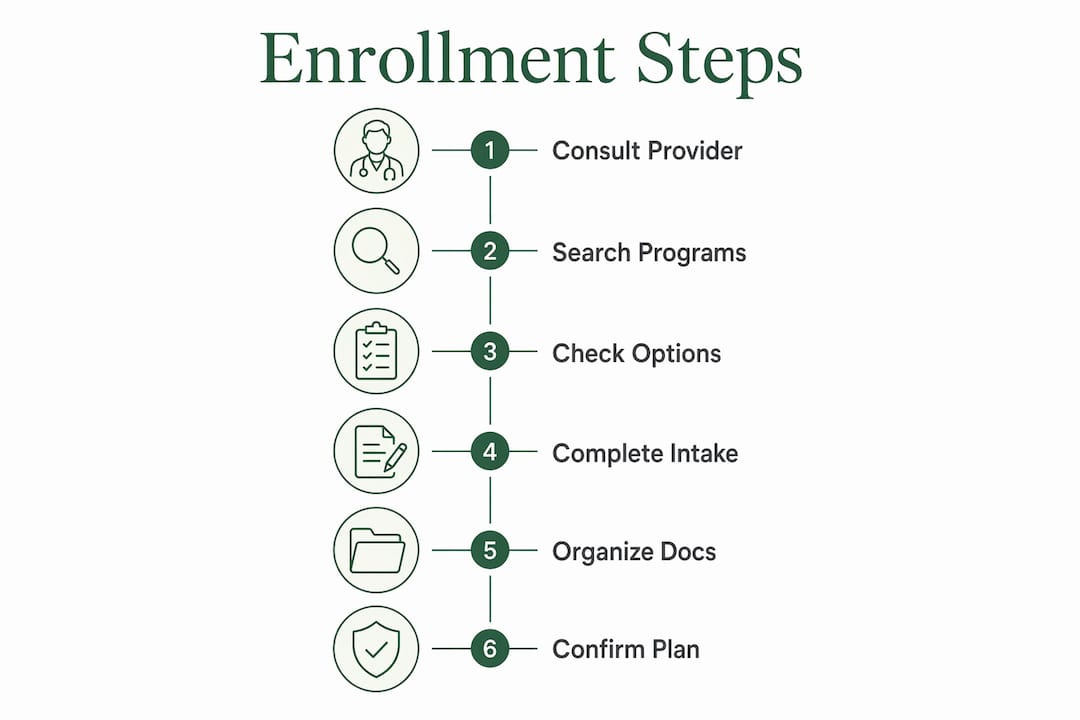
Step 1: Start with your healthcare provider or insurer. Your primary care physician is the most reliable starting point for a guide to weight management programs. Ask directly whether your health plan covers any programs and request a referral if needed. Many insurers maintain a list of approved providers.
Step 2: Search recognized program directories. The CDC's National DPP locator at cdc.gov/diabetes/prevention allows you to find recognized lifestyle change programs by zip code. The NIDDK website also lists criteria for evaluating program quality, which you can use as a checklist when reviewing any program you find.
Step 3: Check employer and community options. Many employers offer weight management support options through their employee assistance programs or health benefits. Community hospitals, YMCAs, and federally qualified health centers often run low-cost or subsidized programs.
Step 4: Complete the required intake process. Most clinician-led programs require an orientation before you begin. The VA MOVE! program, for instance, requires a one-time Jumpstart orientation either virtually or in-person before you can select your ongoing program track. Skipping this step means you cannot access the full program.
Step 5: Gather and organize your documentation. Collect your insurance card, a referral letter if applicable, proof of eligibility (such as a BMI measurement from your provider), and any receipts from enrollment fees. Maintaining this paperwork is critical because incorrect documentation can block reimbursements even after you complete the program.
Step 6: Confirm the program's maintenance plan. Before you sign up, ask whether the program includes a maintenance phase. Programs that offer monthly or twice-monthly contact after the core phase produce better long-term results than those that end abruptly after initial education sessions.
You can also explore personalized health programs at local medical groups to understand what a structured, locally available option looks like before committing.
How to get the most out of your program once you join
Joining a weight loss group or program is the start, not the finish. What you do during participation determines whether you reach your goals.
Track your progress consistently using a journal, a wearable activity monitor, or an app that syncs with your program's platform. Tracking creates accountability and gives your care team the data they need to adjust your plan. Programs that include feedback loops between participants and coaches produce better outcomes than those that rely on self-reporting alone.
Attend every session during the core phase, especially the first eight weeks. Behavioral obesity research shows that frequent support contact prevents weight regain more effectively than less frequent or purely educational approaches. Missing early sessions disrupts the habit-building process that the program is designed to create.
Use social support options actively. Group meetings, online chats, and peer accountability partners are built into many programs for a reason. Participants who engage with group components tend to maintain weight loss longer than those who participate only in individual sessions.
Schedule follow-up appointments with your healthcare provider throughout the program, not just at the end. These check-ins allow your provider to monitor health changes, adjust medications if needed, and confirm that the program remains safe for you.
Pro Tip: If you are not seeing any progress after six to eight weeks of consistent participation, that is a signal to discuss a program adjustment with your provider, not a reason to quit. A plan change is normal and expected in medically supervised care.
Common mistakes to avoid when joining a weight management program
The most frequent error people make is treating a fitness app or diet book as a formal weight management program. Books or apps alone do not qualify as structured programs because they lack ongoing professional guidance and a maintenance plan. This distinction matters for both your health outcomes and your eligibility for insurance reimbursements.
A second common mistake is skipping the healthcare consultation before enrolling. Without a provider's input, you may join a program that conflicts with your medications or health conditions, or you may miss a referral that would have covered part of the cost.
Documentation errors are also a significant problem. Missing a receipt, submitting the wrong form, or enrolling in a program that does not meet your insurer's criteria can result in denied reimbursements even after you have completed the full program.
"Safety, effectiveness, and program structure should be verified before joining. A program that does not include a maintenance plan is not a complete program." — NIDDK
Finally, many people choose programs based on cost alone without evaluating the maintenance support offered after the core phase ends. A lower upfront cost is not a benefit if the program ends after 12 weeks with no follow-up plan. Review the full program structure, including what happens after the initial phase, before you commit.
Key takeaways
Joining a weight management program successfully requires choosing the right program type, meeting eligibility criteria, completing required intake steps, and maintaining documentation for reimbursements.
| Point | Details |
|---|---|
| Start with your provider | A healthcare professional can confirm eligibility, refer you to recognized programs, and document recommendations for insurance purposes. |
| Verify program structure | Effective programs include professional guidance, weekly sessions, progress tracking, and a formal maintenance plan. |
| Document everything | Keep receipts, referral letters, and enrollment forms to qualify for reimbursements from plans like SCAN Inspired. |
| Prioritize maintenance support | Programs with monthly or twice-monthly follow-up contact produce better long-term results than those that end after core sessions. |
| Avoid app-only approaches | Apps and books do not qualify as formal weight management programs and will not satisfy insurance or clinical eligibility requirements. |
What I have learned about joining weight management programs
From my experience reviewing health programs and talking with patients who have gone through enrollment, the biggest obstacle is rarely motivation. It is confusion about where to start and what actually counts as a legitimate program. People spend weeks researching apps and meal plans when what they actually need is a 20-minute conversation with their primary care provider.
The programs that produce real, lasting results share one feature: they do not end. They transition into a maintenance phase. If a program you are considering has a clear end date with nothing after it, that is a red flag worth taking seriously. You can read more about what to consider before trying a weight loss program to sharpen your evaluation criteria before you commit.
My honest advice is to treat program enrollment like a medical decision, because it is one. Bring your questions to a clinician, verify the program's credentials, and do not let cost alone drive your choice. The right program, joined correctly, is one of the most effective health investments you can make.
— Krunal
Start your weight management journey with Garden State Medical Group
Garden State Medical Group, serving North Bergen and Secaucus, New Jersey, offers weight loss programs and primary care services designed to support your health goals with professional, personalized guidance. Their multidisciplinary team includes primary care physicians and specialists who can assess your eligibility, recommend the right program type, and coordinate your care throughout the process. If you are managing a chronic condition alongside your weight goals, their chronic care management program provides the ongoing support structure that research consistently links to better outcomes. Contact Garden State Medical Group today to schedule a consultation and take the first concrete step toward a program that fits your health and your life.
FAQ
What is a weight management program?
A weight management program is a structured plan with professional guidance that includes a reduced-calorie eating plan, physical activity goals, behavioral support, and a maintenance phase. The NIDDK distinguishes these from apps or books because they involve ongoing professional oversight.
How do I find weight management programs near me?
Use the CDC's National DPP locator at cdc.gov/diabetes/prevention to find recognized programs by zip code, or ask your primary care provider for a referral to a clinician-led program in your area.
Does insurance cover weight loss program enrollment?
Some plans do cover enrollment fees. The SCAN Inspired Medicare Advantage plan reimburses up to $100 per year for qualified multi-session programs led by certified health professionals, provided you submit receipts and the correct forms.
What is the first step to enroll in a weight management program?
The first step is consulting your healthcare provider to confirm your eligibility, discuss your health history, and get a referral if needed. Programs like VA MOVE! also require a one-time orientation session before ongoing participation begins.
How long do weight management programs last?
Program length varies by type. The National DPP runs for 12 months with weekly core sessions followed by monthly maintenance contact. Medically supervised programs can run from three months to over a year depending on your health goals and provider recommendations.