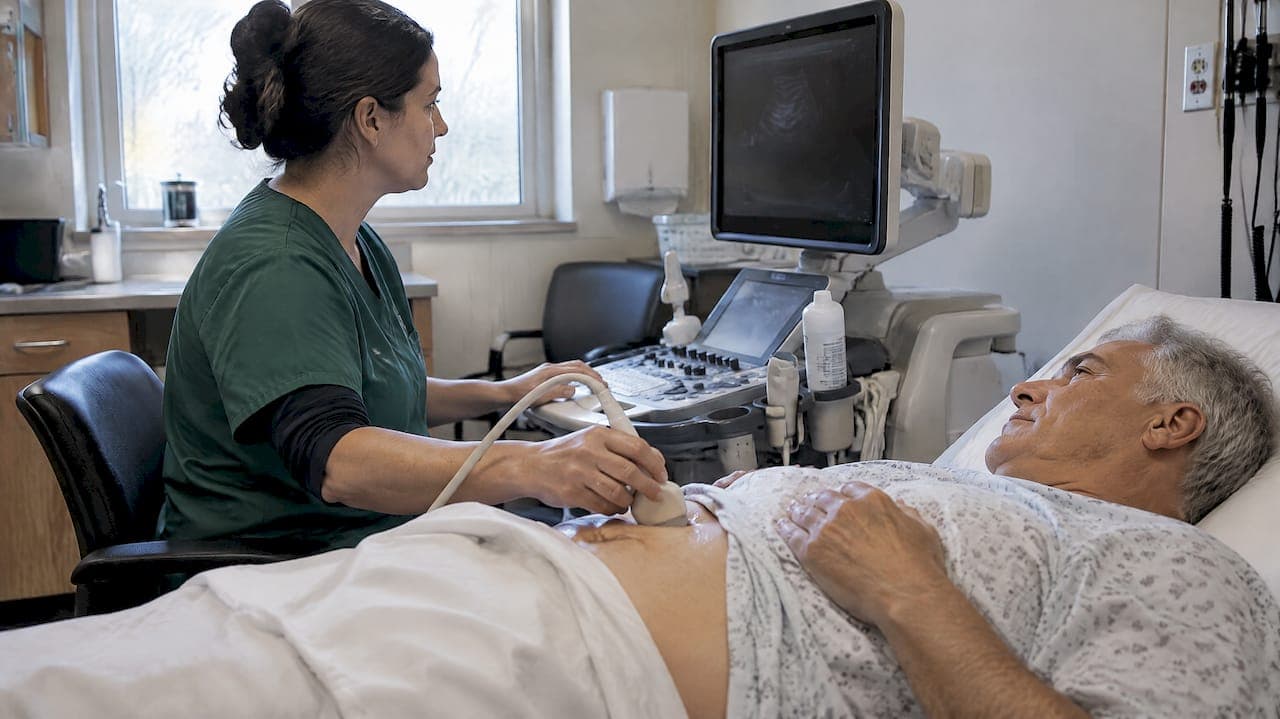
Fatty liver disease means extra fat has built up in your liver. Doctors now often call it steatotic liver disease, and the most common type is metabolic dysfunction-associated steatotic liver disease (MASLD), which you may also see written as NAFLD. According to the National Institute of Diabetes and Digestive and Kidney Diseases (NIDDK), it is a condition in which excess fat builds up in the liver, and the buildup is not caused by heavy alcohol use. It is common, it usually causes no symptoms, and in many people it can be improved. The key is finding it early and treating the conditions that drive it.
This guide explains what fatty liver is, what raises your risk, what an elevated liver enzyme result may mean, how doctors check for scarring, and what you can do about it. If you live in North Bergen or Secaucus, it also explains how we approach it in primary care.
TL;DR
- Fatty liver disease is extra fat in the liver. It is often silent, so many people learn about it from a routine blood test or an imaging scan done for another reason.
- It is closely tied to excess weight, type 2 diabetes, high cholesterol and high blood pressure. Treating those conditions is the foundation of treating the liver.
- Most people with simple fatty liver do not develop serious complications, but a more inflammatory form (MASH) can lead to scarring. The goal of testing is to find out which group you are in.
- Gradual weight loss, a healthier eating pattern and regular activity are the first-line steps. A prescription medication exists for adults with moderate to advanced scarring.
- Talk with your primary care provider before starting supplements or any new medication, and get care right away for vomiting blood, black stools or confusion.
Table of Contents
- What fatty liver disease is, and why the name changed
- Symptoms: why most people feel nothing
- Who is most at risk
- Elevated liver enzymes: what the result does and does not mean
- How doctors diagnose fatty liver and check for scarring
- What you can do: the first-line steps
- Medication for MASH with scarring
- Can fatty liver be reversed?
- When to get care right away
- Our perspective at Garden State Medical Group
- Get checked in North Bergen or Secaucus
- A simple plan for the next 90 days
- FAQ
- Sources
What fatty liver disease is, and why the name changed
Everyone has some fat in the liver. The concern starts when fat makes up too much of the organ. The older terms were nonalcoholic fatty liver (NAFL) and nonalcoholic steatohepatitis (NASH). Medical groups have since moved to newer terms, and NIDDK notes that NAFLD is also referred to as MASLD. You will see all of these names in lab reports and online, and they describe closely related conditions.
The practical distinction is between two stages:
- Simple fatty liver (MASL). Fat is present, but there is little inflammation or liver cell damage. Most people in this group do not go on to develop severe complications.
- Steatohepatitis (MASH, formerly NASH). Fat plus inflammation and cell damage. Over time this can cause scarring (fibrosis), and in some people cirrhosis and liver cancer.
You cannot tell which stage you are in by how you feel. That is why testing matters.
Symptoms: why most people feel nothing
NIDDK describes the condition as a silent disease with few or no symptoms, and says you may not have symptoms even if you develop cirrhosis. When people do notice something, it is usually vague. Some feel tired. Some feel a mild ache or pressure in the upper right side of the abdomen. NIDDK explains that this discomfort tends to come from the liver becoming enlarged, not from the liver tissue itself.
So pain is not a reliable warning sign. If you have risk factors, the better plan is to ask about screening instead of waiting for symptoms.
Who is most at risk
Fatty liver is linked to what doctors call metabolic risk factors. NIDDK says the buildup of fat in the liver is more common in people with overweight or obesity. It also tends to travel with:
- Type 2 diabetes or prediabetes
- High cholesterol or high triglycerides
- High blood pressure
- A larger waist measurement
If you have two or more of these, a liver check belongs in your next checkup. Many of our patients already see us for diabetes or heart risk, and the liver is part of the same picture. Our diabetes management guide covers the blood sugar side in more detail.
Elevated liver enzymes: what the result does and does not mean
Many people first hear about fatty liver after a routine panel shows higher-than-normal liver enzymes, usually ALT and AST. Fatty liver is one common reason. But an elevated enzyme result is a signal to look further, not a diagnosis. Other possible causes your clinician will consider include:
- Alcohol use
- Viral hepatitis
- Certain prescription and over-the-counter medicines
- Other liver conditions
A normal enzyme result does not rule out fatty liver either. Some people with scarring have normal enzymes. Bring a full list of your medicines, vitamins and supplements to the visit, and be honest about how much alcohol you drink. That history shapes which tests come next.
How doctors diagnose fatty liver and check for scarring
NIDDK lists the building blocks of the workup: a medical history, a physical exam, blood tests, imaging tests and, in some cases, a liver biopsy. Imaging such as ultrasound can show fat in the liver. Fat on an image, however, does not tell you whether there is scarring.
Why the scarring check matters most
The amount of fibrosis is what best predicts long-term risk. In primary care, a common first step is a calculated score called FIB-4, which uses your age, AST, ALT and platelet count. It is useful, but it has limits. A 2026 AASLD Liver Meeting abstract argued that current guidance may misclassify a majority of patients who have MASLD with significant fibrosis. In plain terms, a low score is reassuring but not always the final word. When results are unclear or you have several risk factors, clinicians often add a second noninvasive test, such as a FibroScan ultrasound-based stiffness measurement or a blood test designed to estimate fibrosis. AASLD's clinical pearl on noninvasive assessment walks through this approach for clinicians.

If a second test suggests significant scarring, your primary care provider may refer you to a liver specialist (hepatologist).
What you can do: the first-line steps
There is no single cure-all, but the basics work. NIDDK says that for people with overweight or obesity and NAFLD, weight loss can help reduce fat in the liver and inflammation. Here is what that looks like in daily life.
Eat in a way you can keep up
NIDDK's nutrition guidance says a healthy diet, sensible portion sizes and a healthy weight can help prevent the condition, and that your doctor may recommend gradual weight loss and diet changes if you already have it. In practice, we usually suggest:
- Building meals around vegetables, fruit, beans, whole grains, fish and olive oil
- Cutting back on sugary drinks, sweets and heavily processed snacks
- Watching portions of fried and high-fat foods, which are high in calories
- Limiting or avoiding alcohol, especially if you already have liver damage, and asking your clinician what is safe for you
Crash diets are not the goal. Gradual, steady loss is easier to sustain and is what the guidance describes.
Move more, even in small amounts
Regular activity helps your weight, blood sugar and blood pressure, all of which are tied to liver fat. A daily walk after dinner is a reasonable start. If you have heart or lung conditions, or have been inactive for a long time, ask us before you ramp up. We can check your heart first with an EKG or stress test if needed.

Get the related conditions under control
Treating diabetes, cholesterol and blood pressure is part of treating the liver. Our guides on chronic disease management and weight management strategies lay out practical steps. If you want structured, clinician-supervised help with weight, medical weight loss programs are one option to look at, though the right approach depends on your health history and medicines.
Be careful with supplements and painkillers
Supplements are not a replacement for weight loss and diet change. Tell your clinician about everything you take, including herbal products. If you have cirrhosis, NIDDK's guidance is to avoid taking over-the-counter painkillers such as NSAIDs or acetaminophen without a doctor's approval. If you have fatty liver and are not sure which pain reliever is safe for you, ask your primary care provider before you take it regularly.
Medication for MASH with scarring
For a smaller group of adults, there is now a drug option. In March 2024 the FDA approved Rezdiffra (resmetirom) as the first treatment for liver scarring due to fatty liver disease. It is used along with diet and exercise in adults with noncirrhotic MASH who have moderate to advanced fibrosis. It is not meant for people who already have cirrhosis, and it is not a treatment for every case of fatty liver. If your testing points to significant scarring, ask your liver specialist whether you are a candidate. Dosing is set by the prescriber.
Can fatty liver be reversed?
In the early stages, reducing liver fat is realistic for many people who lose weight and improve their metabolic health. Cirrhosis is different. NIDDK's guidance says it does not reverse once it develops, though treating the underlying cause can slow further damage. That is the strongest argument for acting before scarring advances.
When to get care right away
If you have known cirrhosis or advanced liver disease, do not wait for an appointment if you vomit blood, pass black or bloody stools, or become confused. NIDDK says these can be signs of bleeding from enlarged veins in the digestive tract. Call 911 or go to the nearest emergency department. For new yellowing of the skin or eyes, swelling in the belly or legs, or ongoing digestive symptoms, call your clinician promptly.
Our perspective at Garden State Medical Group
We see fatty liver most often in people who came in for something else: a diabetes follow-up, a cholesterol check, a Medicare wellness visit. That is how it should be found. Because the liver problem rarely announces itself, we think the right response is a plan that treats the whole person instead of one lab value.
Our practice combines primary care, cardiopulmonary services, on-site diagnostics and structured health programs under one roof in North Bergen and Secaucus. For a patient with fatty liver, that can mean one team looking at blood sugar, blood pressure, heart health, weight and nutrition together, with the same record shared across visits. We emphasize prevention and education, so you leave knowing what your numbers mean and what to do before the next visit.
We also believe in being honest about limits. Not everyone with fatty liver needs a specialist, and not everyone needs a medication. But everyone with risk factors deserves to have the question asked.
— Garden State Medical Group
Get checked in North Bergen or Secaucus
If you have diabetes, high cholesterol, high blood pressure, excess weight or a recent abnormal liver test, start with a visit to your primary care provider. We can review your history and medicines, order blood work and discuss next steps. Our diagnostic testing includes blood tests, and our weight loss programs and chronic care management support the lifestyle changes that matter most. We accept Medicare and Medicaid, among other insurance plans, so call or book through our website to confirm your coverage.
A simple plan for the next 90 days
- Book a visit and bring your lists. Include medications, supplements and an honest estimate of alcohol intake.
- Ask for the right tests. Blood work including liver enzymes, plus a scarring risk estimate such as FIB-4, and a second test if results are borderline.
- Pick one eating change. Swapping sugary drinks for water is a common starting point.
- Add activity you will repeat. A 20 to 30 minute walk most days is easier to keep than an ambitious plan you drop.
- Recheck. Ask your clinician when to repeat labs and how to track your weight and blood pressure.
Small steps repeated for months do more for the liver than a short, strict effort.
FAQ
Does fatty liver disease always get worse?
No. Most people with simple fatty liver do not develop severe complications. A smaller group has MASH, the inflammatory form, which can progress to scarring. Testing is how you find out which group you are in.
What foods should I limit with fatty liver?
Focus on cutting back on high-calorie, high-fat foods, sugary drinks and heavily processed snacks, and build meals around vegetables, fruit, whole grains and fish. NIDDK recommends gradual weight loss and diet changes when a doctor advises it. Ask your clinician about alcohol for your situation.
Can I have fatty liver without being overweight?
It is possible, although it is more common in people with overweight or obesity. Diabetes, high cholesterol and high blood pressure also raise risk. If you have those conditions at a normal weight, it is still reasonable to ask about screening.
Is there a medication for fatty liver disease?
One drug, Rezdiffra (resmetirom), is FDA approved for adults with noncirrhotic MASH and moderate to advanced scarring, used with diet and exercise. It is not for everyone with fatty liver. Your clinician or a liver specialist can tell you if it fits your test results.
Sources
- NIDDK: Definition & Facts of NAFLD & NASH
- NIDDK: Symptoms & Causes of NAFLD & NASH
- NIDDK: Symptoms & Causes of Cirrhosis
- NIDDK: Diagnosis of NAFLD & NASH
- NIDDK: Treatment for Cirrhosis
- NIDDK: Eating, Diet, & Nutrition for NAFLD & NASH
- AASLD: Noninvasive Assessment of Patients with MASLD
- FDA: First Treatment for Liver Scarring Due to Fatty Liver Disease