
An annual physical exam is a personalized preventive visit where your clinician reviews your history, checks vital signs, does a head-to-toe exam, and recommends age- and risk-based tests and vaccines. It is not a fixed package of routine tests handed to every adult. At Garden State Medical Group, that individualized approach shapes how visits in North Bergen and Secaucus are structured.
TL;DR:
- Routine bloodwork, imaging, or additional tests are ordered only if specific symptoms, abnormalities, or risk factors are identified during the physical exam.
- Vaccination recommendations are customized based on age and health conditions, not applied to every patient universally.
- A Medicare Annual Wellness Visit focuses on risk assessment and prevention planning without the typical hands-on physical exam or routine tests.
- Preparing for your visit by bringing medication, vaccine, and symptom records, and writing down questions can maximize the value of your appointment.
- Most adults should schedule a yearly exam, but individuals with stable health may extend intervals to every one or two years, depending on risk factors.
Table of Contents
- What Happens During a Typical Annual Physical Visit
- Screenings, Labs, and Vaccines: What's Common vs. Individualized
- How to Prepare for Your Annual Exam Without the Scramble
- Medicare Annual Wellness Visit vs. Routine Physical: What's the Real Difference?
- How Often Should You Schedule a Physical?
- Garden State Medical Group's Approach to Annual Exams
- What the Research Actually Supports About Annual Physicals
- Ready to Schedule Your Annual Physical Exam?
- Where to Learn More
- Sources
- FAQ
What Happens During a Typical Annual Physical Visit
Every visit starts the same way: check-in and intake. You'll update your medical history, list any new symptoms, and hand over your medication and supplement list. This step matters more than most people realize. Unreported supplements or over-the-counter products can interact with prescriptions, and the CDC's adult immunization guidance depends on a clinician knowing your full medical picture before making vaccine recommendations.
From there, your provider moves into vitals: height, weight, blood pressure, pulse, sometimes temperature and oxygen saturation. These numbers get compared to your own history, not just a population average. A blood pressure reading that looks fine in isolation might raise a flag if it's crept up 15 points since last year.
The physical exam itself follows a head-to-toe pattern. According to MedlinePlus, a standard checkup typically includes:
- Heart and lung auscultation
- Ear, mouth, and skin inspection
- Lymph node and extremity checks
- A review of mental health, sexual health, substance use, nutrition, and exercise habits
Depending on your age and sex, your doctor may also discuss pelvic or prostate screening, though these conversations are tailored to your risk profile rather than automatic for every visit.
The last piece is the decision point: does anything here justify ordering bloodwork or imaging? Clinicians add tests when something in your history, vitals, or exam findings points to it, not as a routine add-on for everyone who walks through the door.
Screenings, Labs, and Vaccines: What's Common vs. Individualized
Some labs show up often enough that they feel routine, even though they aren't guaranteed. A basic metabolic panel, cholesterol check, or blood glucose test might get ordered, and some require fasting for eight to twelve hours beforehand. Others don't need any prep at all. Always confirm with the scheduling staff which category your labs fall into.
Screening intervals shift with age and risk. Common examples include:
- Mammograms and cervical cancer screening on age-based schedules for women
- Colorectal cancer screening starting around age 45 for most adults
- Prostate-related conversations for men, typically starting in their 50s or earlier with family history
Vaccines follow the same individualized logic. The CDC's adult immunization schedule directs providers to recommend shots based on age and existing medical conditions, not a one-size-fits-all list. A 60-year-old with diabetes and a healthy 30-year-old walk out of the same office with very different vaccine recommendations, and that's by design.
What triggers extra testing beyond the basics? New symptoms, an abnormal vital sign, a family history that hasn't come up before, or a lab value that's drifted out of range since your last visit. Harvard Health has noted that fixed routine-checkup packages haven't shown consistent outcome benefits across the board, which is exactly why personalized decision-making has replaced the old blanket-testing model.
How to Prepare for Your Annual Exam Without the Scramble
A little preparation turns a rushed 20-minute visit into something genuinely useful. Before you go:
- Gather your current medication and supplement list, including dosages.
- Bring vaccine records and any recent specialist reports.
- Write down home readings like blood pressure or blood glucose if you track them. A basic home blood pressure monitor makes this easy to keep up with between visits.
- Draft a one-page symptom timeline with dates, not vague impressions.
- Pick your top three questions and write them down first, since visits run short and the most important question sometimes gets asked last, if at all.
Don't stop any prescription medication before your visit unless your doctor specifically told you to. Fasting is test-specific. Don't assume you need to skip breakfast unless someone actually told you so.
Pro Tip: Ask upfront whether any added test will be billed as preventive or diagnostic. Combining the two in one visit is one of the most common sources of surprise medical bills.
Medicare Annual Wellness Visit vs. Routine Physical: What's the Real Difference?
A Medicare Annual Wellness Visit (AWV) is not a routine physical, even though people use the terms interchangeably. The CMS AWV guidance describes it as a prevention-planning visit built around a health risk assessment and a personalized prevention plan, billed under HCPCS codes G0438 (first visit) and G0439 (subsequent visits).
Key distinctions worth knowing:
- The AWV does not typically include a hands-on physical exam the way a routine checkup does.
- Diagnostic tests ordered during the same visit may not be covered the same way as the wellness visit itself.
- Healthcare notes that mixing preventive and diagnostic care in one appointment is a leading cause of unexpected charges.
Tell the front desk in advance what you want addressed. That one phone call often prevents a confusing bill later.
How Often Should You Schedule a Physical?
Annual visits remain the standard for most adults, though lower-risk younger adults sometimes stretch to every one to two years with their doctor's agreement. Scheduling should reflect your own risk factors, not a generic rule applied to everyone.
Some situations call for an earlier appointment rather than waiting for your annual slot:
- New chest pain, shortness of breath, or unexplained weight loss
- A home blood pressure or glucose reading that's consistently abnormal
- Symptoms that have lasted more than two weeks without improving
Before you leave any visit, ask for a written prevention plan listing due dates for your next screenings and vaccines. It's the easiest way to stay ahead of your own schedule instead of guessing.
Garden State Medical Group's Approach to Annual Exams
The practice operates as a multidisciplinary medical group combining primary care with cardiopulmonary services, radiology, and diagnostic testing. That structure can streamline annual exams by facilitating timely follow-up testing when necessary.
Patients booking an annual visit can expect:
- Physician credentials, office hours, and accepted insurance plans listed clearly on the practice website
- Both in-person and telemedicine appointment options
- Access to chronic disease management programs covering diabetes, heart health, bone health, lung function, and weight management for patients who need ongoing follow-up
- A preparation checklist patients can review before their visit
The goal is straightforward: fewer handoffs between offices, and a clearer picture of your health from one visit to the next.
What the Research Actually Supports About Annual Physicals
The evidence doesn't back the old idea of a standardized battery of tests for every adult walking through the door once a year. What it supports is something more useful: a visit built around your actual risk factors, your family history, and what's changed since last time. That's a harder sell than "get your annual checkup," but it's the honest version.
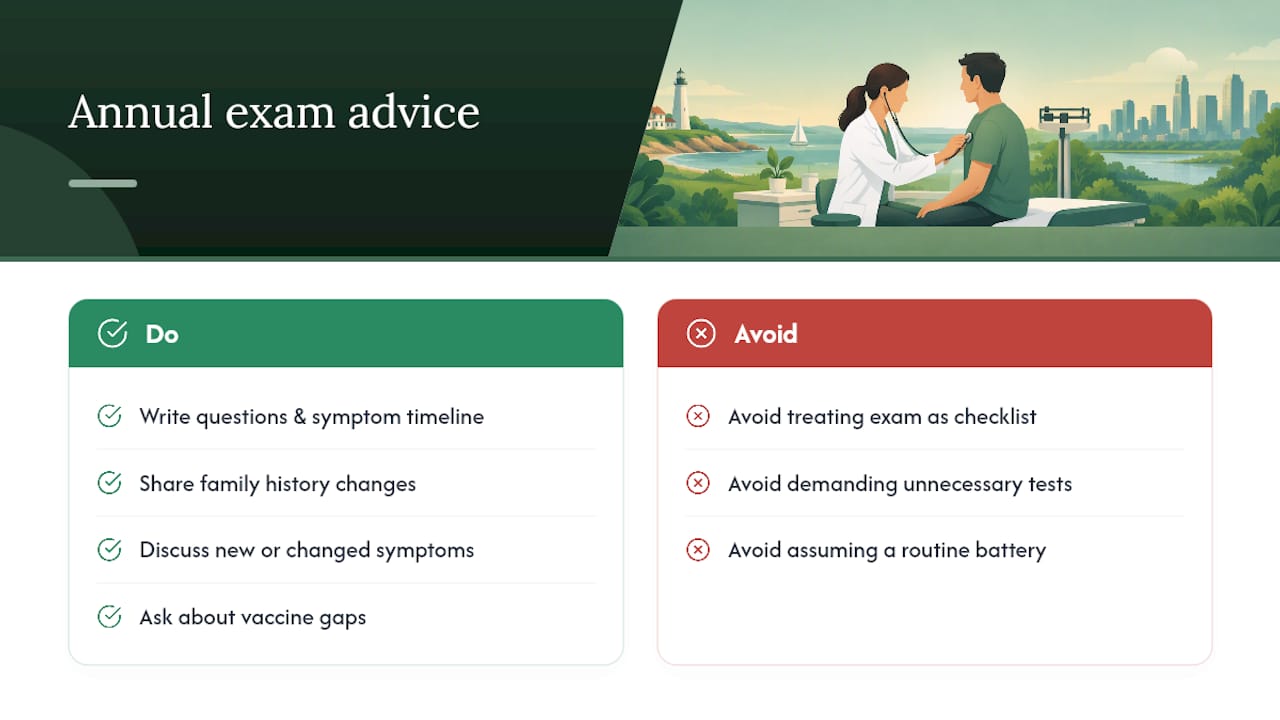
Where conventional advice falls short is in treating the physical exam as a checkbox. Patients sometimes leave disappointed that they "didn't get any tests," not realizing that skipping unnecessary bloodwork is often the correct clinical call, not an oversight. The visit's real value is the conversation. It's the moment where a clinician connects a new symptom to a lab trend from two years ago, or catches a vaccine gap before it becomes a problem.
If you prioritize one thing before your next visit, make it this: write down your questions and your symptom timeline in advance. That single habit does more for the quality of your care than any test you could request.
— Garden State Medical Group
Ready to Schedule Your Annual Physical Exam?
Garden State Medical Group brings primary care, diagnostics, and chronic disease management into one coordinated practice across North Bergen and Secaucus, so a flagged blood pressure reading or an abnormal lab result doesn't mean a referral to a facility across town.
Booking is available for both in-person and telemedicine visits through Primary Care. If your exam turns up something that needs a closer look, onsite diagnostic testing and radiology services mean bloodwork, imaging, or cardiopulmonary testing can often happen without a separate appointment elsewhere. Before your visit, walk through the practice's free annual exam preparation checklist to make sure you arrive with the right records and questions in hand. Schedule your annual physical exam today and get a plan built around your own health history, not a generic template.
Where to Learn More
- CDC adult immunization schedule: vaccine guidance by age and condition
- CMS Annual Wellness Visit page: official Medicare AWV rules
- MedlinePlus health checkup guide: plain-language exam overview
- Cleveland Clinic physical exam guide: what to expect, clinically explained
This article is general information, not a substitute for advice from a qualified doctor. Consult a qualified healthcare professional about your own circumstances before acting on anything here.
Sources
- Health checkup | MedlinePlus
- Adult immunization schedule — by medical condition | CDC
- Annual wellness visit | Medicare coverage | CMS
- What is an annual wellness visit? | Harvard Health
- What to expect at your annual physical exam | Cleveland Clinic Health Essentials
FAQ
What Is Included in an Annual Physical Exam?
A typical exam includes vital signs, a head-to-toe physical check of your heart, lungs, skin, and lymph nodes, plus a review of your medications, vaccines, and family history, according to MedlinePlus. Bloodwork or imaging gets added only when something in your history or exam findings points to it, not as a default.
What Should You Not Do Before an Annual Physical Exam?
Don't stop taking any prescribed medication unless your doctor specifically instructed you to. Only fast if a specific ordered test requires it. Skip heavy exercise or excessive caffeine right before the visit if you're having blood pressure checked, since both can temporarily skew the reading.
Do You Take Your Clothes Off for an Annual Physical?
You'll usually be asked to change into a gown for parts of the head-to-toe exam so your provider can check your skin, heart, lungs, and abdomen properly. You can always ask your provider to explain each step beforehand if you're unsure what to expect.
What Are the Main Tests for a Full Body Checkup?
There's no fixed list of "main tests," since screening choices depend on your age, sex, and risk factors rather than a universal set. Common examples include blood pressure and cholesterol checks, blood glucose testing, and age-based cancer screenings, but a Medicare Annual Wellness Visit specifically centers on a health risk assessment and prevention plan under CMS billing codes G0438 and G0439 rather than a hands-on exam.