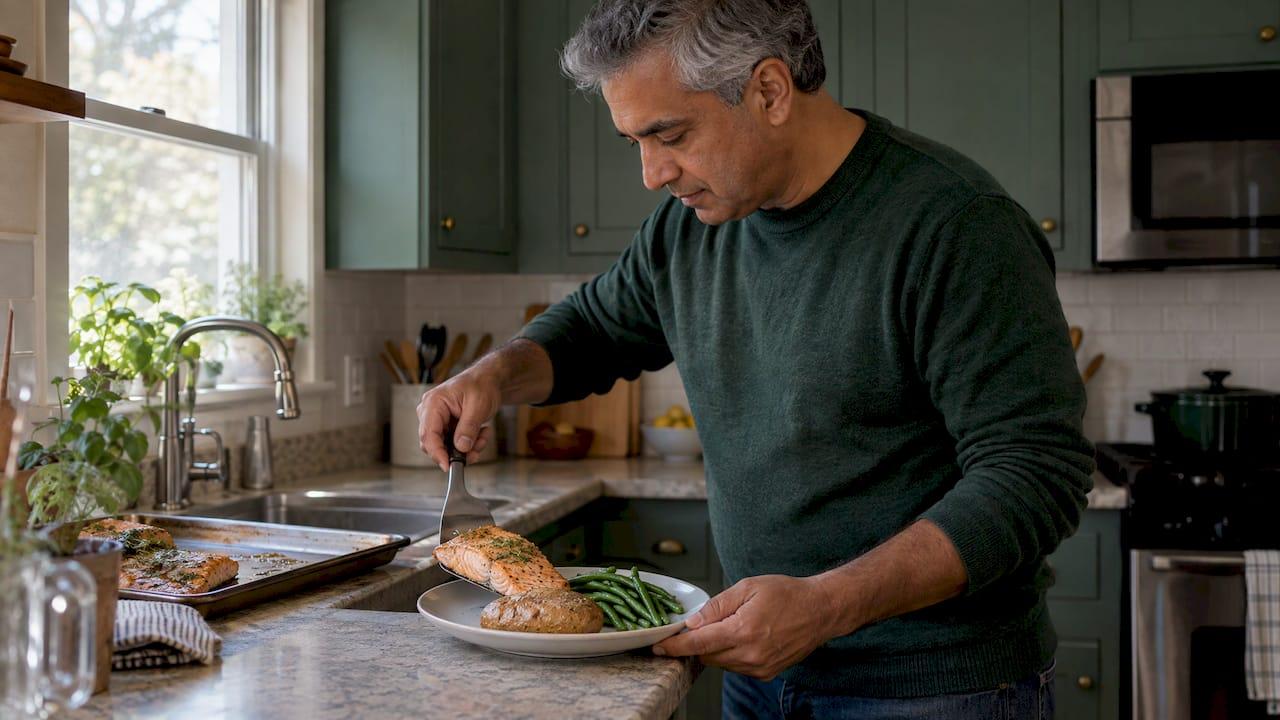
An acid reflux diet is not one strict list of foods. It is a way of eating that lowers the pressure and irritation behind heartburn: smaller evening meals, a gap of a few hours before lying down, fewer of your personal trigger foods and more fiber-rich, lower-fat meals. Most people do not need to give up everything on the "avoid" list. They need to find which foods and habits affect them. This guide shows you how to do that, with a sample day of meals and clear signs that it is time to see a doctor.
TL;DR
- Common triggers include fatty and fried foods, spicy foods, citrus, tomato sauces, chocolate, coffee, mint, onions, carbonated drinks and alcohol. Not everyone reacts to all of them.
- Foods that are usually easier to tolerate include oatmeal, whole grains, non-citrus fruits, vegetables, lean poultry and fish, and healthy fats such as avocado and nuts.
- When and how much you eat matters as much as what you eat: finish meals at least 3 hours before bed and keep dinner lighter.
- Heartburn two or more times a week, trouble swallowing or unexplained weight loss needs a visit with your physician.
Table of Contents
- What an acid reflux diet is meant to do
- Foods and drinks that commonly trigger reflux
- How to find your own triggers
- Foods that are usually easier to tolerate
- How and when you eat
- A sample day of reflux-friendly meals
- Weight, sleep position and other lifestyle changes
- Our perspective
- When reflux needs a doctor
- Get help with reflux in North Bergen and Secaucus
- FAQ
- Sources
What an acid reflux diet is meant to do
Reflux happens when stomach contents move back up into the esophagus. Food can affect this in two ways. Some foods and drinks relax the valve at the bottom of the esophagus or irritate tissue that is already inflamed. Large meals also add pressure in the stomach, which pushes contents upward.
That is why good dietary advice has two parts: what you eat and how you eat. One gastroenterologist writing for Medscape argued that clinicians tend to overdo lists of specific foods. In his view the most useful steps are a smaller evening meal, several hours of fasting before bed and weight loss for people with obesity, not removing every possible trigger. That article dates from 2003, but the same themes appear in current patient guidance from the National Institute of Diabetes and Digestive and Kidney Diseases (NIDDK) and Harvard Health, which we draw on below.
A reflux-friendly diet is also easy to live with. It uses the usual food groups, so you can build it from meals your family already eats.
Foods and drinks that commonly trigger reflux
The NIDDK lists acidic foods such as citrus fruits and tomatoes, alcohol, chocolate, coffee and other caffeine, high-fat foods, mint and spicy foods as items commonly linked to GERD symptoms. It suggests talking with your doctor about reducing or avoiding the ones that bother you.
Harvard Health's list is a little longer. It names fatty and fried foods, spicy foods, citrus, tomato sauces, vinegar, chocolate, caffeine, onions, peppermint, carbonated drinks and alcohol. Columbia University's Go Ask Alice service adds dairy products and garlic to the list of things that can worsen symptoms for some people.
Here is how those triggers group together in daily life:
| Trigger group | Everyday examples |
|---|---|
| High-fat and fried | Fries, fried chicken, pizza, creamy sauces, fatty cuts of meat, full-fat cheese |
| Acidic | Oranges, grapefruit, lemon, tomato sauce, ketchup, vinegar-based dressings |
| Spicy and strongly flavored | Hot sauce, chili, curry, raw onions, garlic |
| Stimulants and sweets | Coffee, strong tea, energy drinks, chocolate |
| Mint | Peppermint tea, spearmint gum, after-dinner mints |
| Drinks | Alcohol, soda, sparkling water for some people |
Citrus is one of the most frequently mentioned triggers, and the lemon test is one way to think about how acidic foods affect you.
Why "your triggers" matters more than "the list"
The lists above describe foods that commonly cause trouble. They do not predict your own reaction. Tomato sauce may be fine for you while coffee is not, or the reverse. Harvard Health recommends a simple process: remove the common triggers to see whether reflux eases, then add them back one at a time. That way you keep the foods you can tolerate.

How to find your own triggers
A short food and symptom diary is the most practical tool. You do not need an app. A notes page on your phone works.
- Write down what you eat and drink, and the time. Include snacks, coffee and anything you sip in the evening.
- Note symptoms and when they started. Heartburn, a sour taste, a cough after eating or a tight throat at night all count.
- Cut the most likely culprits for two to three weeks. Start with fried foods, large late meals, alcohol and carbonated drinks, then widen the list if you still have symptoms.
- Reintroduce one food at a time. Eat a normal portion, wait a few days and record what happens. Then try the next food.
- Keep a short "safe" list and a short "watch" list. Share both with your doctor at your next visit.
If you take reflux medication, do not stop it for this experiment without asking your physician first.
Foods that are usually easier to tolerate
Harvard Health recommends non-citrus fruits such as bananas, melons, apples and pears, raw vegetables, lean meats that are grilled, poached, broiled or baked, and oatmeal, whole-grain bread and brown rice. The same page points to unsaturated fats from plants and fish: olive, canola and sunflower oils, avocados, nuts and seeds, salmon and trout.
Columbia's Go Ask Alice also lists high-fiber foods, non-citrus fruits, vegetables, avocados and nuts, and lean chicken or turkey as less likely to trigger symptoms.
In practice, that gives you building blocks like these:
- Breakfast: oatmeal with banana, whole-grain toast, egg whites, low-fat yogurt
- Lunch: grilled chicken or turkey with brown rice and cooked or raw vegetables
- Dinner: baked salmon or trout with potatoes and green beans, or a small portion of lean protein with a salad
- Snacks: a handful of nuts, a pear, melon, whole-grain crackers
What about grilled cheese and other "is this okay?" foods?
This is one of the most common questions, and the honest answer is: it depends on the version and on you. A classic grilled cheese combines a few things that often cause trouble. It has butter, full-fat cheese and sometimes fried bread, and fat is on every major trigger list, including the NIDDK's list of high-fat foods. It is also often eaten as a big, heavy, late meal.
If you love it, you can try a lighter version: whole-grain bread, a thin slice of lower-fat cheese, a light brush of olive oil instead of butter, a small portion at lunch rather than late at night. Pair it with a side of vegetables rather than tomato soup, since tomatoes are a common trigger. Then notice how you feel.
The same approach works for other questions people ask. Eggs are better as egg whites if yolks bother you. Coffee may be tolerable in a small cup with food, or not at all. Chocolate and mint are usually the first things to test and reduce. Your diary will answer these better than any list.
How and when you eat
Timing and portion size can change symptoms even when the menu stays the same. Current guidance is consistent on these points:
- Leave a gap before bed. If symptoms bother you at night or when lying down, the NIDDK says eating at least 3 hours before you lie down or go to bed may improve them. Harvard Health suggests avoiding food during the three to four hours before bed.
- Eat smaller, more frequent meals. Harvard Health also advises not lying down after eating and avoiding vigorous exercise for a couple of hours after a meal.
- Make lunch your biggest meal. Healthline suggests a larger lunch so dinner can be lighter, and leaving 2 to 3 hours between your last meal and sleep.
- Slow down. Smaller bites and a relaxed pace make it easier to stop before you are overfull.
If you lie awake after a late dinner, a restless mind can make the night feel longer. Some readers find it useful to read about racing thoughts at night alongside these meal-timing changes.
A sample day of reflux-friendly meals
This is an example, not a prescription. Adjust it for your triggers, your culture's food traditions and any dietary needs such as diabetes or kidney disease.
Breakfast (7:30 a.m.): Oatmeal made with water or low-fat milk, sliced banana and a spoonful of almond butter. Herbal tea that is not mint-based.
Mid-morning snack: A pear and a small handful of walnuts.
Lunch (12:30 p.m., your largest meal): Grilled chicken breast, brown rice, steamed broccoli and a salad with cucumber and carrots, dressed with olive oil and a little salt and herbs instead of vinegar.
Afternoon snack: Low-fat yogurt with melon, or whole-grain crackers with avocado.
Dinner (6:00 p.m., lighter): Baked salmon, a small baked potato and green beans, seasoned with parsley, basil or thyme rather than hot spices.
Evening: Water. If you are home by 9:30 p.m. and plan to sleep at 11, the gap is already built in.
Flavor does not have to suffer. Fresh herbs, a little salt, roasted vegetables and mild spices such as thyme and rosemary can replace the heat, garlic and tomato that cause trouble for many people.

Weight, sleep position and other lifestyle changes
Diet is only part of managing GERD. Several other habits matter.
Weight. If you are overweight or have obesity, the NIDDK notes your doctor may suggest losing weight to reduce symptoms. The Medscape review describes a large Norwegian survey of more than 60,000 adults that found a strong link between rising BMI and reflux symptoms. Among people with a BMI over 35, the odds were 3.3 times higher in men and 6.3 times higher in women than in those with a BMI under 25. If this applies to you, our guides on weight management strategies and what weight management involves are a good place to start.
Sleep position. Healthline notes that sleeping on your left side may help because of how the esophagus and stomach are arranged. A 2021 systematic review it cites found that raising your head while sleeping may reduce symptoms, though research limitations make the benefit hard to measure.
After meals. Stay upright, take a short walk and save hard workouts for later.
Our perspective
We see reflux questions come up often in primary care, and we rarely start with a long list of banned foods. A diet that feels like punishment does not last. We would rather help you find the two or three habits that make the biggest difference for you: a lighter dinner, a longer gap before bed, fewer of your own triggers.
Our approach to care is multidisciplinary and built around prevention, chronic condition management and education. That matters for reflux because it rarely stands alone. Weight, sleep, medications, and heart and lung health can all overlap with the symptoms people call heartburn. Chest discomfort in particular should never be assumed to be reflux without a proper evaluation.
Our primary care physicians can review your symptoms and history, talk through your food diary and help you build a plan that fits your life, whether you are managing reflux alone or alongside conditions such as diabetes or heart disease. We also offer weight loss and chronic care programs for patients who want ongoing support.
Garden State Medical Group
When reflux needs a doctor
Occasional heartburn after a big meal is common. Ongoing or changing symptoms deserve attention. The American College of Gastroenterology's patient guide says to see your physician if you have heartburn two or more times a week, no lasting relief from medication, difficulty swallowing (especially solids), choking, wheezing or hoarseness caused by regurgitation, signs of bleeding, unexplained weight loss, or reflux symptoms for more than a year.
Please also take chest pain seriously. Pressure or pain in the chest, especially with shortness of breath, sweating, nausea or pain spreading to the arm or jaw, needs emergency care. Call 911 rather than trying a dietary fix. Our article on signs of common health issues you should not ignore explains more about symptoms that should not wait.
Get help with reflux in North Bergen and Secaucus
If diet changes have not settled your symptoms, or you are not sure whether what you feel is reflux, we can help. Our primary care team sees adults and families at our North Bergen and Secaucus, New Jersey locations and offers in-person and telemedicine visits. If your symptoms involve the heart or lungs, our cardiopulmonary care services and on-site diagnostic testing are available too.
Bring your food and symptom diary and a list of your medications and supplements. To book, visit Garden State Medical Group.
FAQ
What is the worst thing for acid reflux?
There is no single worst food, because triggers differ from person to person. Fried and fatty foods, alcohol, coffee, chocolate, mint, spicy foods, citrus and tomato sauces are the most commonly reported. Large late-night meals can be as troublesome as any specific food.
How should you eat if you have acid reflux?
Eat smaller meals, make lunch your biggest meal and finish eating at least 3 hours before bed. Stay upright after meals and avoid hard exercise for a couple of hours. Build meals around lean protein, whole grains, vegetables and non-citrus fruit.
What calms acid reflux fast?
Standing or sitting upright, loosening tight clothing and waiting to lie down can ease symptoms in the moment. Over-the-counter options exist, but ask your pharmacist or physician which one suits you, especially if you take other medicines. If you need relief two or more times a week, schedule a visit.
Can I eat a grilled cheese sandwich with acid reflux?
Sometimes. Butter, full-fat cheese and frying add fat, which is a common trigger. A smaller sandwich at lunch, with whole-grain bread, lower-fat cheese and little butter, is more likely to be tolerated than a large one late at night. Track how you feel afterward.
Sources
- Eating, Diet, & Nutrition for GER & GERD, NIDDK
- GERD diet: Foods to avoid to reduce acid reflux, Harvard Health
- What foods are good and bad for acid reflux? Go Ask Alice, Columbia University
- Dietary Advice for Patients With GERD, Medscape
- How to Prevent Acid Reflux and Heartburn, Healthline
- Heartburn or Gastroesophageal Reflux Disease (GERD), American College of Gastroenterology
- The Lemon Test
- Racing Thoughts at Night